Yerebatan Cistern and Gülhane Park: Istanbul’s Hidden Balance
A visit to the Basilica Cistern followed by a walk through Gülhane Park offers a change of pace within Istanbul’s historic centre. One takes you beneath the streets of Sultanahmet; the other opens onto tree-lined paths beside Topkapı Palace. Together, they show two different ways the city has used and cared for space.
Basilica Cistern: the city beneath the city
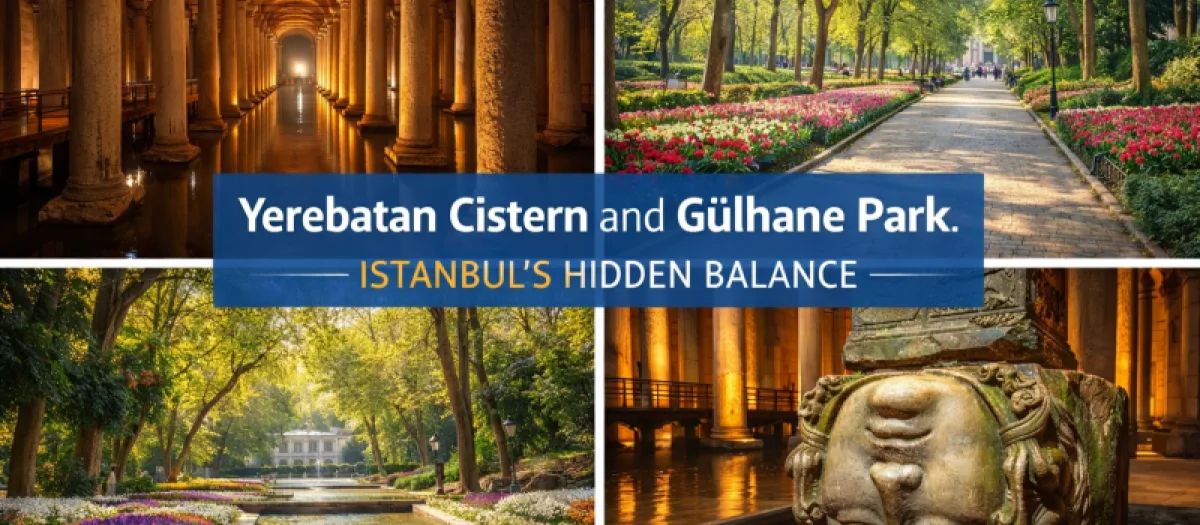
Known in Turkish as Yerebatan Sarnıcı, the cistern was built in the sixth century during the reign of Justinian I. It formed part of Constantinople’s water-supply infrastructure, serving the palace area and surrounding city. Its scale makes that practical purpose easy to appreciate: approximately 140 by 70 metres, with a storage capacity commonly given as about 80,000 cubic metres.
The roof rests on 336 columns arranged in 12 rows of 28. At roughly nine metres high, the columns create long perspectives beneath the brick vaults. Reused architectural elements, known as spolia, explain differences in their appearance. Waterproof mortar on the walls and floor was as important to the reservoir’s function as the more photogenic stonework.
The wider network of aqueducts and water channels connected the city with sources beyond its centre. That history is more useful than imagining the cistern as an isolated underground chamber. Its survival also reflects repair and conservation over time.
Medusa heads, light and the visitor experience
Two reused Medusa heads serve as column bases: one lies on its side and the other is upside down. Their original provenance and the reasons for this arrangement are not securely settled. Practical reuse and symbolic interpretations are explanations to consider, not facts to present as certain.
Columns, reflections and subdued lighting give the space its atmosphere. Today it is a visitor attraction rather than a working municipal reservoir. Modern restoration and visitor walkways are part of what you see.
Check current opening arrangements, ticket conditions and any event schedule before visiting. A guided or priority-entry ticket does not automatically eliminate every security or admission queue. If steps, lighting or mobility are a concern, confirm the current access arrangements rather than relying on an old description.
Gülhane Park: from palace garden to public space
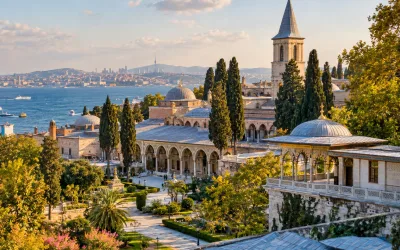
Gülhane was the outer garden of Topkapı Palace. Its history is also associated with the proclamation of the Tanzimat Edict in 1839. The transformation into a public park belongs to the early twentieth century: municipal and governor’s-office accounts date the opening to 1912.
Today the paths, mature trees and places to sit offer a useful pause between museums and monuments. The park is free to enter, while museums and other attractions nearby have their own admission rules. Shade can make a summer walk more pleasant, but quiet, cool conditions are not guaranteed during busy periods.
Enjoy the changing views between trees and palace walls. Later landscaping and restoration have also shaped the park. Its appeal is the combination of history and everyday use: people walking, meeting and resting in the centre of a busy city.
Connecting the two stops and nearby landmarks
The cistern and Gülhane fit naturally into a Sultanahmet–Topkapı–Sirkeci walk. Use the map links below to choose the actual entrances. Gates, pedestrian routes, crowds and your walking pace affect the journey; a distance to a monument is not necessarily the distance to its visitor entrance.
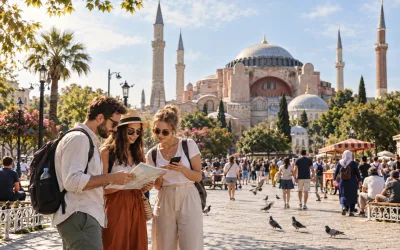
Near the cistern, combine Hagia Sophia, the Blue Mosque, the Hippodrome and the Museum of Turkish and Islamic Arts according to opening and visiting rules. Binbirdirek Cistern provides another underground stop. Towards Gülhane, Topkapı Palace and the Istanbul Archaeological Museums each deserve time of their own.
From the park area, you can continue towards Sirkeci Station, Eminönü and Galata Bridge. The Grand Bazaar is a separate extension towards Beyazıt. Choose a few stops and allow enough time for entry, walking and breaks.
Choosing an Istanbul experience
The options below cover city walks, palace visits, Bosphorus cruises and excursions beyond Istanbul. Choose according to your available time rather than adding them all to the same day. Day trips to Bursa, Sapanca, Troy or Gallipoli, and journeys to Cappadocia, Pamukkale or Ephesus, need separate planning.
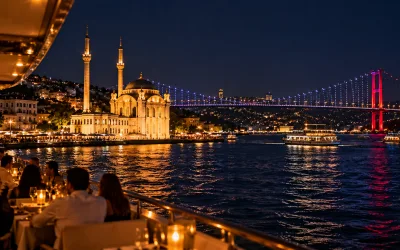
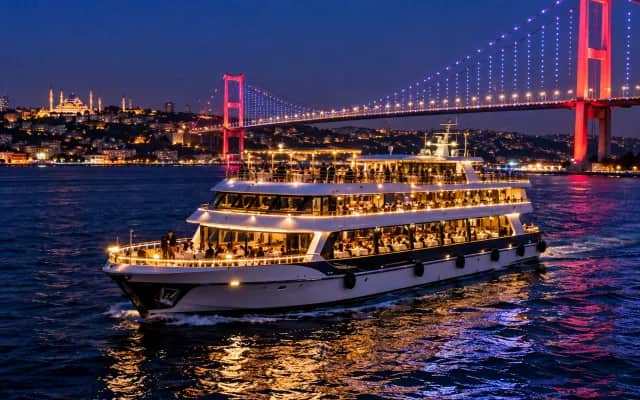
Confirm the meeting point, language, admission inclusions, transport and cancellation terms on the selected tour page. New Year’s Eve and Valentine’s Day cruises are date-specific products, not everyday departures. Dining, drinks, transfers and access arrangements vary by booking.
Map locations
Istanbul tours and related guides
- Hagia Sophia ticket options
- New Year’s Eve Bosphorus dinner cruise
- Bosphorus dinner cruise
- Fishing on the Bosphorus
- Topkapı Palace, Hagia Sophia and Istanbul city tour
- Beylerbeyi Palace afternoon tour
- Byzantine relics morning tour
- Istanbul, Bosphorus and Dolmabahçe Palace tour
- Asia and Europe full-day tour
- Ottoman relics afternoon tour
- Day trip to Bursa
- Two-day Cappadocia trip
- Sapanca Lake and Maşukiye tour
- Süleymaniye Mosque and Yedikule Fortress tour
- Süleymaniye, Yedikule and Bosphorus tour
- Gallipoli day tour
- Istanbul, Cappadocia, Pamukkale and Ephesus four-day tour
- Pamukkale tour by plane
- Ephesus and Virgin Mary’s House by plane
- Troy and Gallipoli two-day tour
- Day trip to Troy
- Food tour on Istanbul’s European and Asian sides
- Opera and ballet event tickets
- Private Turkish bath, sauna and massage
- Basilica Cistern guided tour
- Imperial and hidden treasures of Istanbul
- Princes’ Islands tour
- Valentine’s Day Bosphorus dinner cruise
- Private yacht organisation on the Bosphorus
- Sultanahmet Square: Where Istanbul’s History Lives in the Open Air
- Hagia Sophia: A Timeless Journey of Stone, Light, and Silence
- Topkapi Palace in Istanbul: The Harem and Ottoman Court Life