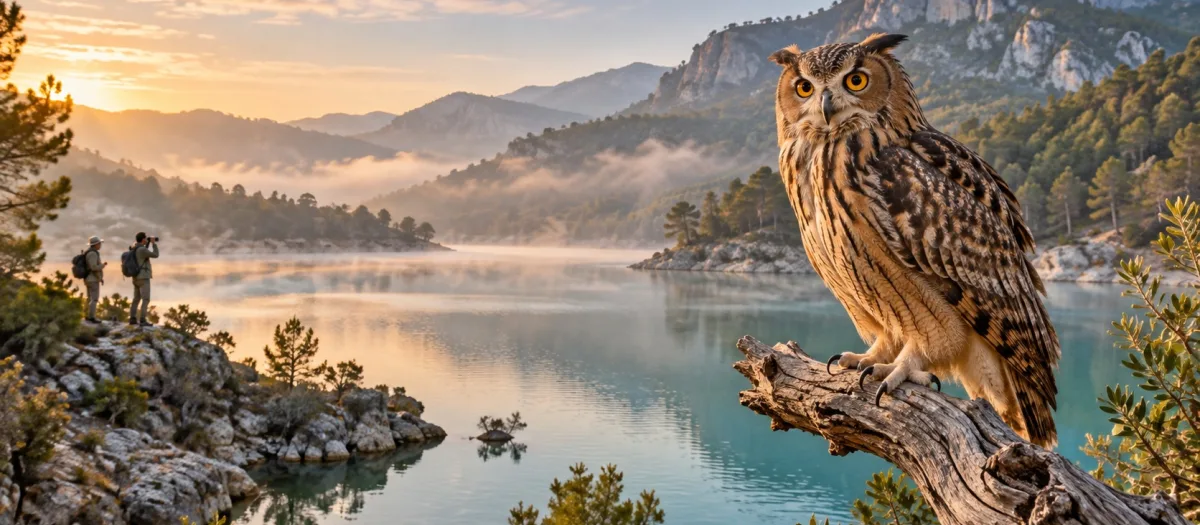
Discover Turkey Through Its Birdlife
Waiting for first light beside a coastal wetland, listening for a woodland bird near Akseki or scanning a rocky Taurus slope through binoculars: birdwatching offers a way to experience a destination through its living landscapes. The pace follows bird activity, light and field conditions, with time to stop, listen and look again.
Vigo Tours offers this experience in several formats: a full day around Side and Akseki, a specialist Brown Fish Owl night walk, a sunrise boat observation on Oymapınar Lake, a two-day mountain journey and an eight-day itinerary linking Gaziantep with Antalya. This guide compares those five programmes and explains how to match your interests, equipment and travel arrangements to the experience you choose.
What Makes a Birdwatching Tour Different?
A birding day may include long waits, short walks, quiet listening and repeated scans of the same habitat. Learning a bird’s name is only part of the encounter. Watching its behaviour and understanding why it uses a particular landscape can make the sighting much more memorable.
Local guiding is especially useful on target-species trips. A guide can weigh recent observations against weather and access, adjusting stops and priorities as the day develops. No itinerary guarantees a wild bird, however. Observation and photography are also different outcomes: a satisfying binocular view may happen when light or distance makes a good photograph impossible.
Five Routes at a Glance
| Programme | Duration | Main focus | Planning point |
|---|---|---|---|
| Side and Akseki | Full day; around 12 hours | Coastal and mountain habitats | Send your date and target list in advance |
| Brown Fish Owl at night | About 5 hours including transport | Guided night observation | No children; strict sound and light rules |
| Oymapınar sunrise | About 3 hours | Boat-based Fish Owl search | Listed season: approximately 15 March–15 July |
| Akseki and Demirkazık | 2 days | Woodland and high-mountain birds | Very early starts and one overnight stay |
| Gaziantep–Antalya | 8 days | Euphrates, steppe, mountain and coastal habitats | Confirm the final direction before booking flights |
Durations reflect the current tour descriptions. Departure times, availability, group requirements and inclusions should be checked on the relevant page and confirmed with Vigo Tours before booking.
1. Side and Akseki: From Coast to Mountain Woodland
The Side and Akseki birdwatching tour suits travellers who want to devote a full day to contrasting habitats. Observation can begin near the coast before moving inland towards mountain and woodland areas, depending on conditions and the birds being sought. The changing landscape is a central part of the experience.
The programme describes observation areas rising from sea level to around 1,800 metres. Bee-eaters, rollers, wetland birds, woodland species and raptors may feature among seasonal targets. These are possibilities, not a promised checklist; the day’s records depend on what is actually present and detectable.
The current conditions use a minimum two-person price basis. Personal birding equipment and food and drinks are not included. Share specific targets when you enquire, and clarify arrangements if you would also like an evening Fish Owl session: this is a separate or additional paid programme, not something to assume is included.
2. Brown Fish Owl Near Manavgat: A Focused Night Experience
The Brown Fish Owl night observation tour is aimed at birders willing to wait quietly and work in darkness for a particular target. It involves walking in stream and valley habitats around the Manavgat and Akseki area. Allow time and energy for it as a dedicated field session rather than treating it as a casual evening add-on.
The tour page indicates observation beginning around 21:00 and an overall duration of approximately five hours including transport. Bring walking footwear, quiet clothing and an extra layer for cool conditions. The current participation rules exclude children, and everyone joining needs to follow the observation discipline.
Flash photography is prohibited. Guests cannot use personal torches; the guide controls any light needed during observation. According to the tour conditions, the organiser arranges official permissions. Review those conditions instead of seeking sensitive locations or attempting independent access. Neither an owl sighting nor a photograph is guaranteed.
3. Oymapınar Lake: Fish Owl Observation at Sunrise
The Manavgat Oymapınar Lake Fish Owl sunrise tour takes place by boat in the early morning, offering a different format from the night walk. Low light, boat movement and distant rocky shores give the experience its own character and require realistic expectations for photography.
The page lists a season of approximately 15 March to 15 July. This is the planning window for this particular lake programme, not a universal season for all birding tours. The listed duration is around three hours, with completion no later than 08:30. Confirm your pickup time against sunrise and the final arrangements.
The price basis is a minimum of four participants. The guide’s vehicle provides transfer from Side for up to four people; larger groups need to clarify transport separately. Tea, coffee and water are offered on the boat, while meals are excluded. Quiet observation and the no-flash rule apply here too.
4. Akseki and Demirkazık: Two Days for Mountain Birds
The two-day Demirkazık birdwatching tour combines Akseki woodland with higher mountain habitats. Its outline includes forest and hillside observation on the first day, travel to Demirkazık and an overnight pension stay, followed by a mountain session beginning before dawn on the second day.
Krüper’s Nuthatch and Caspian Snowcock are among the programme’s targets. Owl searches may also form part of the itinerary when conditions allow. Mountain birding depends on weather, snow and road access as well as species knowledge, so field timings and the return to Side can change.
The tour is not described as a technical climbing expedition, but very early starts and uneven ground still need consideration. Layered clothing, supportive walking shoes and personal binoculars are important. One overnight stay and selected meals are included; review the details rather than assuming every meal is covered.
5. Gaziantep to Antalya: An Eight-Day Habitat Journey
The eight-day Gaziantep–Antalya guided birdwatching tour puts birding at the centre of the holiday. Its route connects the Euphrates Valley and Birecik with Aladağlar and Demirkazık, then Mediterranean habitats. It brings together environments that are difficult to cover meaningfully on a short excursion.
Listed targets include Northern Bald Ibis, Blue-cheeked Bee-eater, Iraq Babbler, Caspian Snowcock, Radde’s Accentor and Brown Fish Owl. The Northern Bald Ibis visit at Birecik should be understood in its conservation and breeding-area context, separately from unrestricted wild encounters. Seasonal and field conditions apply throughout; target lists are not guarantees.
The programme includes private transport, twin-share accommodation, breakfast and dinner, an English-speaking bird guide and specialist field transport. Flights and lunches are excluded. Current conditions specify pricing on a minimum ten-participant basis. As alternative directions can be arranged, confirm the start, finish and full itinerary before purchasing flights.
Choose the Season Around Your Targets
There is no single best month for every bird and every habitat. The Side–Akseki description highlights spring and autumn, while mountain plans also depend on high-altitude weather and access. The Oymapınar sunrise programme has its own restricted seasonal window.
Begin with your priorities, then discuss appropriate dates and routes. For summer travel, prepare for differences between the coast and mountains; in cooler periods, allow for cold night or dawn sessions. A general seasonal statement does not confirm departure on a particular date or the presence of every target bird.
Matching the Route to Your Experience
On a first birding trip, focus on finding birds through binoculars, listening and recognising habitats rather than chasing a large total. A varied Side–Akseki day can help you discover what you enjoy, but take its full-day duration seriously. Tell the organiser about your experience and mobility before choosing.
Dedicated owl watchers can compare the night and sunrise formats. Mountain-bird enthusiasts may prefer the two-day route, while those seeking a broader regional journey can consider eight days. A tour page in your language does not establish the guide’s language: confirm this separately, especially when identification explanations matter to you.
Your Field Preparation Checklist
- Binoculars: Bring a pair you can use comfortably. Ask ahead about loan equipment or a telescope.
- Camera kit: Carry spare batteries, memory cards and a practical bag. Discuss photographic stops and working distances with your guide.
- Clothing: Choose quiet fabrics, subdued colours and layers, with an outer layer for rain and wind.
- Footwear: Use walking shoes suited to wet, rocky or uneven ground.
- Daily essentials: Plan water and meals around the stated inclusions. Pack a hat, sun protection and personal necessities.
- Field notes: Record dates, habitat, behaviour and uncertain identifications. Discuss sensitive locations with the guide before sharing them.
Photography: Start with a Good Observation
Tell Vigo Tours if photography is your main priority. A group trying to find several targets may move at a different pace from a photographer waiting for light on one bird. Boat movement and dim conditions affect sunrise work; mountain distance, wind and carrying equipment introduce other challenges.
Prepare to work without flash on Fish Owl programmes. Do not ask to approach a bird or prolong observation simply for a stronger frame. A brief encounter watched carefully can be more rewarding than a photograph, and sometimes lowering the camera reveals behaviour you would otherwise miss.
Responsible Birdwatching
Keep away from nests and roosts, protect habitats and avoid playback to attract birds. Accept the guide’s decision to stop. These principles follow the American Birding Association’s birding ethics.
Silence, no flash and guide-controlled lighting are explicit parts of Vigo’s Fish Owl conditions. Once an encounter has happened, avoid insisting on another sensitive stop. Leaving the bird undisturbed is more valuable than adding another close view to a personal list.
Questions to Ask Before Booking
- Is the programme available on my date, or does it require an individual request and group arrangements?
- Which route best suits my targets, and what are recent field conditions?
- How much walking, night work, early departure and driving is involved?
- What language does the guide use, and is optical equipment provided?
- Are my pickup area, meals, accommodation and specialist transport covered?
- How are minimum participation and the minimum total price calculated?
Frequently Asked Questions
Do I need previous birdwatching experience?
Guiding can support beginners on general routes. Night owl sessions and long mountain programmes also require the stamina and discipline to follow the schedule and rules.
Should I choose sunrise or night for Fish Owl?
Sunrise observation is a seasonal boat programme; the night option involves walking in darkness. Discuss dates, mobility and photography preferences before deciding.
Can children join?
There is no single age rule covering every tour. The night Fish Owl page excludes children. Ask about ages and suitability for each other programme.
Is birdwatching equipment included?
Check each programme individually. Personal observation equipment is excluded from the Side–Akseki and two-day Demirkazık tours.
What if we do not find the target bird?
Wild sightings are not guaranteed. A missed target does not automatically create a refund or free repeat entitlement; review booking and cancellation terms in advance.
How should I arrange flights for the eight-day tour?
Confirm the agreed start and finish cities and the daily itinerary first. The title or URL alone does not establish the final travel direction.
More Than a Bird List
From coast to mountains and from woodland to Euphrates landscapes, these routes show how varied a nature journey in Turkey can be. A rewarding trip begins with suitable targets, realistic expectations, preparation and patient guiding.
Read the programme that interests you and share your travel dates and target birds with Vigo Tours. You can then plan a focused session within a wider holiday or a complete journey built around birdwatching.




-card.webp)