Rising Costs in Turkey Are Affecting Tourists in Euros
A weaker Turkish lira does not automatically make a holiday cheaper for someone spending euros. What matters is how local prices change relative to the exchange rate, together with the location, season and services included. A hotel room, a restaurant meal and a private excursion can follow quite different price patterns.
Local prices and the exchange rate
To compare a lira price in euros, divide it by the number of lira received for one euro. If the lira price rises faster than that exchange-rate figure, the euro cost increases too. The same principle applies to visitors budgeting in dollars or another currency.
Use prices and exchange rates from the same dates. An annual average rate, a year-end rate and the rate offered by your bank are not interchangeable. Payment or conversion fees can also affect the final amount, so compare the complete cost rather than the headline exchange rate alone.
What tourism businesses pay for
Hotels, restaurants and tour operators pay for staff, food, energy, rent, maintenance and transport. Their exposure differs: fuel matters especially for transfers and boat trips, while food and staffing are central to restaurants. Higher costs can put pressure on margins, but they do not prove that every business has the same costs or must charge the same increase.
A historical wage example illustrates the scale of change without serving as a current price list. The Turkish labour ministry reported a monthly net minimum wage of TL2,825.90 for a single worker without children in 2021 and TL17,002.12 in 2024. These are past net-pay figures, not today’s wages or an index of total employer costs. They cannot by themselves establish how much every tourism service should cost.
Why drinks and meals vary so much
Taxes, including the special consumption tax known as ÖTV on alcoholic drinks, are one part of pricing. Product costs, rent, service and a venue’s location also matter. A supermarket bottle, a hotel bar serving and a restaurant drink are different purchases; compare the same product, quantity and setting.
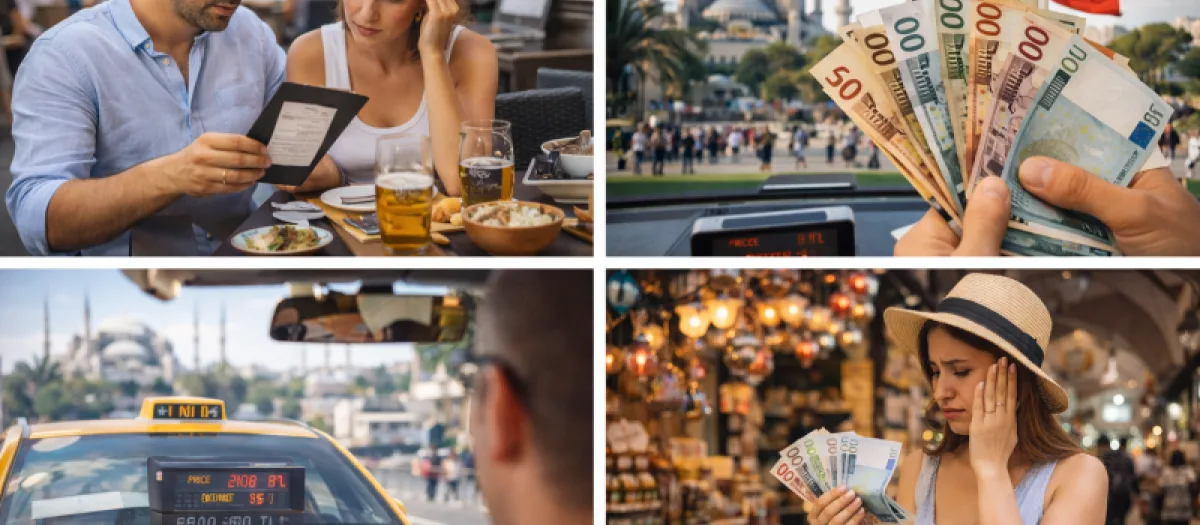
In Antalya, Bodrum, Istanbul and Cappadocia, check menus before ordering rather than relying on an old nationwide beer, rakı or wine price. A dated price comparison is useful only when its product, location and exchange-rate basis are clear.
Compare the whole holiday
An all-inclusive hotel can make some spending easier to predict, but check which meals, drinks and extras are covered. A room-only stay offers more freedom to try local restaurants; self-catering may suit travellers who prefer shopping and cooking. None is automatically the cheapest choice for everyone.
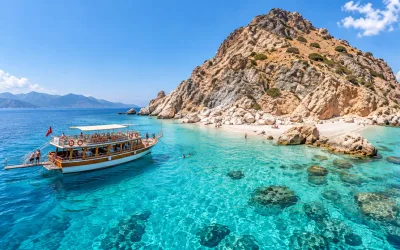
For boat tours, water sports and private excursions, compare duration, group size, transfers, equipment and exclusions as well as price. Decide which activities matter most to you. A shorter stay or fewer paid outings is a budget option, not a rule that all visitors follow.
Build a realistic budget
Price your actual travel dates and region, then separate accommodation, meals, local transport and activities. Add a reserve for extras and reconfirm quotes before booking. Comparing equivalent offers gives a more useful answer than assuming Turkey is always cheaper—or always more expensive—than another destination.