SIM Cards and Money Tips for Your Trip to Turkey
Before travelling, compare your home operator's roaming offer with a Turkish SIM or travel eSIM, and check how you will pay for everyday expenses. A suitable mobile package and a small cash reserve are more useful than assuming one provider or payment method will work everywhere.
Where to buy a Turkish SIM
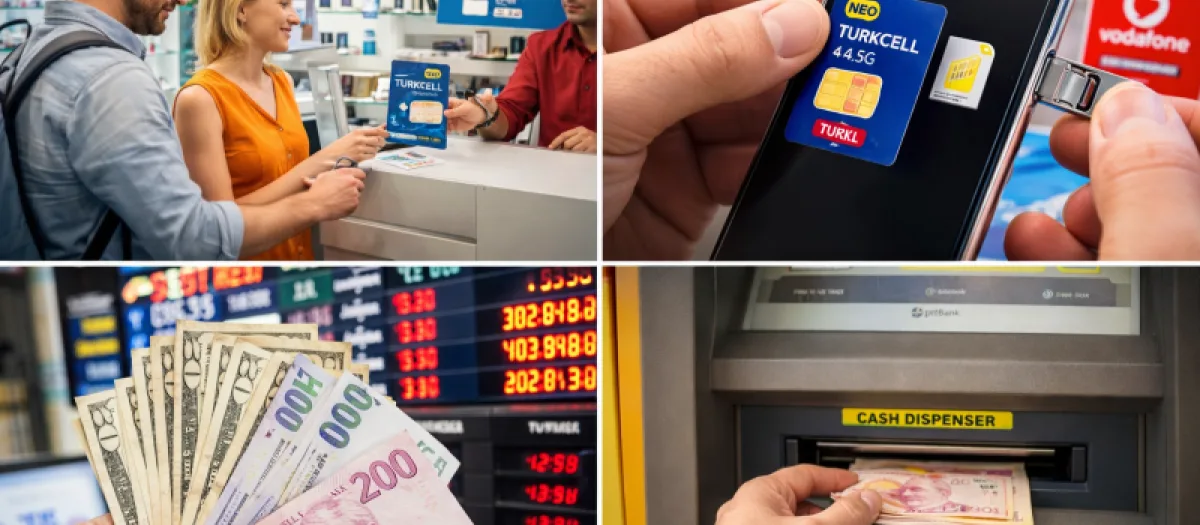
Turkcell, Vodafone Türkiye and Türk Telekom sell tourist services through their own stores and authorised dealers. You will find sales points at major airports, including Istanbul, Antalya and Izmir, as well as in city centres and shopping malls. Airport convenience can cost more, but compare the complete offer rather than assuming every city shop is cheaper.
Bring your valid passport and accommodation details, and have the line registered in your own name. If you entered Turkey using another accepted travel document, ask the operator which in-store registration procedure applies before paying. Online activation can have additional requirements: for example, Turkcell's tourist eSIM app process requires a biometric passport and a compatible phone with eSIM and NFC. Activation time depends on the identity checks and service chosen.
Choose by your route and actual usage
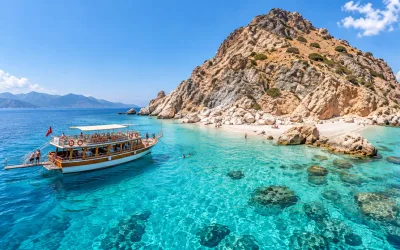
Compare all three networks for the places you will visit, including any rural walks or coastal boat trips. Coverage, speed and price vary with the location, device and package; there is no single best operator for every traveller.
- Request the total price, including the SIM or eSIM, activation, taxes and the first package.
- Check data allowance, domestic calls, SMS and whether international calls are included or sold separately.
- Confirm when validity starts, when it ends, how top-ups work and whether renewal is automatic.
- Ask about hotspot use, any fair-use or speed limits, and the difference between the package expiry and the line's usable lifetime.
- Keep the receipt and support details. Test data and any required calls before leaving a shop.
Tourist prices and allowances change, so request a current written quote. Compare the package with your home roaming plan; a local line does not automatically prevent charges on a second active SIM.
Physical SIM or eSIM?
A physical SIM fits into a compatible card slot; an eSIM is a digital profile installed on a supported device, often through an operator app or QR code. Check your exact model, country version, network lock and the operator's compatibility list. Some phones have no physical slot; others cannot use eSIM.
Depending on the device, you may store several profiles and use two lines, but storage capacity and simultaneously active lines are different things. Set which line handles mobile data, calls and messages, and disable unwanted data roaming. Keep your original physical SIM safe if you remove it. An eSIM avoids an extra plastic card and cannot simply be taken out, but a lost phone still requires prompt account and line protection.
Local operators offer eSIM options, while Airalo, MobiMatter, Holafly and ETravelSim market travel packages. Some travel plans are data-only and do not supply a Turkish phone number or SMS. Access to some international eSIM services is restricted in Turkey: check purchase, installation, activation, top-up and support availability with the provider before travelling. Do not assume that an advertised package or “unlimited” label guarantees unrestricted use.
Cash, cards and ATM fees
Turkey's currency is the Turkish lira (TRY). Visa and Mastercard are commonly accepted at hotels, restaurants and larger shops, while American Express acceptance is more limited. Acceptance also depends on your issuing bank and country; confirm that your particular card works in Turkey. Keep some small lira notes for markets, tips and transport where cards are not accepted.
- Prefer a bank-branch ATM or another well-lit, monitored location. Check for tampering, shield your PIN and decline help from strangers.
- Read the ATM's withdrawal fee and your own bank's foreign-transaction and cash-withdrawal charges. Some machines dispense EUR or USD as well as lira, but availability varies.
- For a lira purchase or withdrawal, choosing TRY and declining the machine's conversion leaves conversion to your card issuer. Dynamic currency conversion into your home currency may include a markup; compare the displayed costs. Paying in TRY does not eliminate your bank's fees.
- Check the amount and currency before approving a payment. Save receipts, enable alerts and know how to freeze or report a lost card. Ask your bank whether a travel notification is needed.
Exchanging money and keeping a budget
Use a bank or authorised döviz exchange office. Compare the amount of lira you will actually receive after any commission, not just a large rate on a sign. Hotel exchange may be convenient, but compare its total cost too; avoid unsolicited street exchanges. USD, EUR and GBP are commonly exchanged, subject to each business's acceptance rules and opening hours.
Carry cash and cards separately, avoid carrying your whole budget, and track daily spending. Compare local transport-card options with your itinerary. Bargaining is common at some bazaars and souvenir stalls, not at every shop; agree the price and inspect the goods before buying.
A few checks before paying for travel services
Use licensed taxis, check the meter or confirmed booking terms, and review bar menus before ordering. Apps such as BiTaksi may help where available, but still check the vehicle and fare conditions. For excursions, verify the agency, professional guide credentials where relevant, inclusions and cancellation terms. Vigo Tours has operated since 2000. Compare the programmes on Vigo Tours by duration, transfers, included services and total price.
Follow local laws, avoid illegal drugs and respect mosque dress requirements and local customs. Choose food handled hygienically and safe drinking water. Keep valuables secure in crowds, check your travel insurance and save 112, the shared emergency number for ambulance, police and fire services. For non-emergency booking questions, use our contact page.