Turkey travel guide: practical advice before you go
A good trip to Turkey starts with a manageable route. Istanbul, Cappadocia and the Mediterranean coast offer very different experiences; trying to see the whole country in a short holiday leaves little time to enjoy any of them. Choose your priorities, allow for travel days and check the details that depend on your passport, destination and dates.
Entry documents and travel insurance
Visa rules depend on nationality, passport type and purpose. Check the Turkish Ministry of Foreign Affairs entry information for your circumstances, including passport validity and permitted stay. National-ID entry is available only to eligible travellers. Do not assume a tourist permission covers work, study or an extended stay.
Keep separate copies of your travel documents and your accommodation address. Copies are a backup, not a substitute for the original identification required by authorities. If a passport is lost, contact the police and your consulate about replacement and departure arrangements.
Compare insurance for medical costs, evacuation and planned activities. Ask your insurer about exclusions and payment arrangements; do not assume treatment is free. Check medicine requirements with the Turkish authorities before travelling, especially for controlled drugs. Keep prescriptions and original packaging. A clinician can advise on personal health preparation.
Safety and emergencies
Read your government’s current regional travel advice before finalising the route. Conditions vary, and demonstrations or security incidents can disrupt travel. Protect valuables in crowds, avoid unlicensed taxis and keep control of your drinks. Carry the required identification. For police, fire or ambulance emergencies, call 112.
Save your accommodation, insurer and consulate details offline. Know the building’s exits and follow official instructions during earthquakes, fires or severe weather. For unfamiliar evening journeys, organise the return trip before going out rather than relying on a stranger’s offer.
Money, cards and everyday costs
The currency is the Turkish lira, abbreviated TRY or TL. Compare the final exchange amount after fees at a bank or licensed exchange office. Carry some smaller notes for markets, small businesses and situations where a card terminal is unavailable. Ask about card acceptance before ordering or starting a journey.
At an ATM or payment terminal, read the currency-conversion offer and fees carefully. Paying in TRY leaves conversion to your card provider; compare this with the terminal’s offer and your bank’s charges. Keep your card in sight and retain receipts. Build your budget from current accommodation, transport and ticket quotes, with a reserve for changes.
Tipping is a personal choice rather than a fixed daily expense. Check whether the bill includes a service charge before adding anything. Bargaining can be appropriate at a bazaar, but not at every shop; supermarkets, pharmacies and chain stores generally use marked prices.
When to travel and what to pack
Spring and autumn often suit walking and archaeological visits. Summer on the Aegean and Mediterranean coasts can be very hot, while inland and eastern regions can have severe winter conditions. The Black Sea coast and highlands need a different packing plan from Antalya. Check the local forecast, not a single national temperature.
Bring comfortable walking shoes, sun protection and layers for evenings or altitude. For mosques, pack clothing that covers shoulders and legs and a head covering where required. Turkey uses 230 V / 50 Hz electricity and type C/F plugs. Check the plug shape and electrical rating of your devices before travelling; a plug adapter does not convert voltage. Download maps, tickets and key addresses for offline use.
Getting around cities and between regions
Public transport, taxis and driving
Istanbul has metro, tram, bus, metrobus and ferry networks; check Istanbulkart and the relevant operator’s current payment rules. Ankara has metro and buses, İzmir also has İzban and trams, and Antalya has tram and bus services. Plan the last connection back as well as the outward journey. Accessibility and lift availability should be checked for the exact station.
Use a registered taxi or an established booking service, confirm the fare basis and ask for a receipt. Vehicle colours and app coverage are not uniform nationwide. Book a suitable child seat or accessible vehicle explicitly; neither should be assumed. Bicycle hire is useful only where the route, traffic and available equipment suit your experience.
Before renting a car, ask the company which licence and translations it accepts, its age and driving-experience requirements, deposit, insurance excess, toll arrangements and one-way fees. Drive on the right and follow posted limits. Mountain roads, winter conditions and dense city traffic need additional planning.
Flights, trains, coaches and ferries
Compare total door-to-door time rather than the flight alone. For Cappadocia, check whether the booking uses Kayseri or Nevşehir and include the onward transfer. Confirm baggage allowances and the exact departure airport; Istanbul’s airports are not interchangeable.
High-speed trains are an option on corridors linking Istanbul, Ankara and Konya, while coaches cover many places outside the rail network. Check the departure station or otogar, seat selection, luggage terms and any onward shuttle separately. Wi-Fi, refreshments and city transfers are not guaranteed on every service.
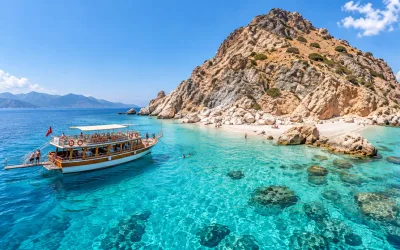
Ferries can be practical in Istanbul and on selected coastal routes. International services, such as Bodrum–Kos when operating, require the appropriate entry documents for the destination as well as return eligibility. Weather, season and port location matter. A gulet holiday from Bodrum, Marmaris or Fethiye is a different product from a public ferry.
Choosing accommodation
Compare hotels, pensions, hostels, apartments and serviced residences against the same essentials: exact location, recent reviews, cancellation terms, taxes, deposits and what the quoted price includes. Breakfast, beach access, air conditioning, parking and airport transport should be confirmed rather than inferred from the property category.
For families, ask about room layout, pool supervision and children’s-club age limits. For pets, obtain written confirmation of size restrictions, permitted areas and charges. Travellers needing step-free access should ask for specific measurements, bathroom details and the route from the entrance to the room. “Accessible” is not a complete description.
Short-term rental accommodation is regulated; check the property’s applicable authorisation and booking terms. A longer rental does not itself grant a right to remain in Turkey. Cave and stone accommodation in Cappadocia, pensions in Kaş or Ayvalık, and smaller hotels in Alaçatı or Bozcaada offer different settings from large coastal resorts.
For camping around Olympos, Kabak, Yedigöller or Kaz Dağları, use authorised sites and check local access and fire restrictions. Kabak is near Fethiye in Muğla. Do not assume a beach or national park permits wild camping or an open fire.
Food, drinks and dietary needs
Try regional dishes rather than ordering the same meal everywhere. Adana, Urfa, İskender and şiş kebabs differ in preparation. Pide, lahmacun and börek are useful bakery choices; mantı are small dumplings. Meze might include hummus, haydari, aubergine salad and spicy ezme. Fish choices include lüfer and hamsi, the latter being anchovies.
Vegetable dishes are not automatically vegan: soups, beans and rice can contain stock, meat or butter. Ask about ingredients in mercimek çorbası, kuru fasulye, nohutlu pilav, dolma and sarma. Meatless çiğ köfte, olive-oil artichokes and barbunya pilaki may suit a plant-based meal when their preparation is confirmed. If halal certification matters to you, ask for it rather than assuming every restaurant is certified.
Simit, balık ekmek, döner and midye dolma are familiar street foods; kokoreç contains offal. Choose food handled and stored appropriately. Explain allergies clearly, including cross-contact concerns, and do not rely solely on a translated dish name. Use drinking water from a source you can trust and follow local advisories.
For sweets, compare baklava, künefe, revani and şekerpare with milk-based kazandibi, sütlaç and muhallebi. Traditional tavukgöğsü contains chicken. Maraş dondurması has a distinctive chewy texture. Turkish coffee is prepared in a cezve: order sade for no sugar, az şekerli for lightly sweet, orta for medium or şekerli for sweet. Tea commonly arrives in a small glass; refills are not automatically free. Alcohol service varies by establishment.
Regions and sights worth building a route around
- Istanbul: Hagia Sophia Mosque, the Blue Mosque, Topkapı and Dolmabahçe palaces, Galata Tower, the Grand Bazaar and the Bosphorus. Check visitor arrangements for worship sites separately from museum tickets.
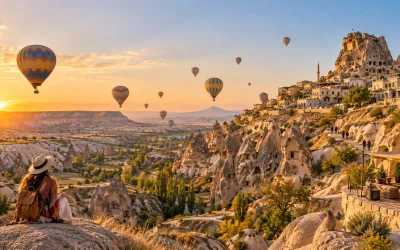
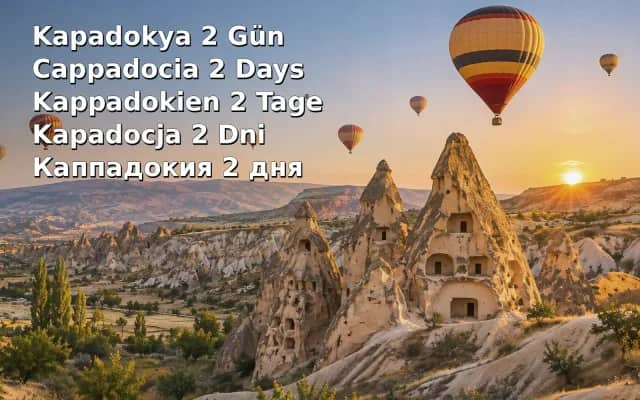
- Cappadocia: Göreme’s rock-cut churches, Derinkuyu and Kaymaklı underground cities, Uçhisar and valley walks. Balloon flights depend on weather and operational approval; allow flexibility. Underground passages and uneven paths may not suit every visitor.
- Pamukkale and Hierapolis: combine travertine views with the archaeological site. Follow designated walking areas and confirm current pool access rather than assuming swimming is included.
- Ephesus and Selçuk: the Library of Celsus and Great Theatre are highlights of the archaeological site; the Temple of Artemis remains are a separate stop near Selçuk. A train to Selçuk is not a train to the entrance.
- Antalya province: Konyaaltı and Lara are city-coast options; Kaputaş, Patara, Olympos and Çıralı require separate travel planning. Observe sea conditions and turtle-nesting restrictions.
- Bodrum: compare waterfront evenings, Bar Street and current venue programmes rather than assuming a famous club name still operates.
- Eastern and southeastern routes: Nemrut near Kahta, Göbeklitepe near Şanlıurfa and Gaziantep’s Zeugma Mosaic Museum reward dedicated itineraries. Check regional advice, access and weather before setting out.
- Black Sea and historic towns: Ayder, Gito, Pokut, Uzungöl and Sümela have mountain-weather and road considerations. Safranbolu offers a different visit centred on historic urban architecture.
- Winter trips: compare Uludağ, Palandöken, Erciyes, Sarıkamış and the Kartalkaya area against current resort, accommodation and lift conditions, not a guaranteed snow calendar.
For museum-focused journeys, consider Istanbul’s archaeology collections, the Rahmi M. Koç museums and Konya’s Mevlana Museum. Check the institution’s own opening information, closures and ticket eligibility.
Culture, festivals and everyday courtesy
At mosques, follow the posted clothing and footwear rules, avoid interrupting prayer and ask before photographing people. Respect no-photography signs and security restrictions. Smoking is prohibited in indoor public places and on public transport; follow signs for any outdoor restrictions. During Ramadan, restaurant hours and evening demand can change. A polite refusal of tea or an invitation is fine; hospitality does not create an obligation to buy.
A hammam visit may include a warm room, kese scrub and foam wash. Ask about the package, privacy, clothing and separate or mixed sessions before booking. Çemberlitaş, Cağaloğlu and Kılıç Ali Paşa are names to research in Istanbul; seek personal medical advice if heat or massage may be unsuitable for you.
Festival ideas include Kırkpınar in Edirne, Şeb-i Arus in Konya, Hıdırellez celebrations, Istanbul and Bozcaada jazz events, Aspendos opera and ballet, and gastronomy events in Gaziantep. Consult the organiser’s programme for the actual year. Folk traditions such as halay, horon and zeybek differ from a Mevlevi sema ceremony, which has religious significance.
Shopping, souvenirs and customs
For browsing, compare Istanbul’s Grand Bazaar, Spice Bazaar, Kadıköy and Mahmutpaşa with İzmir’s Kemeraltı and Gaziantep’s Elmacı market. Çukurcuma and Ankara’s Samanpazarı are associated with antiques. Modern shopping alternatives include İstinye Park, Zorlu Center and Mall of Istanbul; Ankamall and Panora; Forum Bornova and Optimum; TerraCity and MarkAntalya. Check current shops and hours.
Carpets and kilims, ceramics, copperwork, leather, spices, lokum and dried fruit can make useful souvenirs. Hereke, Uşak, Konya, Bergama and Milas refer to different carpet traditions, not a guarantee of any item’s age or authenticity. Ask about material, origin, receipt, shipping and returns before paying.
Protected cultural objects cannot simply be exported because a seller says they are young enough. Obtain competent museum/customs guidance before buying an antique for export. Check both Turkish rules and your destination’s allowances for cash, alcohol, tobacco, food and other goods; there is no single worldwide allowance. Avoid counterfeit goods.
Phones, language and a final checklist
Compare roaming with current Turkcell, Vodafone and Türk Telekom packages. Ask about identification, validity, renewal and coverage along your route. Check eSIM service access before arrival. For longer stays, consult BTK about imported-phone registration and eligibility rather than relying on a simple stay-length rule.
Turkish is the official language. English and other languages are used in some visitor-facing businesses, but not everywhere. Useful phrases include merhaba (hello), teşekkür ederim (thank you), lütfen (please), hesap lütfen (the bill, please), ne kadar? (how much?), yardım edin! (help!) and doktora ihtiyacım var (I need a doctor).
Turkey uses UTC+3 throughout the year. Check local departure times on your tickets rather than applying a fixed time difference from home. Confirm holiday opening hours, pharmacy access and parcel rules with PTT or your chosen courier. Before leaving, make sure your documents, insurance contact, transfers, first-night accommodation and offline maps are ready.
Tours and regional activities
- Istanbul’s top attractions and daily tours
- Explore Cappadocia Tours & Activities
- Ephesus day trip from Bodrum
- Ephesus day trip from Kuşadası
- Antalya's top daily tours and activities
Related travel guides
- Essential SIM Card and Money Tips for Your Trip to Turkey
- Safe Travel Tips in Turkey
- 15 Essential Tips Every Traveler Should Know Before Visiting Turkey