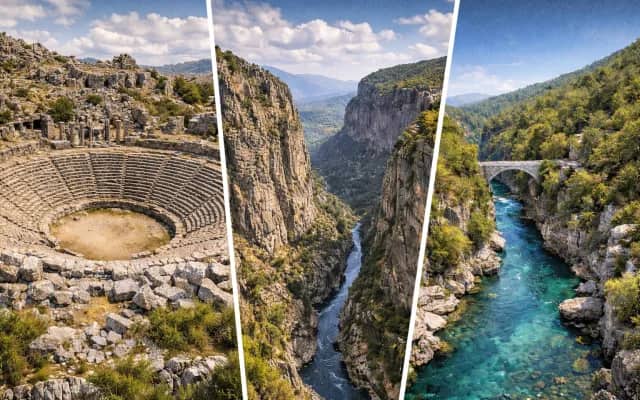
Perge Aspendos and Side Where Stone Remembers Time

The Memory of Stone: Perge, Aspendos and Side — Echoes of Time

Part I: Perge – Time Flowing Through Stone Streets

A Silent Witness of Anatolia

Anatolia is not merely a land; it is a vast memory shaped by human footsteps over thousands of years. One of the clearest pages of this memory is Perge Ancient City. Rising from the wide plains of Antalya, where the wind bends wheat fields with quiet persistence, Perge does not speak loudly. It whispers. And for those who listen carefully, these whispers are stronger than the noise of empires.

Perge was born in the heart of Pamphylia. Its origins are wrapped in legend, often traced back to Achaean heroes arriving after the Trojan War. Yet what truly defines Perge is not myth, but order carved into stone. This city did not grow randomly; it was planned, measured, and shaped by intention, preserving its structure across centuries.

Crossing the City Gates

Entering Perge means passing through monumental city gates that serve more than defensive purposes. These gates establish a threshold between the ordinary world and a realm shaped by history. Once inside, you are no longer a simple visitor—you become a guest of time itself.

Hellenistic towers merge seamlessly with Roman courtyards added later. Despite centuries of change, the city maintains architectural harmony. Time here does not clash with itself; each era builds respectfully upon the last.

The Colonnaded Street and the Memory of Water

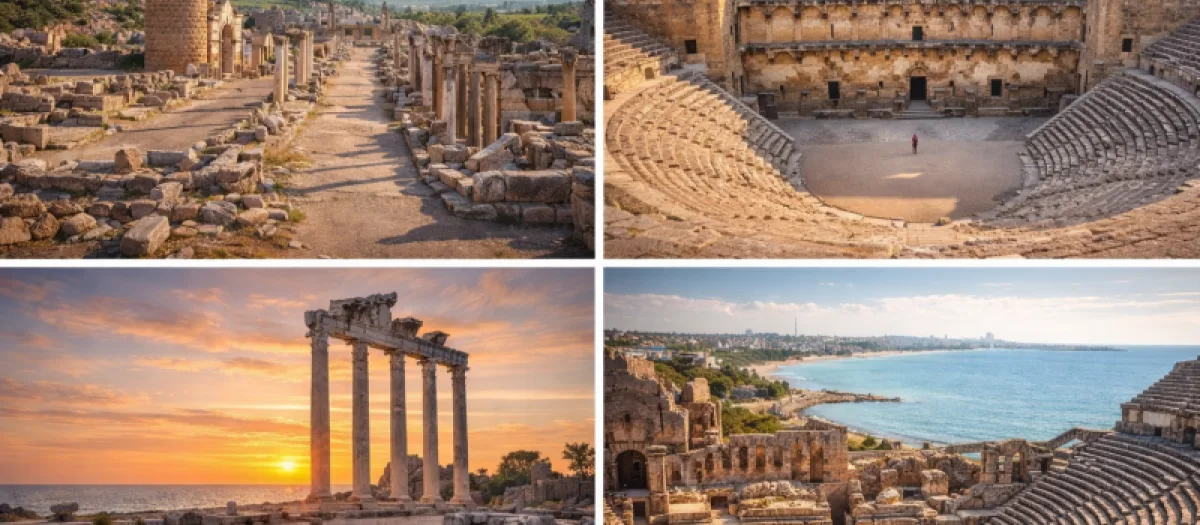
At the heart of Perge lies its north–south colonnaded street, the city’s main artery. This was not just a road, but the backbone of social life, trade, and public interaction. A water channel runs through its center, bringing freshness and rhythm to the city.

Water was carried from the mountains, a clear sign of advanced Roman engineering. In the ancient world, water symbolized power. Perge possessed this power quietly yet effectively. Even today, traces of water remain in the stone channels—moss, erosion, and cracks telling stories of continuous flow.

Walking along this street, you do not step only on stone. You walk over echoes of footsteps—merchants, soldiers, philosophers, and priests who once shared this same path.

The Theatre: Silence of the Crowd

Perge’s theatre is one of the most impressive structures of the Pamphylian region. With a capacity of nearly 15,000 spectators, it was more than an entertainment venue—it was the stage of collective consciousness.

The reliefs decorating the stage building are striking: Dionysus, dancing figures, mythological scenes. Stone becomes a storyteller here. Sitting on the worn stone seats today, you hear no sound—yet the silence is full. Applause, cries, and laughter linger invisibly in the air.

The Stadium: Architecture Dedicated to the Body

The stadium of Perge is among the best-preserved in the ancient world. Designed for nearly 12,000 spectators, it celebrated physical strength, competition, and discipline. Here, the human body was not merely athletic—it was sacred.

Its rhythmic arches reflect movement and breath. Each shadow mirrors a stride, each curve a heartbeat. Sport in Perge was not only contest, but ceremony.

The Presence of Women in Perge

One of the most distinctive aspects of Perge is the visible role of women in public life. Inscriptions and statue bases reveal women as benefactors, leaders, and respected figures. The most prominent example is Plancia Magna.

She restored monumental city gates and shaped the city’s identity through architecture and civic vision. Her legacy proves that Perge was built not only with stone, but with social awareness.

A Balance Preserved in Time

Perge was not destroyed—it was abandoned. And this abandonment granted it protection. Nature slowly reclaimed the city without erasing it. What remains today is not sorrow, but balance.

Perge reminds us of a time when humans lived in harmony with water, stone, body, and land. Quiet yet profound. Modest yet powerful.

Part II: Aspendos – Where Sound Becomes Stone

Power Born Beside a River

Aspendos is not an ordinary ancient city rising from a hill. It is a center of power shaped by the presence of the Köprüçay River, known in antiquity as Eurymedon. This river carried more than water—it carried fertility, trade, and strategic dominance. Aspendos grew rich not because of its soil, but because of its position.

As one of the wealthiest cities of Pamphylia, Aspendos was among the few that minted its own coins, a clear sign of economic and political autonomy. At first glance the city may appear restrained, but beneath this calm surface lies strong administration, precise organization, and advanced engineering knowledge.

A City Defined by Its Theatre

When Aspendos is mentioned, one structure dominates memory: its theatre. This is not merely a building within the city—it is the city’s voice. Constructed during the reign of Emperor Marcus Aurelius by the architect Zenon, the theatre stands today as the best-preserved Roman theatre in the ancient world.

Approaching it, one feels small. The scale exceeds ordinary human limits, yet it never overwhelms. Every stone knows its place. Grandeur here is disciplined, not chaotic.

The Miracle of Acoustics

What makes the Aspendos Theatre truly legendary is its acoustic perfection. A whisper spoken at the center of the stage can be heard clearly at the highest rows. This is no coincidence. It is the result of precise calculation, architectural foresight, and mastery of physics.

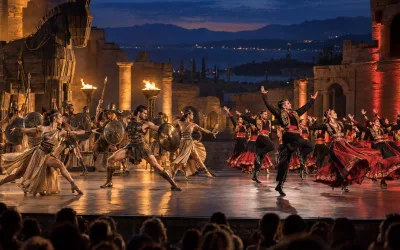
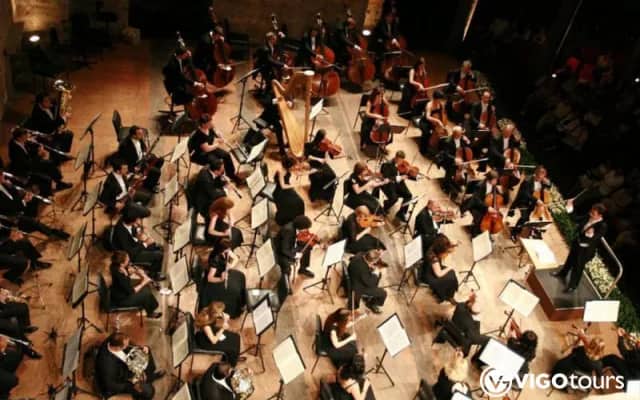
Sound does not disappear here. Stone captures it, guides it, and releases it intact. Even silence echoes. That is why modern concerts and operas can still be performed in this theatre—because its knowledge has defeated time.

The Stage Building: Architecture of Authority

The stage building is not a background; it is a statement of power. Statues of emperors, niches dedicated to gods, columns rising with authority—all were designed to remind the audience of Roman dominance.

This stage did not present only plays; it presented ideology. Rome ruled not only with swords, but with art. In Aspendos, political authority was carved into stone.

Arches, Passages, and the Flow of People

The interior structure of the theatre reveals a deep understanding of human movement. Corridors, stairways, and vaulted passages allowed thousands to enter and exit smoothly. There was no panic, no disorder.

This is the essence of Roman engineering: architecture that disciplines crowds. Even human behavior was calculated. Aspendos is not only beautiful—it is intelligent.

Aqueducts: The Silent Achievement

Beyond the theatre, Aspendos displays another masterpiece—its aqueduct system. Stretching for kilometers, these structures supplied the city with water using advanced techniques, including the rare inverted siphon system.

Water here was more than necessity; it was the guarantee of continuity. Baths, fountains, and homes depended on this invisible network. The aqueducts still standing today are monuments to unseen labor and enduring knowledge.

The Language of Strength

Aspendos is not gentle like Perge, nor romantic like Side. It is powerful. It speaks clearly and firmly. Its architecture values discipline over poetry—but this discipline includes humanity rather than excluding it.

Walking through Aspendos inspires admiration. The city does not boast. It simply shows what is possible when order and strength unite.

A Structure That Passed the Test of Time

Many ancient theatres were dismantled, their stones reused elsewhere. Aspendos survived. During the Seljuk period, it was restored and repurposed as a caravanserai because it remained functional and solid.

This continuity proves that Aspendos does not belong only to the past. It belongs to duration itself.

Part III: Side – Stones That Speak to the Sea

Waiting at the Edge of the Peninsula

Side is one of the rare places where a city belongs naturally to the sea. It was not built to face the land, but to gaze toward the horizon. Standing on the edge of a narrow peninsula, where waves patiently touch stone day after day, Side exists between two worlds. It is neither fully land nor fully sea. It is a moment suspended between both.

If Perge represents order and Aspendos embodies power, Side is the city of memory and solitude. Here, stones do not speak—they listen. The sea tells the story, and the wind completes it.

The Fate of a Harbor City

Side’s destiny was shaped by its harbor. In antiquity, it was one of the key ports of the Mediterranean, growing not only through goods but through cultures. Phoenicians, Greeks, Romans—all arrived, left traces, and continued their journeys.

For this reason, Side is not a single-layered city. It is built from overlapping times. Walking through its streets, one steps from Roman stone into Byzantine shadow within moments. Only the sea remains unchanged, the eternal witness of every era.

The Agora and the Silence of the Enslaved

At first glance, the agora of Side appears to be a standard commercial square. Yet it carries one of the city’s darkest histories. Side was infamous in antiquity for slave trade, and this agora stood at the center of that reality.

The stone pavement absorbed more than footsteps; it absorbed silence. Here, lives were sold alongside goods. Side’s poetic beauty does not conceal this truth—it deepens it. The city carries its elegance together with its pain.

The Theatre: Loneliness Carved in Stone

The theatre of Side does not compete with the grandeur of Aspendos. Its strength lies elsewhere—in emotion. Located close to the city center, it feels more enclosed, more inward-looking. It once hosted gladiatorial combats and wild animal shows, revealing the city’s harsher face.

Sitting among its tiers, one does not feel awe but reflection. Entertainment and cruelty blur here, forcing humanity to confront its own history.

Temples and the Sunset

Few images define Side more strongly than the Temples of Apollo and Athena standing beside the sea. Their columns facing the sunset summarize the ancient understanding of beauty.

Apollo represents light and order; Athena stands for wisdom and warfare. Their coexistence in Side is no coincidence. The city honors both reason and strength. Yet at sunset, even the gods fall silent. As the sun sinks into the sea, the temples dissolve into shadow, stone turning gold, and time slows.

Water and Life in Side

Side’s relationship with water lacks the grandeur of Aspendos but carries deeper necessity. Baths, fountains, and cisterns show how carefully fresh water was preserved, despite the city’s coastal location.

This balance reflects Side’s respect for nature. The sea is taken, but not consumed. The land provides, but is not exhausted. Side understands measure.

Christianity and a Quiet Transformation

Following the Roman era, Side gradually embraced Christianity. Temples became churches, agoras transformed into sacred spaces. This transition was not violent but adaptive.

Old and new beliefs coexist within the same stones. A single column may hold both pagan and Christian memory. Side thus becomes not merely an ancient city, but a place of transition.

Abandonment and Remaining with the Sea

Over time, Side lost its importance. The harbor silted up, trade declined, and people left. The city emptied—but it did not collapse. The sea remained.

Today, walking through Side brings a sense not of crowds, but of waiting. The stones do not expect return. They simply continue to exist.

Three Cities, One Memory

Perge, Aspendos, and Side are three faces of Pamphylia. One represents order, one strength, and one emotion. Together, they form a complete vision of ancient Anatolia.

These cities are not merely places to visit. They are mirrors reflecting humanity’s relationship with time. The memory of stone remains open—if one chooses not just to look, but to see.

Part IV: Conclusion – A Journey from Antalya Through Time

Departing from Antalya, Entering Memory

A tour from Antalya to Perge, Aspendos, and Side is not a simple excursion measured in kilometers. It is a passage through layers of time, where distance is defined not by roads but by centuries. The journey begins in the present, yet with every stop, time loosens its grip.

In Perge, the traveler encounters order—stone shaped by reason, water guided with precision, a city built on balance. In Aspendos, power reveals itself—not through noise, but through mastery. Stone learns to carry sound, architecture learns to command crowds, and engineering becomes a language that still speaks. By the time Side is reached, the journey slows. The sea appears, memory deepens, and history becomes reflective rather than declarative.

One Route, Three Civilizations

What makes this route exceptional is not the number of ancient cities, but the way they complete one another. Perge explains how people lived together. Aspendos shows how authority organized space and experience. Side reveals what remains when prosperity fades and nature reclaims its place.

Taken together, these cities form a narrative arc—birth, dominance, and quiet withdrawal. This is not a fragmented story, but a continuous one. The traveler does not simply observe ruins; they follow a human trajectory carved into stone.

From Knowledge to Experience

Guided through theatres, agoras, stadiums, temples, and water systems, the tour transforms information into experience. History is no longer abstract. It becomes tactile, audible, and emotional. The echo in Aspendos, the shadow in Side, the symmetry in Perge—each leaves a different imprint.

This is why the Perge, Aspendos, and Side tour from Antalya is not about seeing more, but about understanding deeper. It invites the visitor to listen to silence, to recognize intention in architecture, and to sense continuity beyond collapse.

A Route That Remains

When the day ends and the road returns to Antalya, something remains behind—not photographs, but awareness. The realization that civilizations do not vanish suddenly; they recede slowly, leaving behind order, strength, and memory.

For those who wish to experience this journey from Antalya with a carefully structured route that brings these three ancient cities together into a single narrative, detailed information can be found here:

https://vigotours.com/antalya-turkey/excursion-from-antalya-to-perge-aspendos-side

Some journeys end at their destination. Others continue quietly, long after the road is gone. This is one of them.

Sign In