• Home
  • Turkey Travel Guide

Turkey Travel Guide

Your Complete Guide to Visiting Turkey: Everything You Need to Know

Turkey bridges two continents and thousands of years of history. Ancient ruins stand beside modern cities, traditional bazaars neighbor beach resorts, and the food scene rivals anywhere in the Mediterranean. Here's what you need to know before you go.

When Should You Visit Turkey?

Best months: April–May and September–October

These shoulder seasons deliver ideal conditions—comfortable temperatures, smaller crowds, and better prices. Summer (June–August) brings peak season heat and tourist numbers, especially along the coast. Winter offers a different experience entirely.

Seasonal breakdown:

  • Spring (April–May): 15–25°C, wildflowers bloom, perfect for ruins and hiking
  • Summer (June–August): 28–35°C, beach season peaks, coastal towns get crowded
  • Fall (September–October): 18–28°C, sea stays warm, harvest season begins
  • Winter (November–March): 5–15°C, snow in Cappadocia, ski resorts open

Istanbul stays interesting year-round. Cappadocia looks magical under snow. Coastal areas essentially close for winter except major resort towns.

Visa and Entry Requirements

Most nationalities need an e-visa. The process takes 10 minutes online.

E-visa requirements:

  • Valid passport (6 months beyond entry date)
  • $50 fee (varies by nationality)
  • Apply at evisa.gov.tr
  • Print your approval—immigration sometimes requests paper copies

Visa-free entry: Most EU citizens get 90 days without a visa. Check current requirements for your specific passport.

Turkey stamps passports on entry and exit. Keep your entry stamp—you'll need it when leaving.

Getting Around Turkey

Flying Domestically

Turkey spans 1,600 km east to west. Flying saves serious time.

Major routes and typical prices:

  • Istanbul–Antalya: 1 hour 15 min, from $40
  • Istanbul–Cappadocia (Kayseri): 1 hour 30 min, from $35 (Cappadocia daily tours)
  • Istanbul–İzmir: 1 hour, from $30

Turkish Airlines, Pegasus Airlines, and AnadoluJet compete heavily. Book 2–3 weeks ahead for best fares. Baggage policies vary—budget carriers charge for checked bags.

Intercity Buses

Turkish bus companies operate modern fleets with service attendants.

What to expect:

  • Free WiFi and charging ports standard
  • Complimentary tea, coffee, snacks
  • Regular rest stops every 2–3 hours
  • Assigned seating—book online in advance

Top companies: Metro Turizm, Kamilkoç, Pamukkale. Overnight buses work well for longer routes—you save a hotel night and arrive refreshed enough to start sightseeing.

Trains and Urban Transport

The high-speed train (YHT) between Istanbul and Ankara runs efficiently. Other routes lag behind buses for speed and frequency. (Daily tours in Istanbul)

City transportation:

  • Get an İstanbulkart for all Istanbul public transit
  • Metros operate in Istanbul, Ankara, İzmir, Bursa
  • Trams serve historic districts efficiently
  • Apps: BiTaksi, Uber (limited cities)

Taxis use meters in major cities. Confirm the driver starts it. Some tourist areas see inflated fares—know rough distances beforehand.

Where to Go: Top Regions

Istanbul — 4 to 5 Days Minimum

The only city on two continents needs time.

European side highlights:

  • Sultanahmet: Hagia Sophia, Blue Mosque, Topkapı Palace, Basilica Cistern (Ticket for Hagia Sophia)
  • Beyoğlu: İstiklal Avenue, Galata Tower, rooftop bars
  • Karaköy: Street art, design shops, waterfront cafes

Asian side highlights:

Where to stay:

  • Sultanahmet—convenient for major sites, tourist-heavy
  • Karaköy—trendy, central, better food scene
  • Beşiktaş—residential feel, excellent transport connections

Cappadocia — 3 Days

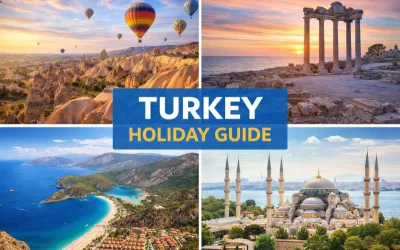
Famous for hot air balloons and fairy chimneys. The landscape delivers.

Must-do experiences:

  • Hot air balloon ride at sunrise ($150–250) - Cappadocia Hot Air Balloon Ride at Sunrise
  • Göreme Open Air Museum cave churches
  • Underground cities (Derinkuyu or Kaymaklı)
  • Valley hikes (Rose Valley, Love Valley)

Base towns:

  • Göreme—central, most balloon companies, cave hotels
  • Ürgüp—quieter, slightly upscale, good restaurants
  • Uçhisar—castle views, fewer tourists

Book balloon rides 2–3 days ahead. Weather cancellations happen—build flexibility into your schedule.

Aegean Coast — 3 to 4 Days

Ancient ruins meet beach culture.

Key destinations:

  • Ephesus—best-preserved Roman city in the eastern Mediterranean
  • Pamukkale—white travertine terraces, thermal pools
  • İzmir—authentic urban Turkey, seafood, less touristy
  • Bodrum—upscale resort town, yacht culture, nightlife - Full-Day Ephesus Trip from Bodrum
  • Çeşme/Alaçatı—windsurfing, boutique hotels, Aegean charm

The Lycian Way long-distance trail runs 540 km along the coast. Day hikes work without committing to the full route.

Mediterranean Coast — 3 to 5 Days

Beach resorts and ancient cities line the Turkish Riviera.

Top spots:

Summer heat peaks here. Spring and fall offer better conditions for exploring ruins without melting.

Money and Costs in Turkey

Currency: Turkish Lira (TRY)
Exchange rate fluctuates—check current rates before traveling

Daily Budget Estimates

Budget Level Daily Cost Includes
Budget $40–60 Hostels, street food, public transport, free sites
Mid-range $100–150 3-star hotels, restaurant meals, guided tours, admissions
Luxury $250+ 4–5 star hotels, fine dining, private tours, premium experiences

Money Tips

Exchange currency wisely:

  • Bring euros or US dollars
  • Exchange at local döviz offices—better rates than airports or hotels
  • ATMs work but may charge fees—check your bank's foreign transaction rates

Using cards:

  • Widely accepted in cities, tourist areas, hotels, restaurants
  • Cash needed for: markets, street food, taxis, small towns, tips
  • Notify your bank before traveling

Bargaining culture:

  • Expected in bazaars and markets
  • Start at 50–60% of asking price
  • Fixed-price shops (labeled "Fiyat Sabit") don't negotiate
  • Restaurants and hotels have set prices

Inflation affects Turkey periodically. Prices listed online may shift—budget extra cushion.

Money Exchange and ATM Safety

Currency Exchange Tips:

  • Avoid airport exchange offices — rates are 10–15% worse than city centers
  • Use official exchange offices (döviz) with clearly displayed rates
  • Compare rates at 2–3 offices before exchanging
  • Count your money before leaving the counter
  • Keep exchange receipts for potential disputes

ATM Withdrawal Safety:

  • Use ATMs inside banks during business hours when possible
  • Cover the keypad when entering your PIN
  • Check for card skimmers or unusual attachments on the ATM
  • Decline "dynamic currency conversion" (DCC) — always choose to pay in Turkish Lira, not your home currency
  • Your bank's exchange rate is almost always better than the ATM's conversion offer
  • Withdraw larger amounts less frequently to minimize ATM fees
  • Notify your bank before traveling to avoid card blocks

Counterfeit Money Warning: Turkish Lira counterfeits exist, though less common than in some countries. Here's how to protect yourself:

How to spot fake lira:

  • Feel the texture — genuine notes have raised print you can feel
  • Check the watermark — hold notes up to light to see Atatürk's portrait
  • Look for the security thread — a thin metallic strip running through the note
  • Tilt the note — the hologram should change color and show clear images
  • Check the serial numbers — they should be evenly printed and aligned

High-risk situations:

  • Small shops in very touristy areas (especially Sultanahmet)
  • Street money changers (illegal and high counterfeit risk)
  • Receiving change from taxi drivers at night
  • Large denomination notes (200 TRY and 100 TRY) are more commonly counterfeited

If you receive a suspicious note:

  • Politely refuse it immediately and ask for another
  • Don't argue extensively — just request a different note
  • If already left the location, banks will confiscate counterfeits without compensation
  • Report to police if you believe someone deliberately gave you fake money

Safest practices:

  • Exchange at banks (guaranteed genuine currency)
  • Use ATMs attached to major banks
  • Get smaller denominations when possible (20 TRY, 50 TRY safer)
  • Check all notes immediately upon receiving them

Turkish Food: What to Eat

Turkish cuisine goes far beyond döner kebab.

Essential Dishes

Breakfast (Kahvaltı): Traditional spread includes cheeses, olives, tomatoes, cucumbers, eggs, honey, jams, simit bread, menemen (scrambled eggs with tomatoes and peppers). Hotel Turkish breakfast beats continental every time.

Main dishes:

  • İskender kebap—thinly sliced lamb over bread with tomato sauce and yogurt
  • Mantı—Turkish dumplings with garlic yogurt
  • Pide—Turkish flatbread with various toppings
  • Testi kebabı—meat cooked in sealed clay pot
  • Lahmacun—thin crispy flatbread with minced meat

Mezze and sides:

  • Hummus, haydari, muhammara, ezme
  • Börek—savory pastries, perfect for breakfast
  • Midye dolma—stuffed mussels from street vendors

Desserts:

  • Baklava—layers of phyllo, nuts, syrup
  • Künefe—shredded phyllo with cheese, soaked in syrup
  • Turkish delight (lokum)—various flavors beyond rose

Drinks:

  • Çay (tea)—served constantly in tulip-shaped glasses
  • Turkish coffee—thick, strong, drink slowly
  • Ayran—salted yogurt drink
  • Rakı—anise-flavored spirit, "lion's milk" when mixed with water

Where to Eat

Lokanta: Home-style restaurants with pre-cooked dishes displayed. Point to what looks good. Cheap and authentic.

Meyhane: Traditional taverns serving mezze and rakı. Social dining experience.

Ocakbaşı: Grill restaurants where chefs cook over charcoal. Watch your kebabs being prepared.

Street food stays generally safe. Choose vendors with high turnover and freshly cooked items.

Cultural Etiquette and Customs

Mosque Visits

Dress code required:

  • Cover shoulders and knees (both men and women)
  • Women need headscarves—usually provided at entrance
  • Remove shoes before entering
  • No photos of people praying without permission

Major mosques stay open to visitors except during prayer times. Visit between prayers for easier access.

Social Customs

Turkish hospitality runs deep. Locals often invite tourists for tea—it's genuine friendliness, not always a sales tactic.

Basic etiquette:

  • Remove shoes when entering homes and some businesses
  • Greet with "Merhaba" (hello) and "Teşekkür ederim" (thank you)
  • Accept tea offers—refusing repeatedly seems rude
  • Elders receive respect—give up seats, let them go first

Tipping standards:

  • Restaurants: 10% (check if service charge included)
  • Taxis: Round up to nearest lira
  • Hotel staff: 5–10 TRY per service
  • Hammams: 15–20% for attendant

Dress Codes Beyond Mosques

Istanbul and major cities: Western clothing normal. Mix of conservative and liberal dress.

Coastal resorts: Beach wear standard—bikinis, shorts, tank tops all fine.

Rural areas: More conservative—cover shoulders and knees shows respect.

General rule: Dress slightly more modest than you would at home. You'll blend better and avoid unwanted attention.

Ramadan Considerations

Turkey remains secular. Restaurants and cafes stay open during Ramadan.

During fasting hours:

  • Some restaurants close until sunset
  • Eating publicly while walking shows insensitivity
  • Many Turks don't fast—you'll see locals eating
  • Tourist areas operate normally

Iftar (breaking fast) meals at sunset create special atmosphere. Many hotels and restaurants offer traditional iftar buffets.

Safety and Health Information

General Safety

Turkey rates safe for tourists overall. Standard travel precautions apply.

Common concerns:

  • Petty theft in crowded tourist spots—watch belongings in bazaars and transit
  • Taxi scams—use apps when possible, confirm meter runs
  • Aggressive carpet sellers—firm "no thanks" works
  • Earthquake risk—Turkey sits on fault lines, buildings have varying standards

Areas to avoid: Southeast region near Syrian border sees occasional conflict. Most tourist destinations in western and central Turkey remain unaffected.

For women travelers: Solo female travel generally goes smoothly. Some unwanted attention happens, especially in touristy areas.

Handling harassment:

  • Ignore catcalls—responding escalates
  • Dress modestly outside resort areas
  • Trust instincts—remove yourself from uncomfortable situations
  • Hotel staff and shopkeepers usually help if you need assistance

Health and Medical

Water: Tap water technically safe in cities. Most people drink bottled. Brush teeth with tap water fine.

Healthcare: Good quality, especially private hospitals in major cities. Travel insurance recommended.

Pharmacies (Eczane): Widely available. Pharmacists often speak English and advise on minor issues. Many medications available without prescription.

Common issues:

  • Stomach troubles from rich food—adjust gradually
  • Sun exposure—Mediterranean sun hits hard
  • Dehydration—drink water constantly in summer

Vaccinations not required for Turkey. Routine vaccines should be current.

Staying Connected

Mobile Phone and Internet

Tourist SIM cards available:

  • Turkcell—best coverage nationwide
  • Vodafone—good in cities
  • Türk Telekom—budget option

Typical packages:

  • 20GB data + calls: ~$20 for 30 days
  • Available at airport or phone shops in cities
  • Bring passport for registration

WiFi availability:

  • Hotels, restaurants, cafes provide free WiFi
  • Quality varies—mobile data more reliable
  • Most tourist areas have good coverage

Turkey requires IMEI registration for foreign phones after 120 days. Short visits unaffected.

Language Basics

Essential Turkish phrases:

  • Merhaba—Hello
  • Teşekkür ederim—Thank you
  • Lütfen—Please
  • Evet/Hayır—Yes/No
  • Affedersiniz—Excuse me
  • Ne kadar?—How much?
  • Hesap lütfen—Check please

English proficiency:

  • Tourist areas: Good
  • Major cities with young people: Moderate
  • Rural areas and older generations: Limited

Translation apps help significantly. Google Translate's camera function works for menus and signs.

Shopping in Turkey

What to Buy

Traditional items:

  • Turkish carpets and kilims—research before buying, significant price range
  • Ceramics from Kütahya or İznik—hand-painted tiles and bowls
  • Turkish delight (lokum)—higher quality than export versions
  • Spices from Spice Bazaar—sumac, pul biber, za'atar
  • Evil eye charms (nazar boncuğu)—believed to ward off bad luck
  • Leather goods—jackets, bags, shoes
  • Turkish tea and coffee

Where to shop:

  • Grand Bazaar (Istanbul)—overwhelming, expect aggressive sales tactics
  • Spice Bazaar (Istanbul)—spices, teas, dried fruits, Turkish delight
  • Local markets—weekly neighborhood markets in every city
  • Arasta Bazaar (Istanbul)—smaller, less intense than Grand Bazaar

Bargaining Strategy

Haggling expected in:

  • Bazaars and markets
  • Carpet shops
  • Souvenir stores
  • Street vendors

Fixed prices in:

  • Supermarkets and chain stores
  • Restaurants (menus show prices)
  • Hotels
  • Shops with "Fiyat Sabit" signs

How to haggle:

  1. Show interest but not excessive enthusiasm
  2. Ask the price
  3. Counter at 40–50% below asking price
  4. Negotiate upward slowly
  5. Be willing to walk away—sellers often call you back with better offers

Quality varies enormously in tourist areas. Research ahead for expensive items like carpets.

Beyond the Usual Tourist Trail

Safranbolu

UNESCO-listed Ottoman town with preserved wooden houses. Located northeast of Ankara, makes a good stopover between Istanbul and Cappadocia.

Highlights: Traditional architecture, local saffron products, slower pace

Time needed: 1–2 days

Pamukkale

White calcium travertine terraces with thermal pools. Ancient city of Hierapolis sits on top.

Best time: Sunrise or sunset to avoid crowds and harsh light

Combine with: Nearby Aphrodisias ruins (impressive stadium and sculptures)

Time needed: Half day to full day

Mount Nemrut

Giant stone heads of ancient gods sit on a remote mountaintop in southeastern Turkey.

Getting there: Requires planning—tour from Kahta or Malatya

Best for: Adventurous travelers willing to go off the beaten path

Time needed: 2 days including travel

Mardin

Stone city cascading down a hill overlooking Mesopotamian plains. Arab, Kurdish, and Assyrian influences blend.

Highlights: Unique architecture, ancient monasteries, authentic southeastern culture

Note: Remote location, further from typical tourist circuits

Time needed: 2–3 days

Amasya

Ottoman-era houses along the river, rock tombs carved into cliffs above. One of Turkey's most photogenic small cities.

Location: Central Black Sea region

Best for: Photography, Ottoman history, avoiding tourist crowds

Time needed: 1–2 days

Frequently Asked Questions

How many days do you need in Turkey?

Minimum 7–10 days covers Istanbul, Cappadocia, and one coastal area without rushing. Two weeks allows Istanbul, Cappadocia, Ephesus region, and Mediterranean coast comfortably. Three weeks adds Black Sea region, eastern Turkey, or deeper exploration of fewer areas.

Is Turkey expensive for tourists?

Mid-range travelers find good value compared to Western Europe. A comfortable day including 3-star hotel, restaurant meals, and activities costs $100–150 per person. Budget backpackers manage on $40–60 daily. Luxury travel costs less than equivalent experiences in neighboring Greece or Italy.

Do you need to speak Turkish to visit?

No. English works in tourist areas, hotels, restaurants, and with younger people in cities. Rural areas and older generations speak less English, but people generally try to help. Learning basic phrases earns goodwill and makes logistics smoother.

Can you drink alcohol in Turkey?

Yes. Turkey is secular and alcohol is widely available—beer, wine, and rakı (traditional anise spirit). Taxes make alcohol more expensive than in Europe. Some conservative neighborhoods have limited options, but tourist areas always have availability. Supermarkets sell alcohol except after 10 PM.

What is Turkish internet like?

Good in cities and tourist regions. Hotels, restaurants, and cafes offer free WiFi with varying quality. Tourist SIM cards provide reliable 4G/5G mobile data cheaply. Remote areas and mountains have spotty coverage.

Is street food safe in Turkey?

Generally yes, especially from busy vendors with high turnover. Fresh preparation matters more than appearance. Grilled items, simit, midye (if from reputable vendors), and gözleme are usually safe. Avoid items sitting out in heat for extended periods.

How much should you haggle in bazaars?

Start at 40–50% below the asking price in tourist bazaars and markets. The seller expects negotiation as part of the cultural exchange. Stay friendly—it's not confrontational. If they won't budge much, the initial price might already be reasonable. Know when to walk away.

What about earthquake safety?

Turkey sits on active fault lines. Modern buildings in major cities follow earthquake codes. Older structures vary significantly. Check hotel safety features if concerned. Keep shoes and essentials near your bed. Most visits happen without incident, but awareness helps.

When is Ramadan and how does it affect travel?

Ramadan dates shift 10–11 days earlier each year (follows lunar calendar). In 2026, Ramadan runs approximately March 1–29. Tourist areas operate normally. Some restaurants close during daylight fasting hours, especially outside major tourist zones. Hotels serve meals to guests. Iftar (sunset meal) creates special atmosphere worth experiencing.

Can you visit Turkey on a budget?

Yes. Hostels start around $10–15 per night. Street food and lokanta meals cost $3–7. Public transport is cheap. Free sites include mosques, some ruins, and walking neighborhoods. Budget travelers easily manage on $40–60 daily outside peak summer season.

Sign In