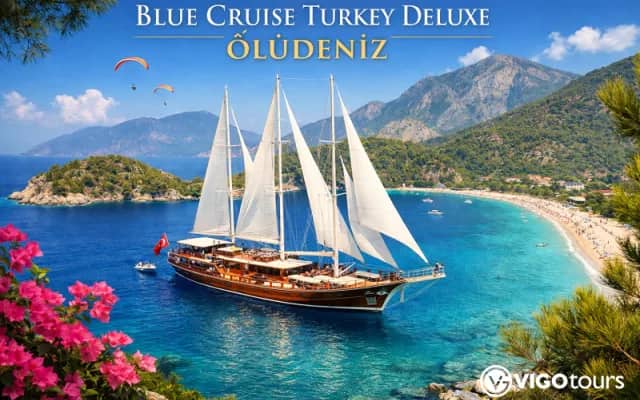
Blue Cruise Turkey Delux Oludeniz
Embarking on a Blue cruise aboard a Deluxe Gulet in Turkey from Fethiye to Oludeniz and Göcek for 7 nights and 8 days is truly a remarkable experienc…
Tours & Activities
Set sail on a gulet cruise from Fethiye, Turkey, and visit stunning Mediterranean destinations. Book your yacht charter for an unforgettable sailing experience.
Showing 9 results
The tours could not be loaded right now. Please try again.
Embarking on a Blue cruise aboard a Deluxe Gulet in Turkey from Fethiye to Oludeniz and Göcek for 7 nights and 8 days is truly a remarkable experienc…

Explore the 7-day blue voyage from Fethiye to Demre with pristine bays, ancient sites, crystal-clear waters and unforgettable sunsets along Turkey’s…

Fethiye and Gocek regions are the most interesting regions of Turkey Blue Cruise routes. The region's green, blue and natural beauties with a good co…

Fethiye and Göcek blue cruise tours offer great opportunities and pleasures for blue cruise lovers. Swimming in the magnificent bays and cute sandy b…
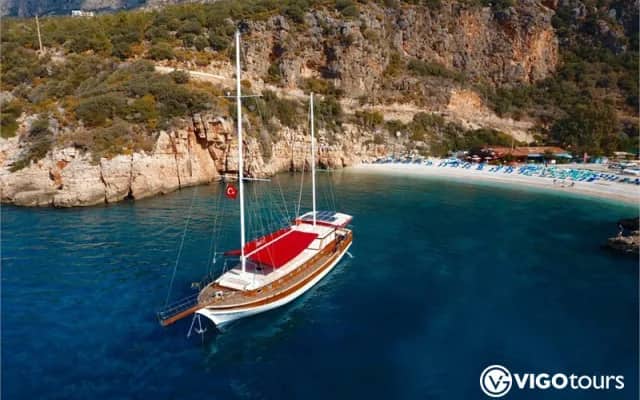
It would not be a lie to say that the most beautiful bays in the world are in this region. The most popular and most beautiful blue cruise routes in…
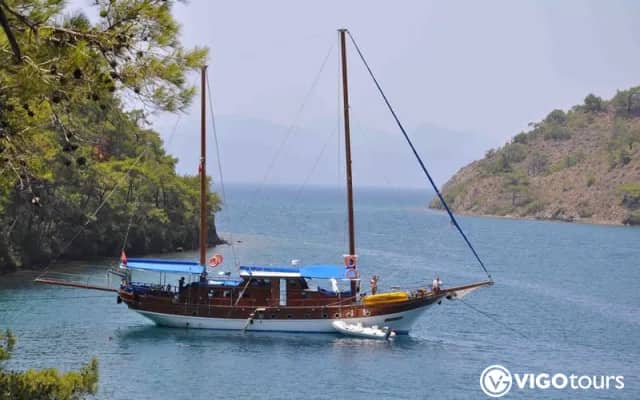
Enjoy a 3-night, 4-day blue cruise between Fethiye and Marmaris, discovering the stunning Turkish coastline. Explore idyllic bays, islands, and villa…

A relaxing 8-day cruise from Fethiye to Kekova and back, exploring hidden bays, ancient ruins, turquoise waters, and charming coastal towns along the…

4-day Blue Cruise from Fethiye to Olympos with bays, swimming, Oludeniz, Kas and Kekova. Relaxation and adventure along Turkey’s turquoise coast.

Sail from Fethiye to Bodrum on a luxurious cruise. Enjoy stunning views, delicious meals, and rich history for an unforgettable journey on the Turkis…
A Gulet Blue Voyage in Turkey is not just a boat trip — it is a traditional coastal journey known locally as the Mavi Yolculuk (Blue Cruise). This experience combines sailing, culture, nature, and history along Turkey’s southwestern coastline.
Sailing between Fethiye, Marmaris, Bodrum, Antalya, Olympos, and Kekova, travelers explore turquoise bays, ancient ruins, quiet fishing villages, and untouched coves that are often inaccessible by land. Whether you choose a private gulet charter or a cabin charter, the journey offers a balance of relaxation and discovery.
A gulet is a traditional wooden sailing yacht built primarily in the Bodrum region of Turkey. Modern gulets are designed for comfort and stability, featuring:
Private cabins (usually with en-suite bathrooms)
Indoor and outdoor dining areas
Sunbathing decks with cushions
Professional crew (captain, chef, deckhands)
Gulets range from economy class to ultra-luxury yachts, allowing travelers to choose according to their expectations and budget.
A Blue Cruise is a multi-day sailing itinerary along Turkey’s Mediterranean and Aegean coasts. Routes typically last:
4 days / 3 nights
7 days / 6 nights
8 days / 7 nights
The journey focuses on:
Swimming in crystal-clear bays
Snorkeling and relaxing
Exploring ancient Lycian and Roman ruins
Enjoying freshly prepared Turkish cuisine onboard
Unlike large cruise ships, gulet cruises offer an intimate and slow-travel experience.
If you do not have a private group, a cabin charter is the most practical option. Instead of renting the entire boat, you reserve a private cabin and share the yacht with other travelers.
You meet travelers from different countries, creating a friendly and cultural exchange environment.
You share the operational cost of the boat, making it significantly more budget-friendly.
Cabin charters follow fixed weekly routes, ensuring smooth organization.
Fethiye is one of the most popular departure points for Blue Cruises.
Butterfly Valley
Ölüdeniz (Blue Lagoon)
St. Nicholas Island
Ancient ruins along the Lycian coast
Ideal for shorter trips with a mix of swimming and history.
Scenic bays
Quiet anchor points
Relaxed swimming stops
Perfect for travelers seeking calm sailing and natural beauty.
Sunken City of Kekova
Simena (Kaleköy)
Ancient Lycian tombs
Secluded turquoise bays
A longer and more historically rich route.
Cabins are compact but comfortable. Most include:
Double or twin beds
Private bathroom
Storage space
Ventilation or air conditioning (depending on category)
Luxury gulets offer larger cabins and premium amenities.
Full-board service is standard. Expect:
Fresh Turkish breakfast
Cooked lunches
Three-course dinners
Seasonal vegetables and seafood
Drinks are usually charged separately.
A typical day includes:
Morning swim stop
Sailing to next bay
Lunch onboard
Afternoon relaxation
Evening anchorage in a scenic harbor
The rhythm is slow, relaxed, and nature-focused.
The sailing season runs from April to November.
June – August: Peak season, hot weather, calm seas
May & September: Ideal balance of warm weather and fewer crowds
October: Pleasant temperatures, quieter atmosphere
For travelers seeking a peaceful experience, shoulder season months are highly recommended.
A Gulet Blue Voyage is ideal for:
Couples seeking a romantic getaway
Solo travelers joining cabin charters
Friends looking for a relaxed adventure
Travelers interested in history and nature
People who prefer small-group experiences over large cruise ships
It may not be suitable for travelers looking for nightlife-focused trips or fast-paced itineraries.
Access to hidden bays unreachable by road
Authentic Turkish maritime tradition
Small-group and personalized atmosphere
Fresh onboard cuisine
Balanced mix of relaxation and exploration
Unlike large commercial cruises, this experience emphasizes simplicity, authenticity, and nature.
Yes. You do not need sailing experience. The professional crew handles all navigation and safety.
Most cabins include private en-suite bathrooms, especially on standard and luxury gulets.
Typically:
Accommodation
Full-board meals
Crew service
Fuel for cruising
Drinks, optional excursions, and harbor fees may be extra depending on the company.
Some luxury gulets offer limited Wi-Fi, but connection may be weak in remote bays.
Swimwear
Light summer clothing
Sunscreen
Comfortable sandals
Light jacket for evenings
Large suitcases are not recommended; soft bags are preferred.
Yes, but cabin charters are generally more suitable for adults. Families often prefer private charters.
Gulets are stable vessels and mostly sail close to the coastline. Seasickness is uncommon but possible in open waters.
Most crews can accommodate vegetarian diets. It is important to inform the company in advance about allergies or special requirements.
For peak season (June–August), booking 2–4 months in advance is recommended.
A Gulet Blue Voyage in Turkey offers a rare combination of natural beauty, cultural heritage, and relaxed sailing. It is not a luxury cruise in the conventional sense — it is a slow journey through turquoise waters, quiet anchorages, and centuries-old coastal landscapes.
Whether you choose a short 4-day route or a full 7-night adventure, the experience delivers simplicity, authenticity, and unforgettable memories along one of the world’s most beautiful coastlines.
If you want, I can now:
Make it fully SEO-optimized with meta title, meta description, slug, H structure
Expand it to 2000+ words
Rewrite in German / Polish / Russian
Insert internal links in clean anchor Markdown format
Add structured schema-ready FAQ section
Discover our 7-night sailing journey along the Turkish coast, combining comfort, scenic bays, and full board service:
Premium Blue Cruise from Bodrum to Fethiye – 7 Nights 8 Days
Fethiye has a wide local public transport network operated with numbered minibus and bus lines. In daily language, visitors usually call these vehicles “dolmuş”, although many of the official services are registered public transport lines under the local Muğla transport system.
The Fethiye dolmuş network connects the town centre with Çalış Beach, Günlükbaşı, Taşyaka, Karagözler, Çatalarık, Karaçulha, Ovacık, Hisarönü, Ölüdeniz, Kayaköy, Faralya, Kabak, Yanıklar, İnlice and Göcek. For most visitors, the most important routes are the Çalış line, the Ölüdeniz line, the Kayaköy line, the Faralya–Kabak line and the Göcek line.
The system is based on line numbers, fixed routes, official route distances, registered stops and distance-based fares. This means that a short ride inside Fethiye is not priced the same as a full journey to Ölüdeniz, Faralya, Kabak or Göcek.
Fethiye dolmuşes do not work like private taxis. They follow fixed routes and stop at registered stops along the way. Each route has a line number. The line number is important because some vehicles use the same roads for part of the journey but continue to different destinations.
For example, the Ölüdeniz line and the Kayaköy line may both pass through parts of the Fethiye–Ovacık–Hisarönü corridor, but they do not finish at the same place. The destination sign and the line number should always be checked before boarding.
Many important routes start from or pass near central Fethiye points such as Fethiye Mahalle Garajı, Fethiye town centre, Pazaryeri, Otogar-side stops, Karagözler, Taşyaka and other urban stops. Routes toward Ölüdeniz, Kayaköy, Faralya and Kabak generally use the inland road toward Ovacık and Hisarönü before splitting toward their final destinations.
Routes toward Çalış, Günlükbaşı, Yanıklar and Göcek use different corridors, depending on whether they follow the coastal side, the inner urban road or the main road toward Dalaman.
Fethiye dolmuş fares are distance-based. The official fare system uses passenger categories such as student, teacher or 60–65 age group, standard adult fare and 2-use Muğla Kart fare.
For a visitor, the standard adult fare is the most relevant category. Short-distance urban rides are cheaper, while longer journeys are charged according to route distance and destination. Payment by card is available on many official vehicles, but carrying small Turkish lira notes is still useful, especially on rural routes or during busy periods.
The basic short-distance fare applies to local rides in the lower distance category, especially 0–10 km urban routes. Many central Fethiye lines fall into this group.
Short urban routes include the main Fethiye–Çalış lines and several neighbourhood lines such as Fethiye–Çatalarık, Karagözler–Taşyaka, Taşyaka–Çatalarık and Fethiye–Karaçulha.
The current short-distance adult fare is 42 TL. The student fare is 21 TL. The teacher and 60–65 category is 32 TL. The 2-use Muğla Kart fare is 59 TL.
Medium-distance routes include Fethiye to Ölüdeniz and Fethiye to Kayaköy. These are not short urban rides. The official route distance for both the Ölüdeniz and Kayaköy lines is 30 km.
On the Fethiye–Ölüdeniz route, the full Fethiye to Ölüdeniz adult fare is 89 TL. Shorter sections on the same line, such as Fethiye to Ovacık or Hisarönü, are cheaper than the full route.
Longer routes include Fethiye to Faralya and Kabak, Fethiye to Göcek, and other regional lines toward villages or neighbouring districts. These lines are priced higher because they cover longer distances.
The Faralya–Kabak line has an official route distance of 45 km. The Göcek line has an official route distance of 35 km. These should be understood as regional routes, not simple town-centre dolmuş rides.
The 3-23 Fethiye–Çalış line is one of the main short-distance routes between Fethiye town centre and Çalış Beach. It follows the coastal side of Fethiye and is useful for passengers travelling between central Fethiye, the waterfront side and Çalış.
The official route distance is 10 km. This places the line in the short urban transport category.
This line is best understood as the Fethiye–Çalış coastal route. It is useful for visitors staying around the marina side, Paspatur, Karagözler or central Fethiye who want to reach Çalış Beach without using a taxi.
It is also useful in the opposite direction for visitors staying in Çalış who want to go to Fethiye town centre, the harbour, the old town or the market area.
The 3-23 line is a short urban service with many stops between Fethiye and Çalış. Because the route is only 10 km, it is one of the most practical and affordable lines for tourists.
The full route normally falls inside the short-distance urban fare group. The standard adult fare for this category is 42 TL.
The 3-24 line is another important Fethiye–Çalış route, but it follows the inner urban corridor through Günlükbaşı rather than the coastal side.
The official route distance is 10 km.
This line is useful for passengers travelling between Fethiye, Günlükbaşı, Akarca, inner residential areas and Çalış. It is especially practical for people who are not close to the coastal road but still want to reach Çalış Beach or Fethiye centre.
The 3-23 line should be considered the coastal Çalış route. The 3-24 line should be considered the Günlükbaşı and inner-city Çalış route.
Both lines connect Fethiye with Çalış, but they do not serve the exact same streets and stops.
Because the official route distance is 10 km, this line also belongs to the short urban fare category. The standard adult fare is generally the short-distance fare.
The 3-40 Fethiye–Ölüdeniz line is one of the most important public transport routes in the Fethiye region. It connects Fethiye with Ovacık, Hisarönü and Ölüdeniz.
The official route distance is 30 km.
This is the main public transport line for visitors going to Ölüdeniz Beach, the Blue Lagoon area, Hisarönü nightlife, Ovacık hotels and villa areas.
It is not just a beach shuttle. It is a full public transport line used by residents, workers, students and tourists.
The line starts from the Fethiye side and continues toward Ovacık and Hisarönü before descending to Ölüdeniz. Important route points include Fethiye Mahalle Garajı, Pazaryeri, the Otogar side, Ovacık, Hisarönü, Ölüdeniz Tabiat Parkı, Kumburnu and Ölüdeniz centre.
The line has a large number of registered stops in both directions. The full route distance is 30 km, but passengers do not always travel the full route. A short ride between Ovacık and Hisarönü is priced differently from a full Fethiye to Ölüdeniz journey.
For the full Fethiye–Ölüdeniz journey, the current standard adult fare is 89 TL. The student fare is 50 TL. The teacher and 60–65 category is 70 TL. The 2-use Muğla Kart fare is 115 TL.
For the shorter Fethiye–Ovacık–Hisarönü section, the standard adult fare is 56 TL. The student fare is 29 TL.
The basic indi-bindi fare on this route is 42 TL for a standard adult passenger and 21 TL for students.
The 3-44 Fethiye–Kayaköy line connects Fethiye with Kayaköy, one of the most important historical settlements in the area.
The official route distance is 30 km.
This route is important for visitors who want to see the abandoned stone houses of Kayaköy, walk around the old village, take photographs or continue toward nearby walking routes.
The line also serves parts of the Ovacık and Hisarönü corridor, depending on the exact direction and stop pattern.
Because the route distance is 30 km, Kayaköy should not be treated as a short urban ride. It is a medium-distance route.
Passengers should check the destination sign carefully. A vehicle going to Ölüdeniz and a vehicle going to Kayaköy can share part of the same general direction at first, but they do not finish at the same place.
The Kayaköy line is priced as a medium-distance route. The exact fare depends on the boarding point and final stop.
The 3-42 Fethiye–Faralya–Kabak line is the main public transport route for the scenic mountain and coastal areas beyond Ölüdeniz.
The official route distance is 45 km.
This line is used by visitors travelling to Faralya, Kabak, Butterfly Valley viewpoints, nature accommodation, hiking routes and Lycian Way access points.
It is one of the most scenic public transport routes in the Fethiye area, but it is also more rural and less frequent than the Çalış or Ölüdeniz routes.
The route includes mountain and coastal road sections. Travel time can be affected by road conditions, traffic around Ölüdeniz, weather, summer congestion and passenger stops.
Because the line is 45 km, it belongs to a higher distance category than the short Fethiye–Çalış lines or the 30 km Ölüdeniz and Kayaköy routes.
The Faralya–Kabak route is a long-distance local line. The fare is higher than short urban fares and depends on the exact destination.
Passengers should check the return time before travelling, especially when going to Kabak. Services are less frequent than the main tourist lines.
The 3-47 Fethiye–Yanıklar line connects Fethiye with Yanıklar through the northern side of the district.
The official route distance is 20 km.
This line is useful for people staying around Karagedik, Çiftlik, Kargı and Yanıklar. These areas include residential zones, hotels, villas, campsites and rural accommodation.
The route is longer than central Fethiye town lines but shorter than Göcek, Faralya or Kabak. It works as a local-rural connection between Fethiye and the northern coastal villages.
Because the official route distance is 20 km, a full-route ride is not priced like a 0–10 km urban journey. The fare depends on how far the passenger travels.
The 3-50 Fethiye–Göcek line connects Fethiye with Göcek, a marina town known for sailing, yacht tourism, boat trips and waterfront cafes.
The official route distance is 35 km.
This line is useful for visitors making a day trip from Fethiye to Göcek, passengers travelling to yacht charters, marina workers, local residents and people moving between Fethiye and the Dalaman direction.
The line connects Fethiye with Göcek through the northern route. Important areas on or near the corridor include Karagedik, Yanıklar, İnlice and Göcek.
The Fethiye–Göcek route is longer than the Ölüdeniz and Kayaköy lines but shorter than Faralya–Kabak. It is a regional line rather than a basic urban route.
Because Göcek is also connected with marina and airport traffic, travel demand can change depending on the season, flight periods, yacht activity and summer tourism.
The Fethiye–Göcek full-route fare is higher than Fethiye’s short urban fares. The current standard adult fare for Fethiye–Göcek is 103 TL.
The 3-25 Fethiye–Çatalarık line is a local urban route with an official distance of 10 km. It mainly serves residential movement between central Fethiye and Çatalarık.
This is not a main tourist beach route, but it can be useful for long-stay visitors, students and residents.
The 3-26 Karagözler–Taşyaka line connects the marina-side Karagözler area with Taşyaka.
The official route distance is 10 km. It is useful for moving across Fethiye’s central districts without using a taxi.
The 3-27 Taşyaka–Çatalarık line has an official distance of 9 km. It is a short local route serving residential areas.
This line is mainly useful for local passengers rather than short-term visitors.
The 3-28 Fethiye–Huzurevi line has an official route distance of 10 km. It is part of Fethiye’s local urban network and serves neighbourhood movement inside the town.
The 3-34 Fethiye–Karaçulha line has an official distance of 10 km. It connects Fethiye with Karaçulha and is mainly used by local passengers.
The Fethiye Otogar–Dalaman Airport service should not be confused with a normal town dolmuş. It is an airport transport route with an official distance of 55 km.
This route is designed for airport passengers and operates differently from short Fethiye urban dolmuş lines. It is useful for travellers going between Fethiye and Dalaman Airport, especially with luggage.
A local dolmuş is used for everyday movement between neighbourhoods, beaches and nearby villages. An airport service is designed around airport access and longer-distance passenger movement.
For airport travel, passengers should check current departure times separately and should not assume that airport services operate like frequent town-centre dolmuşes.
For Çalış Beach, use the Fethiye–Çalış lines. The 3-23 line is better for the coastal side. The 3-24 line is better for the Günlükbaşı and inner-city side.
For Ölüdeniz, use the 3-40 Fethiye–Ölüdeniz line. This is the main public transport route for Ölüdeniz Beach, the Blue Lagoon area, Ovacık and Hisarönü.
For Kayaköy, use the 3-44 Fethiye–Kayaköy line. Always check the destination sign because the Kayaköy and Ölüdeniz corridors can overlap at the beginning of the journey.
For Faralya and Kabak, use the 3-42 Fethiye–Faralya–Kabak line. This route is best for nature stays, viewpoints, hiking and Lycian Way access.
For Göcek, use the 3-50 Fethiye–Göcek line. It is the practical public transport option for Göcek marina, yacht connections and day trips from Fethiye.
Do not rely only on the general direction. Always check the line number and final destination before boarding.
Some routes share the same roads at the beginning but split later. This is especially important for Ölüdeniz, Hisarönü, Ovacık, Kayaköy, Faralya and Kabak.
Fethiye dolmuş fares are not the same for every journey. A 10 km urban ride is not priced the same as a 30 km or 45 km route.
Card payment is common, but small cash is still useful. This is especially true for tourists using rural routes or travelling at quieter times.
For Çalış and Ölüdeniz, services are usually frequent during the tourism season. For Faralya, Kabak, Kayaköy, Yanıklar and village routes, return times should be checked before travelling.
Traffic can be heavy in July, August and September, especially on roads toward Ölüdeniz, Hisarönü, Ovacık and beach areas. If you have a boat trip, paragliding booking, tour meeting point or airport connection, leave earlier than necessary.
Fethiye’s dolmuş and local public transport network is based on numbered routes, official distances and distance-based fares. The most useful visitor lines are Fethiye–Çalış, Fethiye–Ölüdeniz, Fethiye–Kayaköy, Fethiye–Faralya–Kabak and Fethiye–Göcek.
The 3-23 and 3-24 Çalış lines are short 10 km urban routes. The 3-40 Ölüdeniz line is a 30 km route serving Ovacık, Hisarönü and Ölüdeniz. The 3-44 Kayaköy line is also 30 km. The 3-42 Faralya–Kabak line is 45 km and serves the scenic mountain and coastal corridor beyond Ölüdeniz. The 3-50 Göcek line is 35 km and connects Fethiye with Göcek marina.
For travellers, the main rule is simple: use Çalış and central routes for short local rides, use Ölüdeniz and Kayaköy routes for sightseeing and resort access, and use Faralya, Kabak or Göcek routes for longer regional journeys.
Continue exploring
Destinations, tour categories, and support — everything you need to plan your trip in one place.