Ramadan in Turkey: Spiritual Meaning, Social Life and Economic Impact
Introduction
Ramadan is the holiest month in Islam and holds deep spiritual meaning for Muslims around the world. In Turkey, Ramadan is not only a religious observance but also a powerful cultural experience that shapes daily life, social behavior, and economic activity. Traditional customs blend with modern urban life, creating a unique atmosphere across the country.
This article explores the religious importance of Ramadan, its social and economic effects in Turkey, changes in daily routines, traditional practices, and what visitors can expect during this special month.
The Religious Significance of Ramadan
Ramadan is the ninth month of the Islamic lunar calendar. According to Islamic belief, the Quran was first revealed to the Prophet Muhammad during this month. For Muslims, Ramadan is a time of fasting, prayer, reflection, and spiritual renewal.
From dawn (imsak) until sunset (iftar), Muslims abstain from eating, drinking, and other physical needs. The purpose of fasting is to develop self-discipline, gratitude, empathy for the less fortunate, and a stronger connection to faith.
Turkey has a population of approximately 85 million people, and the vast majority identify as Muslim. Various surveys indicate that around 70–80% of adults fast during Ramadan, although participation may vary by age group, region, and lifestyle.
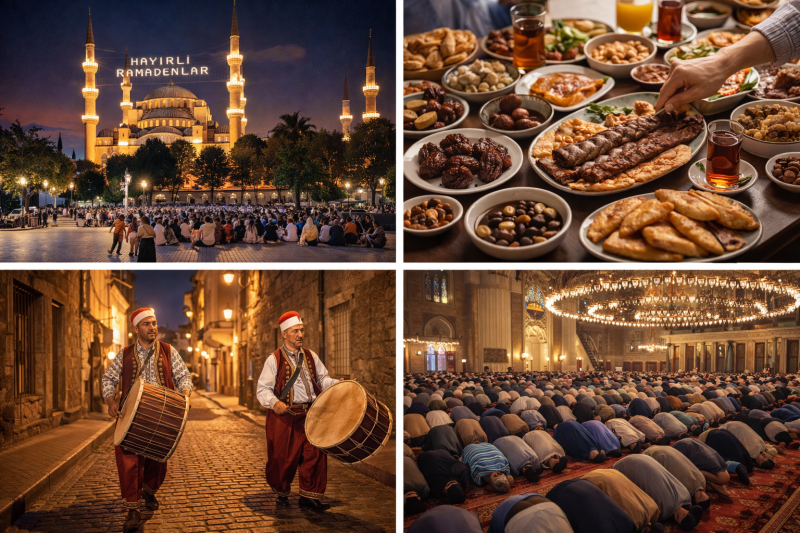
Mosques across the country become especially active during this month. Turkey has nearly 90,000 mosques, and attendance significantly increases for evening Taraweeh prayers. In Istanbul, iconic mosques such as the Sultanahmet Mosque and Hagia Sophia Mosque attract thousands of worshippers and visitors during Ramadan nights.
Social Life During Ramadan in Turkey
Ramadan strongly influences social relationships and community life in Turkey.
Strengthening Family and Community Bonds
One of the most visible aspects of Ramadan is the importance of iftar gatherings. Families come together every evening to break their fast, and invitations to neighbors, relatives, and friends become more frequent. Studies in Turkey show that family visits increase significantly during Ramadan, with some research indicating a rise of more than 60% compared to other months.
Sharing food is a central value. Large iftar tables are prepared not only in homes but also in public spaces. Municipalities, foundations, and charities organize mass iftar events, especially in large cities like Istanbul, Ankara, and Izmir. Thousands of iftar tents are set up every year to provide free meals for those in need.
Charity and Solidarity
Ramadan is also a peak period for charitable giving. Muslims are encouraged to give zakat (obligatory almsgiving) and fitrah (a specific donation given before Eid). During Ramadan, donations to charitable organizations increase dramatically. Billions of Turkish lira are distributed each year through official and private foundations to support low-income families.
This strong emphasis on generosity reinforces social solidarity and highlights the community-centered spirit of Ramadan in Turkey.
Economic Impact of Ramadan in Turkey
Ramadan has a noticeable effect on various sectors of the Turkish economy.
Growth in Food and Retail Sectors
Food consumption rises significantly during Ramadan. Household spending on food can increase by around 20–30%. Supermarkets and local markets experience higher demand for traditional Ramadan products such as:
-
Dates
-
Olives and cheese varieties
-
Soups and ready-made meals
-
Ramadan pita (Ramazan pidesi)
-
Güllaç dessert
Bakeries operate at full capacity, especially close to iftar time, when fresh Ramadan pita is sold. Nationwide, hundreds of millions of Ramadan pitas are produced and consumed during the month.
Restaurants and hotels also benefit from organized iftar programs. In major cities, restaurant reservations during iftar hours often reach very high occupancy rates, particularly in central and touristic districts.
Slower Activity in Some Sectors
While food and hospitality sectors grow, other areas may experience a slowdown. Daytime café culture can become quieter in non-touristic neighborhoods, and some entertainment venues see reduced daytime activity. However, evenings after iftar often become lively, balancing overall economic movement.
Changes in Daily Life During Ramadan
Ramadan reshapes daily routines across Turkey.
Suhoor and Night Routine
People wake up before dawn for suhoor, the pre-fasting meal. After eating and performing the early morning prayer, some return to sleep before starting their workday. This shift affects sleeping patterns throughout the month.
Working Hours
In some public institutions, working hours may be adjusted during Ramadan. In certain sectors, offices operate on slightly reduced or shifted schedules. Productivity rhythms change, especially in the afternoon hours when fasting fatigue may be felt more strongly.
Traffic Patterns
Traffic tends to be lighter in the early morning but increases significantly shortly before iftar, as people rush home to break their fast with family. In large cities like Istanbul and Ankara, evening congestion before sunset is common during Ramadan.
Night Atmosphere
After iftar, parks, waterfronts, and public squares fill with families. Many people attend Taraweeh prayers at local mosques. Quran recitation programs and religious gatherings are widely followed, both in mosques and through television broadcasts.
Ramadan Traditions in Turkey
Ramadan in Turkey is rich in historical and cultural traditions.
Ramadan Pita
Ramazan pidesi is a round, flatbread prepared specially for this month. It is baked fresh every day before iftar and is one of the most symbolic foods of Ramadan in Turkey.
Ramadan Drummers
A tradition dating back to the Ottoman period continues today. Ramadan drummers walk through neighborhoods before dawn, playing drums to wake residents for suhoor. In many cities, thousands of drummers maintain this custom.
Mahya Lights
Mahya is a traditional art form where illuminated messages are hung between mosque minarets. These lighted inscriptions display spiritual messages such as unity, patience, and gratitude. Hundreds of mosques across Turkey are decorated with mahya during Ramadan.
Karagöz and Hacivat Performances
Traditional shadow theater performances featuring Karagöz and Hacivat are often organized during Ramadan, especially for children and families. These performances reflect Ottoman-era entertainment traditions.
Eid al-Fitr in Turkey
At the end of Ramadan, Muslims celebrate Eid al-Fitr (Ramazan Bayramı in Turkish). This holiday marks the completion of fasting and is a time of joy and gratitude.
Communal prayers are held early in the morning at mosques across the country. Families visit relatives, exchange sweets, and seek blessings from elders. Intercity travel increases significantly during this holiday period, as millions of people visit their hometowns.
Observing Ramadan in Different Countries
Although Ramadan follows the Islamic lunar calendar, its start and end dates can vary slightly between countries due to different moon-sighting methods.
Turkey determines Ramadan dates using astronomical calculations announced in advance. Some countries rely strictly on physical moon sightings, which can cause a one- or two-day difference in the beginning or end of the month.
How Ramadan Shifts Each Year
The Islamic lunar calendar has 354 or 355 days, which is about 10–11 days shorter than the Gregorian calendar. As a result, Ramadan moves approximately 10–11 days earlier each year.
Over time, this shift causes Ramadan to rotate through all seasons. It takes about 33–34 years for Ramadan to return to roughly the same position in the Gregorian calendar.
Ramadan in Europe
Muslims living in Europe observe Ramadan in similar ways to those in Muslim-majority countries, but with adaptations.
In northern European countries, fasting hours can be much longer in summer due to extended daylight. Some Muslims follow local timings, while others follow the schedule of Mecca or a nearby country with moderate fasting hours.
Despite being a minority in many European countries, Muslims maintain strong community ties through mosque gatherings, shared iftars, and charitable initiatives.
Visiting Turkey During Ramadan
For tourists, Ramadan offers a unique cultural experience in Turkey.
Restaurants in touristic areas generally remain open during the day. However, visitors should be respectful when eating or drinking in public in more conservative neighborhoods.
Evenings are particularly vibrant. Streets become lively after iftar, mosques are beautifully illuminated, and traditional events take place in public squares. Experiencing an iftar meal in Turkey can be one of the most memorable cultural experiences for visitors.
Ramadan 2026 Dates
In 2026, Ramadan will begin on the evening of Monday, February 17, 2026, and will end on the evening of Thursday, March 19, 2026. Throughout this period, Muslims in Turkey will fast from dawn to sunset, engage in prayer, charity, and spiritual reflection, and participate in traditional Ramadan gatherings.
Eid al-Fitr (Ramazan Bayramı), marking the end of the fasting month, will begin on Friday, March 20, 2026, and will be celebrated for three days across Turkey. This festive holiday includes communal prayers, family visits, traditional sweets, and increased domestic travel as millions visit relatives in different cities.
As Ramadan follows the Islamic lunar calendar, its dates shift approximately 10–11 days earlier each year in the Gregorian calendar. Therefore, the exact dates may vary slightly depending on official announcements, but in Turkey, they are determined in advance through astronomical calculations.
Conclusion
Ramadan in Turkey is a deeply rooted religious and cultural period that influences nearly every aspect of life. It strengthens family ties, increases charitable giving, reshapes daily routines, and stimulates certain sectors of the economy. With its unique traditions, vibrant evening atmosphere, and strong sense of solidarity, Ramadan remains one of the most meaningful and transformative times of the year in Turkey.
For both residents and visitors, it offers a powerful experience of spirituality, community, and cultural richness.
Frequently Asked Questions About Ramadan
1. What is Ramadan?
Ramadan is the ninth month of the Islamic calendar and is considered the holiest month for Muslims. It is a time of fasting, prayer, reflection, and community.
2. Why do Muslims fast during Ramadan?
Muslims fast to practice self-discipline, spiritual growth, gratitude, and empathy for those in need. Fasting is one of the Five Pillars of Islam.
3. What are the Five Pillars of Islam?
The Five Pillars of Islam are the core practices of the Islamic faith: faith (Shahada), prayer (Salah), charity (Zakat), fasting (Sawm), and pilgrimage (Hajj).
4. When does Ramadan start and end?
Ramadan begins with the sighting of the new moon and lasts for 29 or 30 days, depending on the lunar calendar.
5. What time do Muslims fast during Ramadan?
Muslims fast from dawn (Fajr) until sunset (Maghrib). They eat a pre-dawn meal called Suhoor and break their fast at sunset with Iftar.
6. What is Suhoor?
Suhoor is the pre-dawn meal eaten before the fast begins at sunrise.
7. What is Iftar?
Iftar is the meal eaten at sunset to break the daily fast. It traditionally begins with dates and water.
8. Who is required to fast?
Fasting is required for all adult Muslims who are physically and mentally able. Children, elderly people, travelers, pregnant or nursing women, and those who are ill may be exempt.
9. Can you drink water during Ramadan?
No. During fasting hours, Muslims do not eat or drink anything, including water.
10. What happens if someone misses a fast?
Missed fasts can usually be made up after Ramadan. In some cases, a person may provide food to someone in need instead.
11. What is Laylat al-Qadr?
Laylat al-Qadr (The Night of Power) is believed to be the holiest night of Ramadan, when the Quran was first revealed to Prophet Muhammad.
12. How do Muslims celebrate the end of Ramadan?
Ramadan ends with a holiday called Eid al-Fitr, which includes prayers, family gatherings, meals, and giving charity.
13. Is Ramadan only about fasting?
No. Ramadan is also about prayer, charity, reading the Quran, self-improvement, and strengthening relationships with family and community.
14. Can non-Muslims participate in Ramadan?
Non-Muslims are not required to fast, but they are welcome to join Iftar meals and learn about Ramadan traditions.
15. Why does the date of Ramadan change every year?
Ramadan follows the Islamic lunar calendar, which is about 10–11 days shorter than the Gregorian calendar. Therefore, it shifts earlier each year.