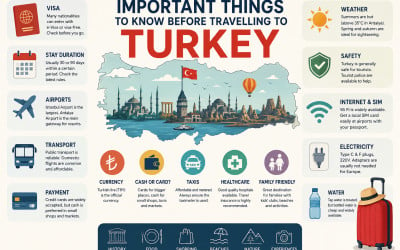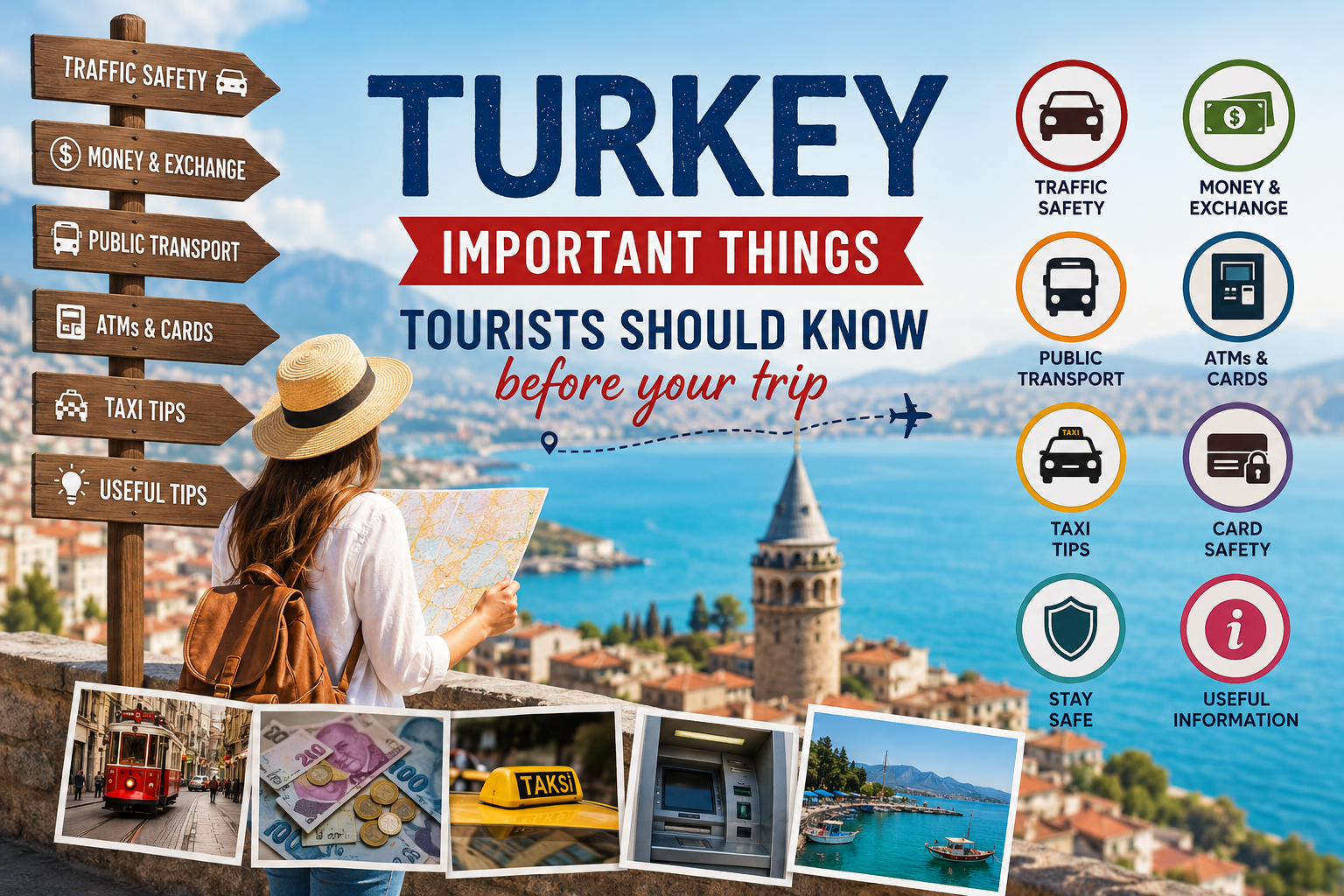
Useful information for foreign tourists visiting Turkey. Learn about traffic safety, money exchange, public transport, credit card scams, taxis, ATMs and practical travel tips.
Important Things Tourists Should Pay Attention to for an Enjoyable Holiday in Türkiye
Türkiye is one of the world’s most welcoming holiday destinations. From the Mediterranean coast to Istanbul’s historical streets, millions of visitors enjoy safe and unforgettable vacations every year. Still, like in every country, there are some practical things tourists should know in order to avoid problems and enjoy a smoother holiday experience.
Traffic Safety Is Extremely Important
One of the most important things to pay attention to in Türkiye is traffic. Whether you are driving a car, crossing the street, or simply walking around busy tourist areas, always stay alert.
Traffic can sometimes feel more chaotic than in many European countries. Drivers may stop suddenly, motorcycles can appear unexpectedly, and pedestrian crossings are not always fully respected.
Children should always be watched carefully near roads and parking areas.
When using local public transportation such as minibuses (dolmuş), never get on or off before the vehicle fully stops. During the ride, hold onto handles or rails, especially if standing. Keep a close eye on children inside crowded vehicles.
If you plan to rent a car, it is always safer to choose well-known and officially registered rental companies.
Be Careful With Credit Cards and Cash
Tourist areas are generally safe, but basic financial precautions are still important.
When withdrawing money from ATMs, never accept help from strangers. Always cover your PIN while entering it. It is also recommended not to exchange large amounts of money at the airport immediately after arrival, because exchange rates are usually much lower there.
When paying by credit card, carefully check the amount shown on the payment terminal. Make sure the currency displayed is correct and verify whether the price is being charged in Turkish Lira, Euro, or US Dollars before confirming the payment.
If you need to exchange money, use legal exchange offices or banks only.
Also pay attention to Turkish banknotes. Fake or altered notes occasionally appear in tourist areas. If a banknote has the word “ÖRNEKTİR” written diagonally across it, it is not real money. As of 2026, the highest Turkish banknote is 200 TL.
Book Tours Only Through Licensed Companies
On beaches and in busy tourist streets, you may encounter many people trying to sell tours and excursions. It is highly recommended to book tours only through legal and licensed travel agencies that are members of TÜRSAB.
This is important not only for safety, but also for insurance coverage, professional standards, and legal protection.
Water sports activities on beaches are usually organized locally, but for daily tours, boat trips, jeep safaris, diving, rafting, or cultural excursions, always choose authorized companies.
Food and Drinking Water
Türkiye has excellent cuisine, but it is still wise to be selective about where you eat.
Avoid places that look unhygienic or extremely empty during busy hours. Be careful with open drinks or drinks prepared in questionable conditions.
It is generally recommended to drink bottled water rather than tap water. Make sure the bottle is sealed when it is served to you.
Avoid buying perfumes from street markets or bazaars. Most are counterfeit products and may contain unsafe chemical ingredients that can cause skin irritation or other health problems.
Watch Your Personal Belongings
Although violent crime against tourists is relatively rare in Türkiye, petty theft can happen in crowded places just like anywhere else in the world.
Always keep an eye on your bags, wallets, phones, and passports, especially in busy markets, public transportation, beaches, and nightlife areas.
Avoid carrying large amounts of cash unless necessary.
Never Buy Historical Artifacts
If someone offers to sell you “ancient coins,” “historical objects,” or “archaeological treasures,” refuse immediately.
Buying or exporting historical artifacts from Türkiye is illegal and considered a serious crime. Even unintentionally purchasing such items can lead to major legal problems at the airport.
Avoid Unsafe or Isolated Areas at Night
Most tourist destinations in Türkiye are lively and safe, especially around hotels, restaurants, and city centers. Still, it is better to avoid isolated streets, abandoned areas, or poorly lit places late at night.
If you are unsure about an area, ask your hotel reception or local guide.
Bargaining Is Part of the Culture
Outside restaurants, bars, and supermarkets, bargaining is quite normal in many places in Türkiye, especially in bazaars, souvenir shops, and local markets.
Negotiating politely is usually expected and can even become part of the shopping experience. However, always remain respectful and friendly.
Visiting Mosques
Many mosques in Türkiye are open to tourists and are absolutely worth visiting because of their architecture and atmosphere.
When entering a mosque, modest clothing is recommended. Women are generally expected to cover their hair with a scarf or shawl. In most tourist-friendly mosques, scarves are available at the entrance for visitors.
Shoes must also be removed before entering prayer areas.
Do Not Give Money to Organized Beggars
In some tourist areas, begging networks operate in organized groups. Giving money often encourages these systems to continue.
If you want to help people in need, donating through reliable charities is usually a better option.
Keep Watching Your Children
During your holiday, always pay close attention to children in crowded places, beaches, swimming pools, roads, shopping streets, and public transportation.
Tourist areas can become very busy during the summer season, and children can easily become separated from their families.
Use Only Legal and Licensed Taxis
In Turkey, it is strongly recommended to use only official and licensed taxis. Especially at airports, tourist areas and during nighttime, visitors should avoid illegal or unauthorized vehicles. Official taxis use taximeters and operate with municipal licenses. For your safety, do not accept transportation offers from random people on the street. Taxis are legally required to use the taximeter at all times.
Prefer Licensed Travel Agencies for Airport Transfers
It is recommended to organize your airport transfers through legal and licensed travel agencies such as Vigo Tours. Professionally organized private transfers with advance reservations are much safer and more comfortable. Visitors should avoid unauthorized individuals offering transportation services at airports or around tourist areas.
Book your airport transfer in Turkey in advance for a safer and more comfortable arrival.
Türkiye Is Still a Safe Destination
Despite all these precautions, Türkiye remains one of the countries with relatively low crime rates against tourists compared to many major tourism destinations around the world.
Most visitors experience warm hospitality, helpful local people, amazing food, beautiful beaches, and unforgettable memories without any problems at all.
The advice above is not only useful for Türkiye, but for traveling anywhere in the world. A little attention and common sense can make your holiday much safer, easier, and far more enjoyable.
Frequently Asked Questions About Holidays in Turkey
Is Turkey safe for tourists?
Yes, Turkey is generally a safe destination for tourists. Millions of visitors travel to Turkey every year without problems. Like in any country, it is important to stay aware of your surroundings, especially in crowded tourist areas.
Which are the safest holiday regions in Turkey?
Most tourist regions in Turkey are comfortable and welcoming for international visitors. Popular destinations such as Antalya, Side, Bodrum, Fethiye and Marmaris are especially popular thanks to their tourism infrastructure, beaches and international atmosphere. As everywhere in the world, basic travel awareness is always recommended.
Explore the best daily tours and activities in Side for unforgettable holiday experiences in Turkey.
Do I need cash in Turkey?
Yes. Although credit cards are widely accepted, it is still useful to carry some Turkish Lira for taxis, local shops, markets and small restaurants.
Can I pay with Euro or Dollar in Turkey?
In many tourist areas, euros and dollars are accepted, but paying in Turkish Lira usually gives a better exchange rate.
Should I exchange money at the airport?
It is usually not recommended because airport exchange offices often offer poor rates.
Are credit cards accepted everywhere?
Most hotels, restaurants and shops accept Visa and Mastercard. However, smaller businesses may prefer cash.
Is it safe to use ATMs in Turkey?
Yes, but always use ATMs attached to official banks and avoid accepting help from strangers while using the machine.
Is tap water safe to drink?
In tourist areas, most visitors prefer bottled water.
Is English widely spoken in Turkey?
In major tourist destinations, many hotel employees, guides and restaurant staff speak English. German and Russian are also common in some regions.
What is a dolmuş?
A dolmuş is a shared minibus commonly used for local transportation in Turkey. It is cheap and practical but can become crowded during busy hours.
Read the Turkey travel guide for useful travel tips, practical information and holiday advice before your trip.
Is public transport safe in Turkey?
Yes, public transportation is generally safe. Always hold onto handrails in moving vehicles and be careful when boarding or leaving dolmuş minibuses.
Is driving in Turkey difficult?
Traffic can be chaotic compared to some European countries. Defensive driving and extra caution are recommended.
Should I rent a car in Turkey?
Yes, especially if you want to explore independently. It is best to use well-known and trusted car rental companies.
Is Uber available in Turkey?
Uber has limited operation in some cities. Local taxi apps are often more commonly used.
Do taxis overcharge tourists?
Occasionally this can happen. It is recommended to use official taxis, ask for the meter to be used and avoid unofficial drivers.
Which is better for a holiday: Antalya or Bodrum?
It depends on your travel style. Antalya offers large resorts and family holidays, while Bodrum is more famous for nightlife and boutique hotels.
Is Side a good holiday destination?
Yes. Side is very popular thanks to its beaches, ancient ruins and relaxed atmosphere.
How many days should I spend in Cappadocia?
Most travelers stay between 2 and 4 days to enjoy hot air balloon flights, valleys and cultural sites.
When is the best time to visit Turkey?
Spring (April–June) and autumn (September–October) are usually considered the best periods thanks to pleasant temperatures.
Is the sea warm in Turkey?
From June until October, the Mediterranean Sea is generally warm enough for swimming.
Are Turkish people friendly to tourists?
Turkish hospitality is famous worldwide. Most visitors find local people very welcoming and helpful.
Is bargaining normal in Turkey?
Yes, bargaining is common in bazaars, markets and some souvenir shops.
Is tipping expected in Turkey?
Yes. Small tips in restaurants, hotels and for guides are appreciated.
Is Turkey expensive for tourists?
Turkey is still considered good value compared to many European destinations, although prices have increased in recent years.
Are all-inclusive hotels worth it?
For families and beach holidays, all-inclusive resorts are often considered very convenient and cost-effective.
Is Turkish food suitable for children?
Yes. Turkish cuisine offers many child-friendly dishes such as grilled chicken, rice, pasta, meatballs and fresh bread.
Are boat tours and adventure tours safe?
Licensed tour companies generally operate under strict safety regulations. Always book through reliable agencies.
Is paragliding safe in Turkey?
Popular paragliding destinations like Fethiye follow international safety standards when operated by licensed companies.
Do I need travel insurance?
Yes, travel insurance is highly recommended for any international trip.
What emergency number should I call in Turkey?
112 is the main emergency number for ambulance, police and fire services.
Can women travel alone in Turkey?
Yes. Many solo female travelers visit Turkey every year comfortably. Basic travel awareness and common precautions are always recommended.
What are the most common tourist mistakes in Turkey?
Common mistakes include exchanging money at the airport, using unofficial taxis, underestimating traffic, and not carrying some cash for small purchases.