Istanbul: The City on Two Continents – Where Europe Meets Asia
There are cities with great history, cities with spectacular views, and cities where different cultures live side by side. Then there is Istanbul — a city that manages to offer all three while literally standing on two continents.
Istanbul is one of the few cities in the world where you can have breakfast in Europe, cross a stretch of water, and spend the afternoon in Asia. The Bosphorus Strait separates the European and Asian sides of the city, but in daily life it does much more than divide them. Ferries, bridges, neighbourhoods, markets and centuries of shared history connect both sides into one enormous and endlessly fascinating metropolis.
For travellers, this geographical position creates an experience that is difficult to find anywhere else.
You can discover historical landmarks, cruise between Europe and Asia, explore Ottoman palaces, visit colourful neighbourhoods and taste completely different sides of Istanbul in a single trip.
For organised sightseeing, cruises, cultural experiences and excursions, explore the complete collection of Istanbul tours and activities by Vigo Tours.
Why Is Istanbul Located on Two Continents?
Istanbul stretches across both Europe and Asia, with the Bosphorus forming the natural boundary between the two continental sections of the city.
The western side belongs geographically to Europe, while the eastern side — often called the Anatolian or Asian side — belongs to Asia.
The European side includes famous districts and historical areas such as Sultanahmet, Eminönü, Fatih, Beyoğlu, Beşiktaş and many of Istanbul's most internationally recognised landmarks.
Across the Bosphorus, districts such as Üsküdar and Kadıköy introduce travellers to another face of the city.
Yet Istanbul never really feels like two separate cities.
Every day, ferries carry commuters across the Bosphorus. Bridges connect the shores, restaurants look toward the opposite continent, and people regularly move from Europe to Asia simply to work, meet friends, eat or enjoy an evening by the water.
The Bosphorus: The Waterway Between Europe and Asia
The Bosphorus is approximately the geographical heart of Istanbul's identity.
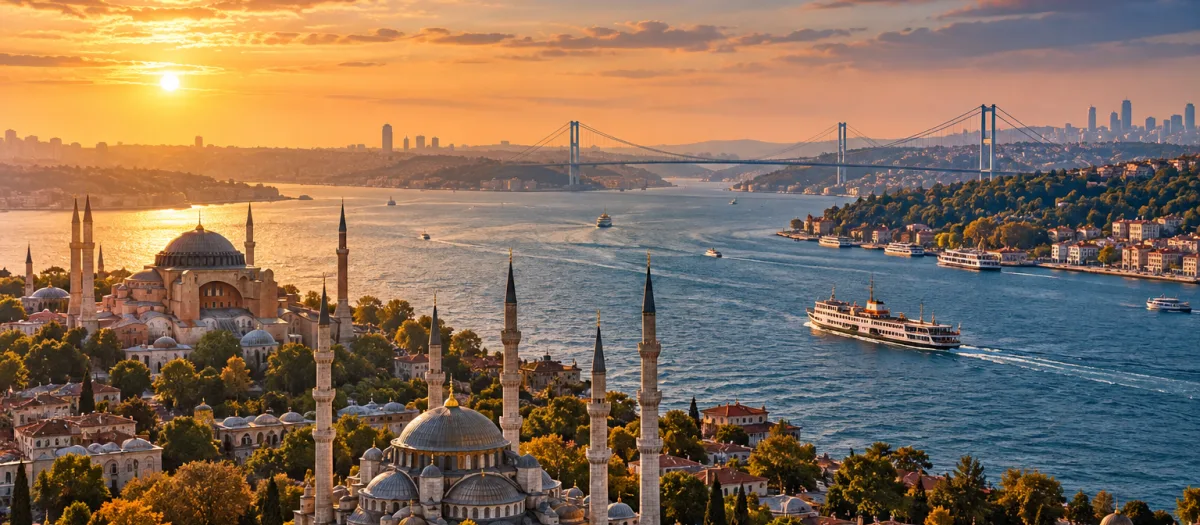
It connects the Black Sea with the Sea of Marmara while separating the European and Asian continents.
Along its shores are Ottoman palaces, mansions, mosques, fortresses, waterfront neighbourhoods and modern districts.
One of the easiest ways to understand Istanbul's unusual geography is therefore not from a map, but from the water.
A full-day Istanbul Bosphorus and city tour combines sightseeing with a Bosphorus cruise and offers visitors an opportunity to experience the city's relationship with both continents in a single day.
Sailing Between Two Continents
During a Bosphorus cruise, Europe can be on one side of the boat while Asia is on the other.
Few major cities offer such an experience.
From the water, Istanbul's enormous scale also becomes easier to understand. Historic mosques rise behind modern buildings, waterfront mansions stand beside contemporary neighbourhoods, and bridges stretch between continents above one of the world's most famous waterways.
The European Side of Istanbul: Where Empires Left Their Mark
For many first-time visitors, the European side is where their Istanbul journey begins.
This part of the city contains the Historic Peninsula, where some of Istanbul's most important Byzantine and Ottoman monuments stand within a relatively compact area.
Sultanahmet and the Historic Peninsula
Sultanahmet is home to landmarks that tell the story of Constantinople and Istanbul across different civilizations.
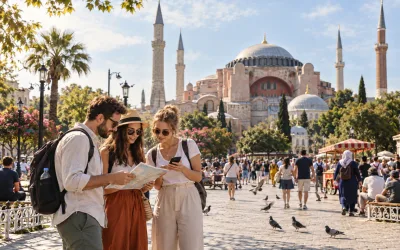
Among them are Hagia Sophia, the Blue Mosque, the Hippodrome and Topkapi Palace.
Exploring these monuments reveals how the city changed from the capital of the Byzantine Empire into the centre of the Ottoman Empire and eventually became modern Istanbul.
Travellers who want to explore several of these landmarks together can join the Istanbul Historical Tour with Hagia Sophia and Topkapi Palace. The programme includes major Old City landmarks and focuses on Istanbul's Byzantine and Ottoman heritage.
Hagia Sophia: Centuries Under One Dome
Few buildings represent Istanbul's layered history as powerfully as Hagia Sophia.
Originally constructed as a Byzantine church, it later became an Ottoman mosque, then a museum, and today functions again as a mosque.
Its enormous dome, mosaics, architectural details and centuries of religious and political history make it one of Istanbul's defining landmarks.
Visitors who prefer an independent visit can also consider Hagia Sophia tickets with an audio guide.
Topkapi Palace and Ottoman Istanbul
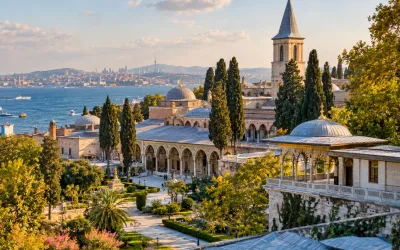
For centuries, Topkapi Palace was closely connected with the administration and ceremonial life of the Ottoman Empire.
Its courtyards, chambers, collections and location overlooking the waterways of Istanbul demonstrate how strategically important the city was.
From this part of the Historic Peninsula, the relationship between land and water becomes immediately visible.
The Bosphorus, Golden Horn and Sea of Marmara all helped turn Istanbul into a centre of trade, politics and imperial power.
Crossing from Europe to Asia
Crossing continents in Istanbul does not require an airport, a passport check or a long journey.
Sometimes it requires little more than boarding a ferry.
Public ferries travel regularly between the European and Asian shores, making the continental crossing part of ordinary city life.
For visitors, however, even a simple ferry journey can become one of the most memorable moments of the trip.
Üsküdar: Istanbul from the Asian Shore
Üsküdar sits directly across the Bosphorus from the European side and offers striking views toward Istanbul's historic skyline.
Mosques, waterfront cafés and neighbourhood streets give the district a character that feels different from the busy tourist areas around Sultanahmet.
From the shoreline, it is possible to look back toward Europe and understand just how closely Istanbul's two halves face one another.
Beylerbeyi Palace and Çamlıca Hill
The Asian side also contains important Ottoman landmarks.
Beylerbeyi Palace stands beside the Bosphorus and reflects the imperial architecture of the later Ottoman period.
Travellers interested in discovering this part of the city can consider the Istanbul Asian Side Tour with Beylerbeyi Palace and Çamlıca Hill.
Seeing Both Continents from Above
Çamlıca Hill provides one of Istanbul's classic panoramic viewpoints.
From elevated locations on the Asian side, visitors can look across the Bosphorus toward European Istanbul while seeing bridges, neighbourhoods and waterways stretching across the horizon.
It is one of the places where Istanbul's two-continent geography becomes visually obvious.
Kadıköy: The Lively Face of Asian Istanbul
Kadıköy offers another reason to cross to Asia.
Its streets, cafés, food markets, restaurants and neighbourhood atmosphere present a more local side of Istanbul than many of the city's major sightseeing districts.
Visitors can wander through market streets, stop at traditional bakeries, try Turkish dishes and experience the everyday rhythm of the city.
Rather than simply crossing from Europe to Asia for the geographical novelty, spending several hours in Kadıköy makes the difference between the two shores much easier to appreciate.
Taste Istanbul on Both Sides of the Bosphorus
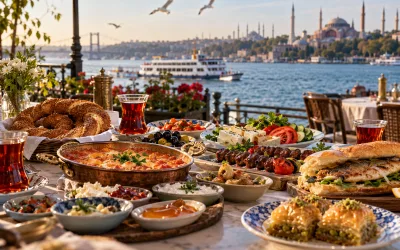
Food is one of the best ways to understand Istanbul because the city's cuisine has been shaped by migration, trade and centuries of cultural exchange.
A visit might include Turkish breakfast, simit, börek, kebabs, seafood, meze, baklava, Turkish coffee and countless regional dishes brought to Istanbul from across Türkiye.
The guided Istanbul food tour covering the European and Asian sides is designed around discovering the city through its neighbourhoods and culinary traditions on both continents.
Two Continents, One Food Culture
Although the Bosphorus marks a continental boundary, Istanbul's food culture constantly crosses it.
People travel between the shores for favourite restaurants, markets and cafés, while culinary traditions from every part of Türkiye can be found throughout the city.
The result is not a European Istanbul and an Asian Istanbul with completely separate identities, but one food culture constantly moving between both.
Istanbul's Bridges: Connecting Europe and Asia
The city's bridges are among the most visible symbols of Istanbul's transcontinental identity.
Road bridges crossing the Bosphorus physically connect Europe and Asia, carrying enormous numbers of vehicles between both sides of the city.
Seen from a Bosphorus cruise, the bridges appear almost like giant gateways suspended above the water.
At night, the illuminated bridges become part of Istanbul's skyline.
Experience the Bosphorus After Dark
Istanbul changes dramatically after sunset.
Palaces and mosques are illuminated, waterfront neighbourhoods glow along both shores and the bridges become some of the most recognisable features of the nighttime cityscape.
One way to experience this atmosphere is aboard a Bosphorus Dinner Cruise in Istanbul, combining an evening cruise with dinner and Turkish entertainment while sailing between the European and Asian shores.
Dinner Between Europe and Asia
There are not many places where dinner can literally take place between two continents.
On the Bosphorus, the European shoreline appears on one side while the Asian shoreline stretches along the other.
It is a simple geographical fact, but experiencing it at night — surrounded by Istanbul's illuminated skyline — makes it much more memorable.
More Than Two Continents: A Meeting Point of Cultures
Istanbul's importance is not based only on geography.
For centuries, the city has been a meeting point for merchants, travellers, armies, religions, languages and cultures moving between Europe, Asia, the Mediterranean, the Balkans, the Black Sea region and the Middle East.
The result can still be seen throughout the city.
Byzantine churches stand near Ottoman mosques. Historic bazaars continue to trade beside modern shopping streets. Centuries-old neighbourhoods exist alongside contemporary business districts.
Istanbul's identity has always been built on movement and exchange.
The Grand Bazaar and Centuries of Trade
The Grand Bazaar reflects this history particularly well.
Its streets have welcomed traders and customers for centuries, selling jewellery, textiles, ceramics, carpets, leather products, spices and countless other goods.
Historically, Istanbul's strategic position allowed products, ideas and people travelling between East and West to meet here.
A City Built Around Connections
This may be the best way to understand Istanbul.
The Bosphorus separates two continents geographically, yet practically everything about the city is based on connection.
Bridges connect the shores.
Ferries connect neighbourhoods.
Markets connect cultures.
And thousands of years of history connect the modern metropolis with the civilizations that came before it.
Discover the Princes' Islands from Istanbul
Not every Istanbul experience has to take place beside the Bosphorus.
The Princes' Islands offer a different perspective on the city, with island landscapes, coastal views and a noticeably slower atmosphere than central Istanbul.
Travellers looking for a full-day escape can explore the Princes' Islands Tour visiting Büyükada and Heybeliada.
A Different Side of Istanbul
The islands reveal how geographically varied Istanbul can be.
Within one destination, travellers can experience imperial monuments, dense urban neighbourhoods, forests, beaches, islands and waterways.
That variety is another reason Istanbul deserves more than a brief stopover.
How to Experience Both Continents in One Day
Seeing Europe and Asia in the same day is remarkably easy in Istanbul.
A practical itinerary could begin in the Historic Peninsula on the European side.
Visit Sultanahmet, Hagia Sophia and the surrounding historical area in the morning.
Continue toward the Bosphorus around midday and cross by ferry to Üsküdar or Kadıköy.
Spend the afternoon exploring the Asian side before returning toward Europe as the city lights begin to appear.
A Simple Two-Continent Istanbul Itinerary
Start the morning around Sultanahmet and explore Istanbul's Byzantine and Ottoman heritage.
Continue toward Eminönü or another Bosphorus departure point.
Cross to the Asian side by ferry.
Explore Üsküdar or Kadıköy.
Enjoy Turkish food or coffee before returning across the water.
Finish your evening with a walk along the Bosphorus or an organised dinner cruise.
Let the Bosphorus Guide Your Day
Trying to see every famous attraction in Istanbul at once can become exhausting.
Instead, use the Bosphorus as the central theme of the day.
Experience one side in the morning, cross the water, discover the other side in the afternoon and watch both continents from the Bosphorus in the evening.
It creates a much more memorable introduction to the city.
How Many Days Should You Spend in Istanbul?
It is technically possible to experience both continents in one day, but Istanbul deserves considerably more time.
Three days allow visitors to explore many of the principal attractions.
Four or five days provide a more relaxed experience and create time for neighbourhoods, food, cruises and activities beyond the major landmarks.
A longer stay also makes it possible to include excursions outside central Istanbul.
Planning Your Istanbul Activities
Travellers have very different reasons for visiting Istanbul.
History lovers may want to concentrate on Sultanahmet, Hagia Sophia and Topkapi Palace.
Couples may prefer a Bosphorus cruise in the evening.
Food lovers may spend more time in markets and neighbourhoods on both continents.
Families may combine sightseeing with boat trips and more relaxed activities.
The complete selection of Istanbul daily tours, Bosphorus cruises, sightseeing experiences and activities makes it possible to compare different options before building an itinerary.
Choose Experiences, Not Just Attractions
Istanbul's famous landmarks are important, but the city becomes much more interesting when travellers experience how it actually works.
Ride a ferry.
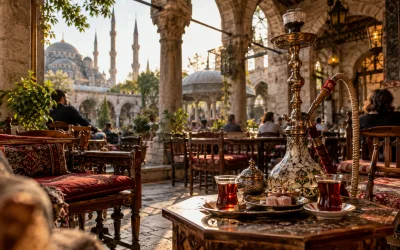
Drink tea overlooking the Bosphorus.
Walk through a local market.
Spend time on both continents.
Watch fishing boats beneath enormous bridges.
See the skyline after sunset.
These everyday experiences often become as memorable as the monuments themselves.
Why Istanbul's Two-Continent Identity Makes It Unique
Many cities describe themselves as meeting points between East and West.
Istanbul physically is one.
Europe begins on one shore.
Asia begins on the other.
Between them flows the Bosphorus, surrounded by palaces, mosques, neighbourhoods, ferries and millions of people whose daily lives connect both continents.
Yet Istanbul is much more than a geographical curiosity.
Its real character comes from what happened because of that location.
Empires fought to control it. Merchants travelled through it. Religions left monuments behind. Communities brought languages, traditions and food from across vast regions.
All of those influences became part of Istanbul.
One City, Two Continents, Thousands of Stories
Spend the morning among Byzantine and Ottoman monuments in Europe.
Take a ferry across the Bosphorus.
Eat lunch in Asia.
Watch the sunset from the water between the two.
Then return beneath illuminated bridges as Istanbul stretches away in both directions.
Few cities allow you to experience geography, history and everyday life so clearly in a single day.
Discover Istanbul with Vigo Tours
Whether you want to explore Hagia Sophia and Topkapi Palace, cruise along the Bosphorus, discover the Asian side, experience Turkish cuisine or spend an evening sailing between Europe and Asia, Istanbul offers far more than a conventional city break.
Browse the complete selection of Istanbul tours, activities, cruises and day trips with Vigo Tours and choose the experiences that match the way you want to discover the city.
Because in Istanbul, travelling from Europe to Asia is not the beginning of another journey.
It is simply part of the city.