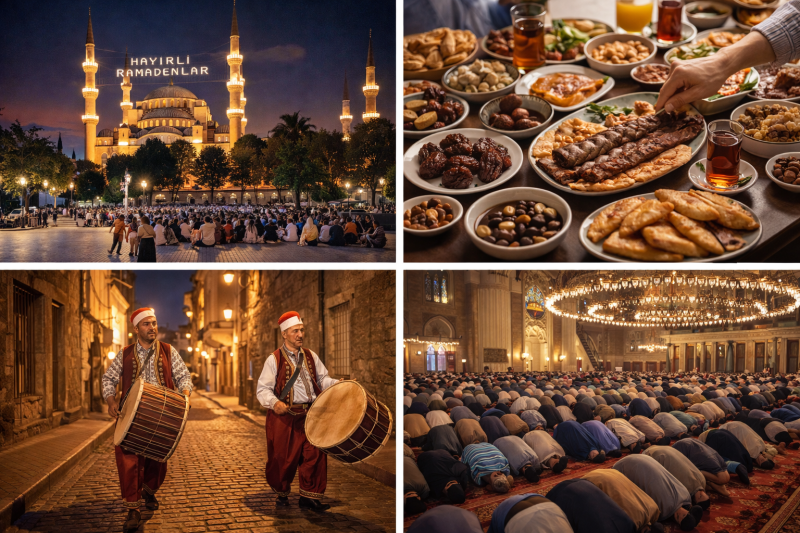
During Ramadan, the rhythm of life in Turkey can shift towards shared evening meals, prayer and time with family. How noticeable this is depends on the neighbourhood, household and individual. Some people fast, others do not; there is no single way that everyone in Turkey spends the month.
What Ramadan means
Ramadan is the ninth month of the Islamic lunar calendar. Muslims associate it with the revelation of the Quran, reflection, generosity and self-discipline. Fasting is one of Islam’s five pillars, alongside the profession of faith, prayer, almsgiving and pilgrimage.
Those observing the fast abstain from food and drink, including water, from dawn—not sunrise—until sunset. Sahur is the meal before dawn; iftar breaks the fast at sunset. Prayer, Quran recitation and the Night of Power, known in Turkish as Kadir Gecesi, are also important parts of the month.
Religious exemptions exist, including circumstances related to health and travel; individual questions belong with a qualified religious adviser. Anyone taking medication or concerned about fasting and health should discuss this with their clinician rather than change treatment to fit a travel article.
Iftar, family and generosity
Iftar may be a small family meal or a larger gathering with friends and neighbours. Dates, soup, olives and cheese often appear on the table, followed by dishes that vary from home to home. Municipalities and charities may organise shared meals; check the local programme rather than assuming every square has an iftar tent.
Zakat and fitre are forms of charitable giving associated with religious obligations, while other donations and food sharing express the same spirit of solidarity. Visitors invited to a meal can take part without fasting: follow the host’s lead and wait for the meal to begin.
Traditions to look out for
Ramazan pidesi is the round bread often bought fresh before iftar. Güllaç, a milk-based dessert made with delicate starch sheets, is another seasonal favourite. Bakery queues can become part of the late-afternoon scene.
In some neighbourhoods, drummers call residents to sahur before dawn, sometimes with rhyming verses called mani. Mahya are illuminated messages strung between minarets. Local evening programmes may include Karagöz and Hacivat shadow theatre, particularly for families. These customs are not present in every town or every street.
After iftar, worshippers may attend teravih prayers. Around mosques such as Sultanahmet and Hagia Sophia, allow room for worship and follow visitor access rules rather than treating prayer as a performance.
Daily life, shops and restaurants
Work, transport and tourism continue, but individual businesses may change their hours. Many restaurants in tourist areas serve daytime meals; elsewhere, some focus on the evening. Confirm opening times directly and reserve ahead if you want a particular iftar menu. Alcohol availability depends on the venue, so ask rather than assume.
The month can shift demand towards bakery products, food shopping and evening dining, without affecting every business in the same way. Allow extra travel time before sunset, when people may be heading home for iftar. Evenings in parks and waterfront areas can be lively, while some daytime cafés are quieter.
Dates and Ramazan Bayramı
The lunar calendar moves Ramadan roughly 10–11 days earlier each Gregorian year, carrying it through the seasons over about 33 years. Countries and communities can use different calendar criteria; for Turkey, consult Diyanet’s published dates and the local daily prayer timetable.
For historical reference, Turkey’s first fast in 2026 was on 19 February. Ramazan Bayramı, the festival ending the month, was on 20–22 March. Do not reuse those dates for another year.
Bayram brings morning prayers, family visits, sweets and greetings to elders. Intercity transport and accommodation can be busy as people visit relatives; book important journeys early and check holiday opening hours.
Ramadan beyond Turkey
Muslim communities in Europe also gather for iftar, prayer and charitable activities while balancing work and school. Long summer daylight in northern regions raises timetable questions: follow guidance from the relevant local religious authority rather than importing another city’s hours. Customs, access to halal food and workplace arrangements differ between communities.
A considerate visit
You do not need to fast to appreciate Ramadan. Be discreet around worship, ask before photographing people, and respect both those who fast and those who do not. Check local event announcements and restaurant hours, and leave time for a shared meal rather than approaching the month as a list of rules.