From Wooden Radio to Smart World: 50 Years of Change
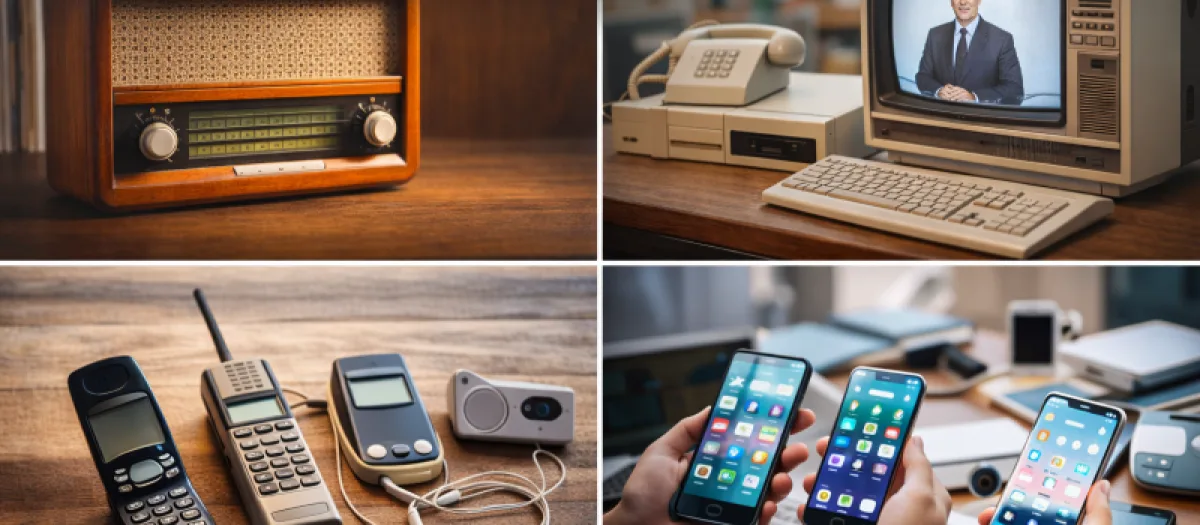
Fifty-four years after first encountering my grandfather’s wooden radio, I still remember the wait. A click, a faint hum, then silence while the valves warmed up. We listened for the familiar announcement: “Burası Türkiye Radyo Televizyon Kurumu Ankara Radyosu…” For me, that voice opened a door to the world.
In the early 1970s, news, folk songs and radio dramas filled our home. The radio brought distant places close, but it also brought us together around the same sound.
The neighbourhood gathers around a television
TRT began television test broadcasts in Ankara in 1968. My memories of television entering small-town life belong to the 1970s, when a household with a set could become the neighbourhood’s meeting place. Women sat on cushions, children on the rug, and men watched with cigarettes glowing in the dim room. We could finally see the presenters and musicians we had only heard.
The broadcasts were black and white and the evening’s viewing was limited. Later, colour added another layer to the excitement. TRT’s full colour broadcasting began in 1984, following earlier trials. Coffeehouses gathered people around football matches and evening programmes. Watching television was something we did together.
A telephone in the best corner of the house
I associate the spread of home telephones around me with the late 1980s and early 1990s. Before that, calls often meant a visit to the post office or a public line and waiting for someone to connect us. “You may speak now” was the beginning of a conversation we had looked forward to.
At home, the telephone received a place of honour, sometimes with a lace cover. I remember the rotary dial’s click-click-click and the pride in saying, “We have a telephone.” Relatives in the city suddenly felt less far away.
Voices and messages in our pockets
Turkey’s GSM services began in 1994. The early handsets I remember were bulky, expensive and limited by coverage. By the end of that decade, seeing someone extend an antenna in the town square no longer seemed quite so extraordinary. Phones appeared more often in the market, on buses and in the fields.
SMS brought a different intimacy: “Good night,” “How are you?” and “I miss you.” A few words could carry far more than their length suggested.
The sound of the modem
Turkey’s first internet connection was established at METU in 1993. For many people in the small-town world I describe, internet cafés in the early 2000s made that distant development tangible. Young people arrived after school to open email accounts, play games or chat. The modem’s beeps and screeches became another familiar sound.
Pages loaded slowly, yet we could now search, write and share rather than only receive. Home ADSL connections later brought these activities into everyday routines: shop orders, homework, school records and weather forecasts.
From the town square to the phone screen
During the 2010s, Facebook, Instagram, YouTube and Twitter became new places to exchange news and ideas. WhatsApp groups carried wedding announcements, condolences and school messages alongside older ways of keeping in touch. Shopkeepers displayed products online, and friends studying in other cities or abroad remained part of daily conversations.
In the 2020s, smartphones bring payments, maps, online lessons and translation into many people’s lives, though access is not the same everywhere. Connected devices can exchange information too, from soil-moisture sensors to automated irrigation. These are different technologies, not all necessarily artificial intelligence, but together they show how much communication has widened.
What I still hear in that old radio
My grandfather’s radio reminds me of the patience before the first voice and the pleasure of listening together. I value today’s speed, yet I miss that shared pause.
Perhaps our grandchildren will one day smile at our smartphones and call them old-fashioned. Their devices may be very different, but I suspect they will recognise the same feeling: the joy of reaching someone and hearing a voice answer.
About the Author
Mehmet Kılıç was born in Hatay in 1963, though his family roots trace back to Malatya.
He has a deep passion for technology, history, and human stories.
His writing connects the past and the present, focusing on the people behind change.
He works at Vigo Tours as a tour operations specialist and is also an active birdwatching guide.
Email: meozcan@gmail.com