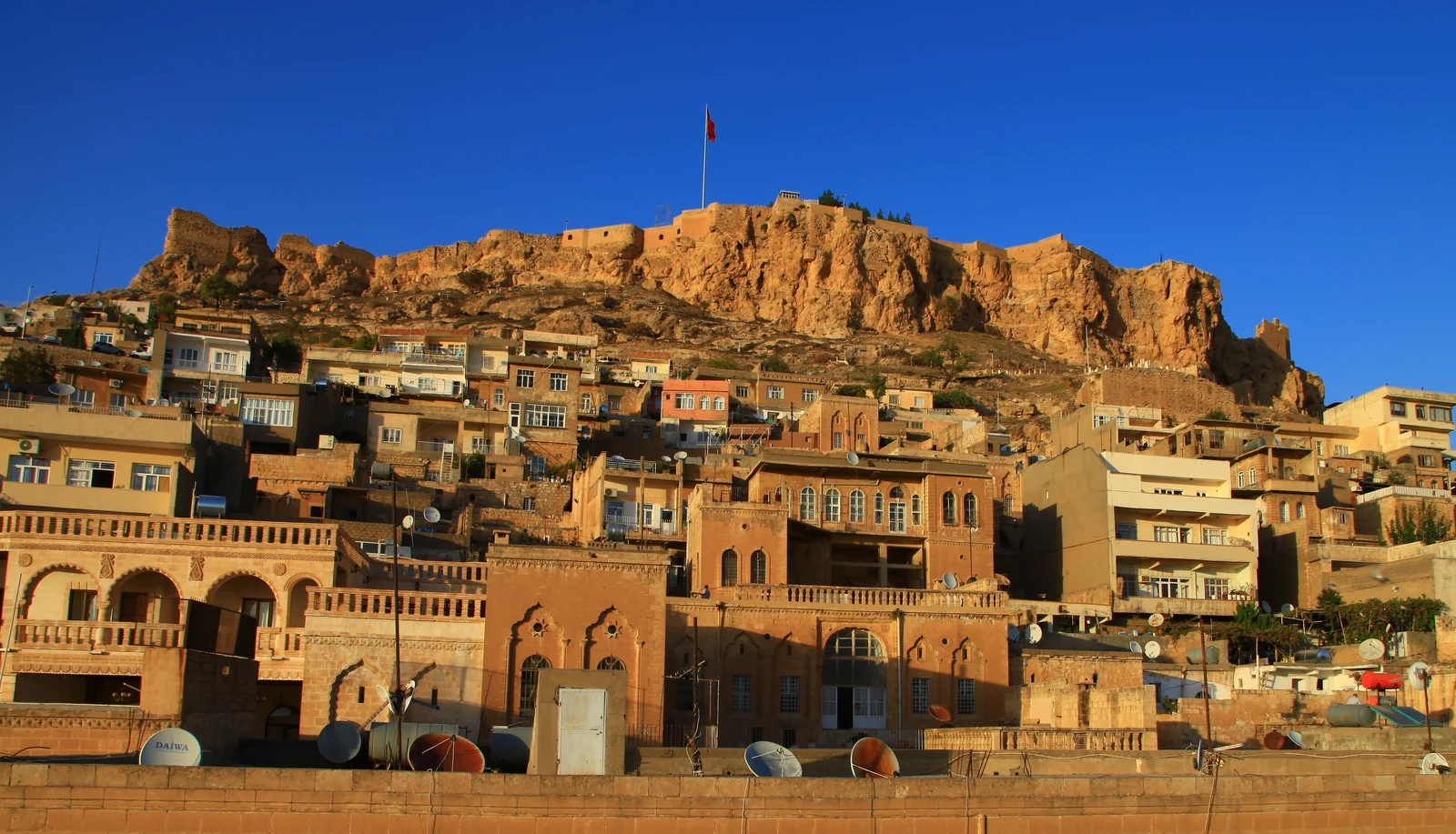
Step out of a stone passage in Mardin and the Mesopotamian plain opens up below. In Diyarbakır, the Hevsel Gardens stretch beneath dark basalt walls. Both views show how an old city takes shape around its terrain, building materials and access to water.
The lands around the Euphrates and Tigris preserve very different chapters of Upper Mesopotamia’s history. Early Neolithic monuments near Şanlıurfa, a Hellenistic sanctuary in Adıyaman and Roman domestic mosaics in Gaziantep sit alongside places of worship, markets and streets that people still use in Mardin and Diyarbakır.
Şanlıurfa and Göbeklitepe — Early Neolithic communities
Animals carved into T-shaped limestone pillars are the most striking details at Göbeklitepe. UNESCO dates the monumental structures to roughly 9600–8200 BCE. How exactly they were used remains a subject of research. Pair the site with Şanlıurfa Archaeology Museum to place local finds alongside discoveries from other settlements.
Around Balıklıgöl, the city’s places of worship and everyday life meet. If you have more time, the conical-roofed houses of Harran show a distinctive use of local materials and building techniques.
Adıyaman and Mount Nemrut — A kingdom’s mountaintop sanctuary
In the first century BCE, Antiochus I of Commagene commissioned a monumental tomb and sanctuary near modern Kahta. The stone heads and reliefs on the east and west terraces reflect the kingdom’s Greek and Persian connections. Take time to notice how the figures were arranged on the summit. Check road and access conditions before the visit, since conditions can differ sharply from the plain.
Gaziantep and Zeugma — Roman houses beside the Euphrates
Zeugma developed at a crossing on the Euphrates near present-day Nizip. Many of its Roman domestic mosaics are now displayed in the Zeugma Mosaic Museum in Gaziantep. The mythological scenes once formed the floors of living spaces. Mosaics from Eastern Roman churches appear in a separate part of the museum.
In the historic centre, the Coppersmiths’ Bazaar and nearby inns tell a different chapter of the city’s commercial and craft history. A museum morning and a walk through the old market in the afternoon make a balanced day.
Mardin — Limestone houses, courtyards and places of worship
Pale limestone homes step down the hillside above the Mesopotamian plain. Mardin’s Great Mosque, Zinciriye Madrasa and Forty Martyrs Church show how different traditions shaped the same city. Deyrulzafaran Monastery provides another perspective on Syriac Christian heritage. At nearby Dara, rock-cut tombs and cisterns tell the story of a late antique frontier city.
Give old Mardin a day of its own. Set aside a second day for Dara and the monastery to leave time for the journeys and the visits.
Diyarbakır — Basalt walls and the Hevsel Gardens
The walls around Suriçi bear traces of rebuilding across many periods. Inside are the Great Mosque and historic inns. On the Tigris side, the Hevsel Gardens occupy the land below the walls. UNESCO recognises the fortress and gardens together as a cultural landscape, connecting the city’s defences with the soil and water that sustained it.
Batman and Hasankeyf — A changing landscape on the Tigris
Part of the old settlement was submerged by the Ilısu Dam. Several monuments, including the Tomb of Zeynel Bey, were moved. Finds from rescue excavations in Hasankeyf Museum place the town within the wider history of the Tigris Valley. Add an extra day if you want to include Hasankeyf.
A six-day itinerary through southeastern Türkiye
- Day 1 — Gaziantep’s Zeugma Mosaic Museum, historic markets and inns.
- Day 2 — Mount Nemrut via Adıyaman and Kahta.
- Day 3 — Göbeklitepe, Şanlıurfa Archaeology Museum and Balıklıgöl. Set aside extra time for Harran.
- Day 4 — Old Mardin, the Great Mosque, Zinciriye Madrasa and Forty Martyrs Church.
- Day 5 — Dara and Deyrulzafaran Monastery.
- Day 6 — Diyarbakır’s Suriçi, city walls and viewpoints overlooking the Hevsel Gardens.
Treat the itinerary as a starting point and check drive times, openings and access for your dates. In summer, plan outdoor sites for the morning. Bring shoes for stone steps and uneven streets, plus a wind layer for Mount Nemrut.
To explore early Christianity in another part of Anatolia, see our guide to the Seven Churches of Revelation in western Türkiye.
Sources
- UNESCO – Göbeklitepe
- UNESCO – Nemrut Dağ
- UNESCO – Diyarbakır / Hevsel
- Zeugma Mozaik Müzesi
- Kültür Portalı – Mardin
- Dara Örenyeri
- Hasankeyf Müzesi
- Kültür Portalı – Harran
Cover photo — Mardin Castle and the hillside stone houses. MSinjari / Wikimedia Commons · CC BY-SA 4.0. Cropped version from Wikimedia Commons. Resized for the web.