Istanbul Shopping Guide for Travelers: Best Places & Finds
Istanbul offers several different shopping experiences: historic bazaars, independent neighbourhood shops, long shopping streets and modern malls. Choose an area near your accommodation or sightseeing route rather than crossing the city for every stop. Prices and quality vary within each district; neither a famous bazaar nor the Asian side guarantees a bargain.
Historic bazaars and neighbourhood shops
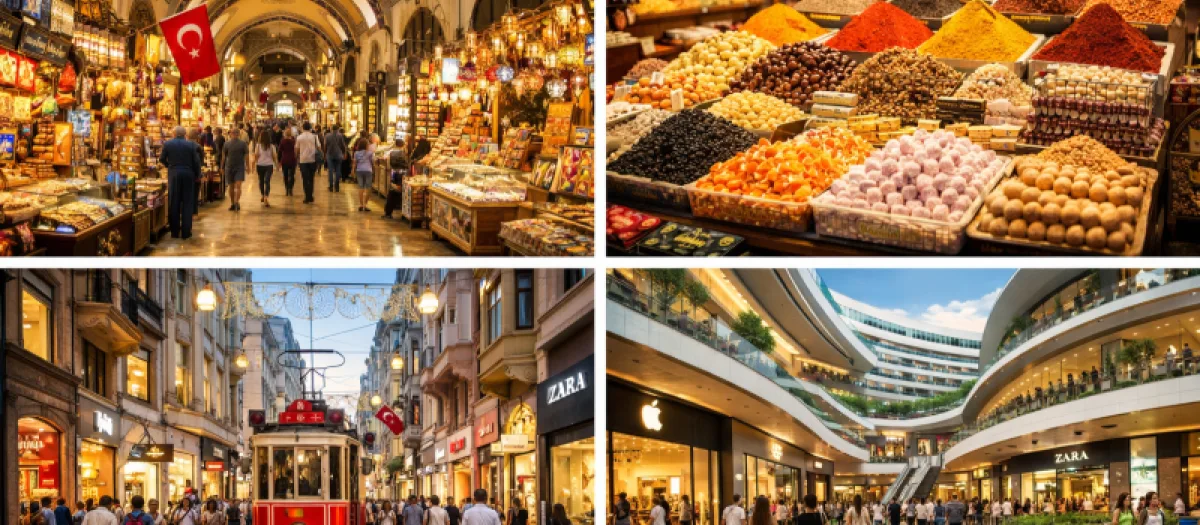
The Grand Bazaar, founded in the 15th century, brings together carpets, kilims, jewellery, leather, ceramics, textiles, metalwork and mosaic lamps. Its covered lanes reward a slow visit. Compare similar pieces in several shops and ask about materials and production before discussing price.
The Spice Bazaar in Eminönü is a place to browse spices, nuts, dried fruit, tea, honey and Turkish delight. Ask about origin, ingredients and price per unit of weight. Arasta Bazaar behind the Blue Mosque offers a smaller shopping area for textiles, scarves, kilims and ceramics. Nearby Beyazıt’s Sahaflar book market is a different kind of souvenir stop, with second-hand books, prints, maps and magazines.
Kadıköy’s market streets combine food shops, independent boutiques, records, second-hand finds and cafés. Üsküdar offers other local-market possibilities. Around Galata and Karaköy, look for contemporary design, jewellery studios, leather accessories and small galleries. Balat and Fener suit browsing for vintage décor, posters and collectables, but their steep streets need comfortable shoes. Before buying anything described as antique, check its provenance and export requirements with the relevant authorities; a seller’s receipt alone does not establish that it may leave Türkiye.
Shopping streets
İstiklal Avenue and its side streets combine mainstream clothing, books, cosmetics, music shops and independent boutiques. Nişantaşı, especially around Abdi İpekçi Street, is a different option for designer fashion, jewellery and luxury accessories. Bağdat Avenue on the Asian side offers fashion, sportswear, shoes and café breaks along an extended outdoor route. Decide which section interests you rather than attempting the whole avenue.
Choosing a shopping centre
İstinyePark combines indoor shopping with an open-air luxury area. Zorlu Center brings retail, restaurants and performing arts together. Kanyon’s semi-open, canyon-like architecture distinguishes it from a conventional enclosed mall. Cevahir in Şişli offers a broad choice of shops.
On the Asian side, Akasya and Emaar Square Mall are alternatives for fashion, technology, food and leisure; Optimum Outlet focuses on outlet shopping. Compare current prices and collections: an outlet label does not guarantee the best deal.
Mall of Istanbul lies farther west than the main historic sightseeing areas, so allow a separate journey. Forum Istanbul is another large retail option, while Vialand combines an outdoor shopping area with nearby leisure facilities. Check each centre’s current shop directory, events and attraction arrangements before travelling. Confirm whether leisure attractions are operating and whether separate admission is required.
What to buy and what to check
Carpets and kilims: ask whether a piece is handmade or machine-made, its fibre composition, origin and age. Look at both sides and the colours in daylight; request written details for an expensive purchase. Wool, cotton and silk serve different purposes, and flexibility or knot density alone does not prove authenticity. Confirm packing, shipping, insurance and any import costs before paying.
Regional names such as Hereke, Konya and Kayseri describe different weaving traditions; ask the seller to substantiate the claimed origin.
Ceramics and tiles: compare decoration, glaze, finish and condition. Ask whether the item is intended for food use or only display, and arrange protective packaging. Small imperfections are not proof of hand-painting. Mosaic lamps and metalwork also need careful packing; check electrical compatibility for a lamp.
Jewellery: ask about fineness, weight, gemstones, workmanship and the final price. Marks such as 925 or a gold karat stamp are useful details, not independent guarantees. Check clasps and request an itemised invoice; use an established seller and independent expertise for a high-value purchase. Lightweight jewellery is not automatically poor quality.
Leather: inspect seams, lining, zips, hardware and the declared material. Fit and construction matter more than weight or smell alone. Confirm care instructions and return or alteration arrangements for jackets, bags, shoes, belts and wallets.
Food gifts: lokum, pistachios, dried figs, saffron, sumac, red pepper, tea and pomegranate products offer plenty of variety. Check ingredients, allergens, origin, dates and sealing. Colour alone cannot verify saffron or other premium products. Review your destination’s food-import rules before buying.
Hammam gifts: peştemal towels, olive-oil soap, kese mitts, sponges and scented oils are compact choices. Read textile and ingredient labels and consider luggage restrictions for liquids. Handmade is a production description, not an automatic quality guarantee.
Prices, bargaining and payment
Ask for a current total rather than relying on a promised discount percentage. Materials, workmanship, brand, exchange rates and shipping all affect the total. Compare two or three shops for similar goods, set a budget and ask about returns before purchase.
Polite bargaining may be welcome in some bazaar and independent shops; chain stores, supermarkets and most malls normally use fixed prices. Ask rather than assume. You can decline an offer or leave without buying. Be cautious about unsolicited guides directing you to a particular shop.
Cards and contactless payments are common but not universal. Confirm acceptance, the charged currency, any fees and the final amount before paying. Mobile-wallet support depends on your card, bank and terminal. Compare cash-exchange and ATM costs instead of assuming one always gives the best rate. Keep receipts and avoid displaying large sums of cash.
Tax-free shopping and getting around
Tax-free refunds are conditional, not available automatically to every tourist or purchase. Before paying, check eligibility and the shop’s participation, request the correct documents, and follow customs validation and export deadlines. Keep goods available for inspection and check current official guidance and refund-provider conditions; a stamped receipt by itself is not the whole process.
The T1 tram is useful for Sultanahmet, Beyazıt–Grand Bazaar and Eminönü. Metro connections serve the Şişli and Levent shopping areas, while ferries provide options for Kadıköy. Check the current route and final walking distance, especially for malls farther from the centre; choose the route to your actual departure airport. Use licensed taxis when needed and allow for traffic.
Keep bags secure in crowds, decline persistent approaches and check opening arrangements before setting out. The map links below are starting points: confirm the named venue and entrance in your navigation app. A focused neighbourhood route leaves more time to browse and less time in transit.
Maps, tours and related guides
- Grand Bazaar / Kapalıçarşı — map
- Spice Bazaar / Mısır Çarşısı — map
- Arasta Bazaar — map
- Sahaflar — map
- Kadıköy — map
- Galata — map
- Balat–Fener — map
- İstiklal — map
- Nişantaşı / Abdi İpekçi — map
- Bağdat Caddesi — map
- İstinyePark — map
- Zorlu Center — map
- Kanyon — map
- Cevahir — map
- Akasya — map
- Mall of Istanbul — map
- Emaar Square Mall — map
- Optimum Outlet — map
- Forum Istanbul — map
- Vialand — map
- Istanbul tours and activities
- Istanbul’s Grand & Spice Bazaars: Echoes of Eternity
- Beyoğlu & Taksim: The Light, Shadow, and Living Rhythm of Istanbul
- 3 Days in Istanbul: Notes from My Journey
- Official Turkish customs guide to tax-free shopping