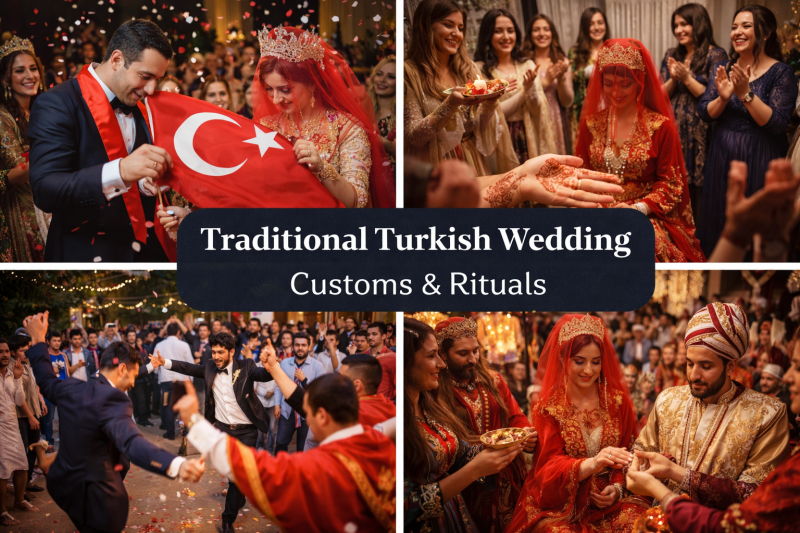
A Turkish wedding may bring together family rituals, a lively dance floor and the couple’s own ideas. There is no single compulsory sequence: customs vary by region, family, faith and personal preference. Some couples hold several celebrations; others choose a small ceremony and a meal.
Meeting the families: kız isteme
Couples may meet through friends, education, work or online, while introductions through relatives also exist. A family introduction should not be confused with a decision made in place of the couple. Their wishes and consent come first.
In the custom known as kız isteme, the prospective groom’s family visits the prospective bride’s family. A senior relative may make a traditional request invoking God and the Prophet. The visit is an opportunity for the families to meet and discuss plans; it is a social custom, not the wedding itself.
Turkish coffee often accompanies the conversation. Some brides playfully add salt to the groom’s cup. The joke is sometimes described as a test of patience, but neither drinking salty coffee nor following this custom is a requirement.
Söz and nişan: promise and engagement
Söz marks a promise to marry; nişan is the engagement celebration. Families may hold them separately or combine them. Rings tied with a red ribbon, cut by an elder, are a familiar symbol of the occasion.
An engagement may be a small gathering at home or a larger event in a hall or garden. Special clothes, photographs and exchanged gifts can be part of it. Gold coins, bracelets or other jewellery may be offered, but the scale and expense should reflect the couple’s circumstances rather than an assumed national rule.
Çeyiz and preparing a home
Çeyiz is the collection of household textiles and objects traditionally prepared for the new home. Bedding, kitchenware, embroidered cloths and handmade lace are common examples. Some families display these items for relatives before the wedding.
Today, couples may buy household items together, keep inherited handiwork or skip a separate display. The custom does not mean that every bride’s family must provide the same list or carry the whole cost of setting up a home.
Kına gecesi: henna night
A henna night is held before the wedding, often with women relatives and friends, though the guest list and the groom’s participation vary. Henna is applied to the hands, and a red veil or traditional outfit may be worn. Songs such as “Yüksek Yüksek Tepelere” express the emotion of leaving the family home; tears may be part of the occasion, not an obligation.
Folklore shows sometimes present staged interpretations of wedding customs. If you are interested in a Bosphorus dinner cruise, check the current entertainment programme rather than assuming a henna segment is included. A tourist show is not an invitation to a family wedding.
Bosphorus dinner cruise: current programme
Wedding music, processions and gifts
Celebrations range from village gatherings lasting several days to a single evening in a hotel, ballroom or garden. Davul drums and zurna may accompany traditional dancing; other couples choose a band, DJ or a mixture of styles. Some families include a procession from the bride’s family home.
A takı ceremony gives guests an opportunity to present gold or money. If you are invited, ask someone close to the couple how gifts are handled and what clothing is appropriate. There is no universal gift amount. Follow the hosts’ lead for dancing, photographs and any family rituals.
Family life after the celebration
Visits during religious holidays, help from grandparents and family names given to children can keep generations connected. Living arrangements differ: some couples share a home with relatives, others live separately. These are choices shaped by relationships and circumstances, not duties that apply to every Turkish household.
Education, work, housing costs and personal plans can influence when people marry and whether they have children. Marital difficulties may involve communication, money, infidelity, family interference or abuse; none is explained simply by nationality. A cultural guide cannot predict an individual relationship or replace professional support.
Couples with different cultural backgrounds
International couples may combine languages, foods, celebrations and family expectations. Discussing daily routines, communication, relatives’ involvement and plans for children can make expectations clearer. Differences can be enriching without being either a guaranteed advantage or an inevitable problem.
For visitors, the most useful approach is curiosity without assumptions. Ask what a custom means to the people practising it and respect the couple’s decisions. Traditional and contemporary elements often sit side by side within the same celebration.