Istanbul weather: choosing a season and planning your days
Istanbul’s weather shapes a day out: a breezy ferry crossing, a warm walk through Gülhane Park or a rainy afternoon in a museum. The city sits between the Black Sea and the Sea of Marmara, and conditions can differ between the waterfront, inland neighbourhoods and the northern coast. This guide describes seasonal patterns, not a live forecast.
A climate guide, not today’s temperature
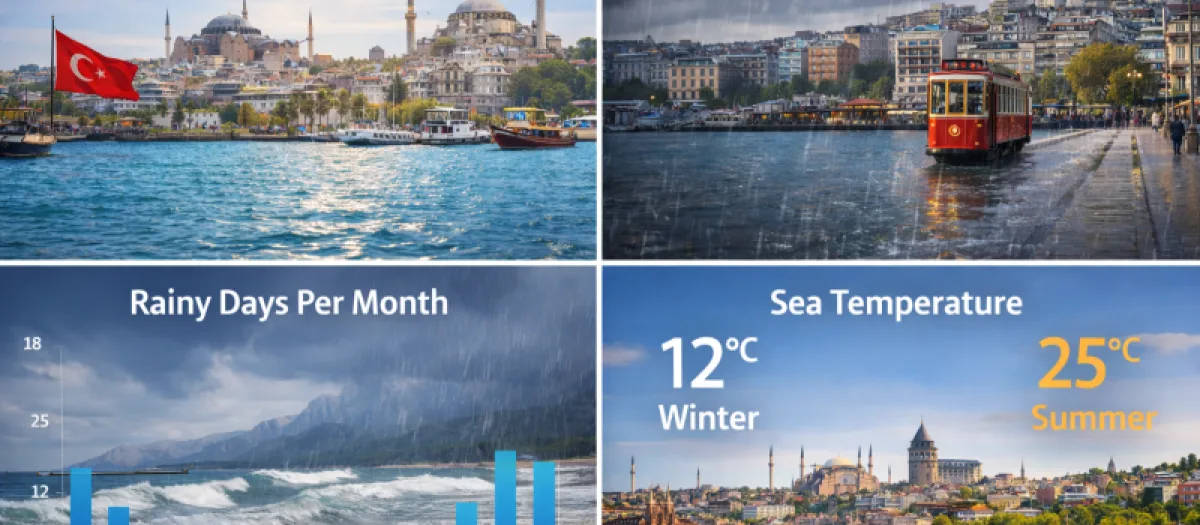
MGM’s Istanbul statistics for 1950–2025 give a January monthly mean of 6.8°C and a July mean of 24.7°C. These averages are not daytime highs or a promise for your travel dates. Check the forecast for your actual district shortly before departure and again before a boat trip.
Spring: parks and flexible walking plans
March can still feel wintry, while later spring usually brings more comfortable walking weather. Gülhane Park, Sultanahmet and the Bosphorus waterfront work well as parts of a flexible route. Take a light waterproof layer and leave room for a café or museum if showers arrive. Tulip displays depend on the season and local planting, not a guaranteed date.
Summer: heat, humidity and time by the water
Summer is generally warmer and drier, but rain and hot spells remain possible. Start longer walks early, take shaded breaks and carry water. Humidity can make busy streets feel warmer; a sea breeze is welcome but not guaranteed. Rooftop dinners, Karaköy evenings and a trip to Büyükada offer different ways to spend the day, subject to actual opening and transport.
Autumn: slower walks and a rain plan
Early autumn can still feel summery. Later in the season, cooler evenings and more frequent rain call for layers and waterproof shoes. Galata, Üsküdar and shoreline walks are easier to enjoy when you can shorten the route or move indoors. Do not assume September and November have the same weather.
Winter: museums, cafés and possible disruption
Winter is often cool, wet and windy. Snow is possible, but neither a snowy skyline nor a quick thaw can be promised. Combine palaces and museums with breaks for tea or salep; check opening hours rather than assuming every attraction operates daily. Allow extra time when snow, ice or strong winds affect travel.
Wind, ferries and swimming
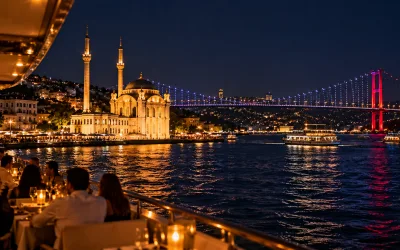
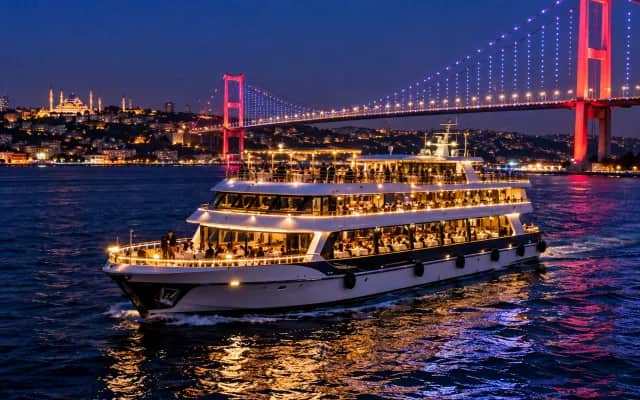
Poyraz is a northeasterly wind; lodos comes from the southwest. Neither belongs exclusively to one season. Strong wind or fog can disrupt ferries and Bosphorus cruises, so check the operator’s notices and keep an alternative route. A cruise departure does not establish safe swimming conditions.
For a beach day, use a designated open beach and follow local flags and instructions. Marmara, the Black Sea coast and the Bosphorus do not share identical currents or water conditions. Water temperature alone does not make swimming safe; the Bosphorus is a busy shipping channel, not a casual bathing area.
What to pack and what to check
Bring comfortable footwear, layers, sun protection and a compact rain layer. Check sunrise and sunset for your date rather than confusing daylight length with sunshine hours. Before leaving the hotel, review the district forecast, weather warnings, your return transport and any activity cancellation policy.