From Didim to the white terraces of Pamukkale
Ancient streets above a valley of white stone
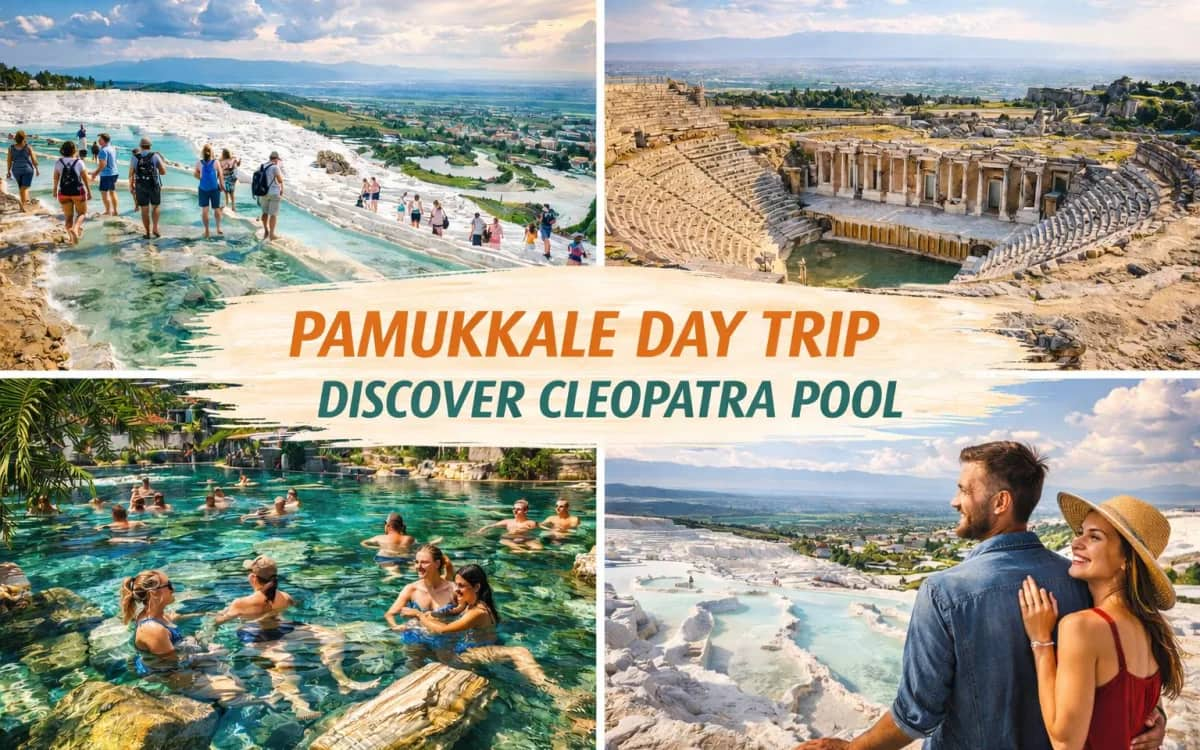
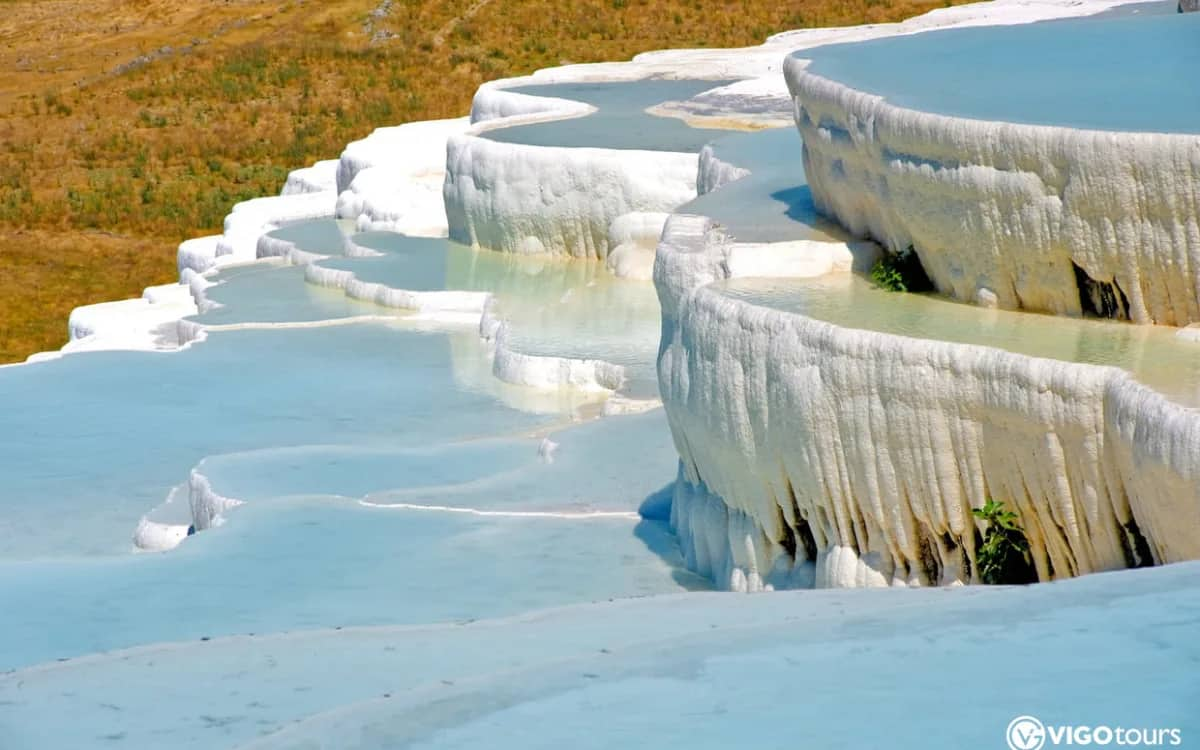
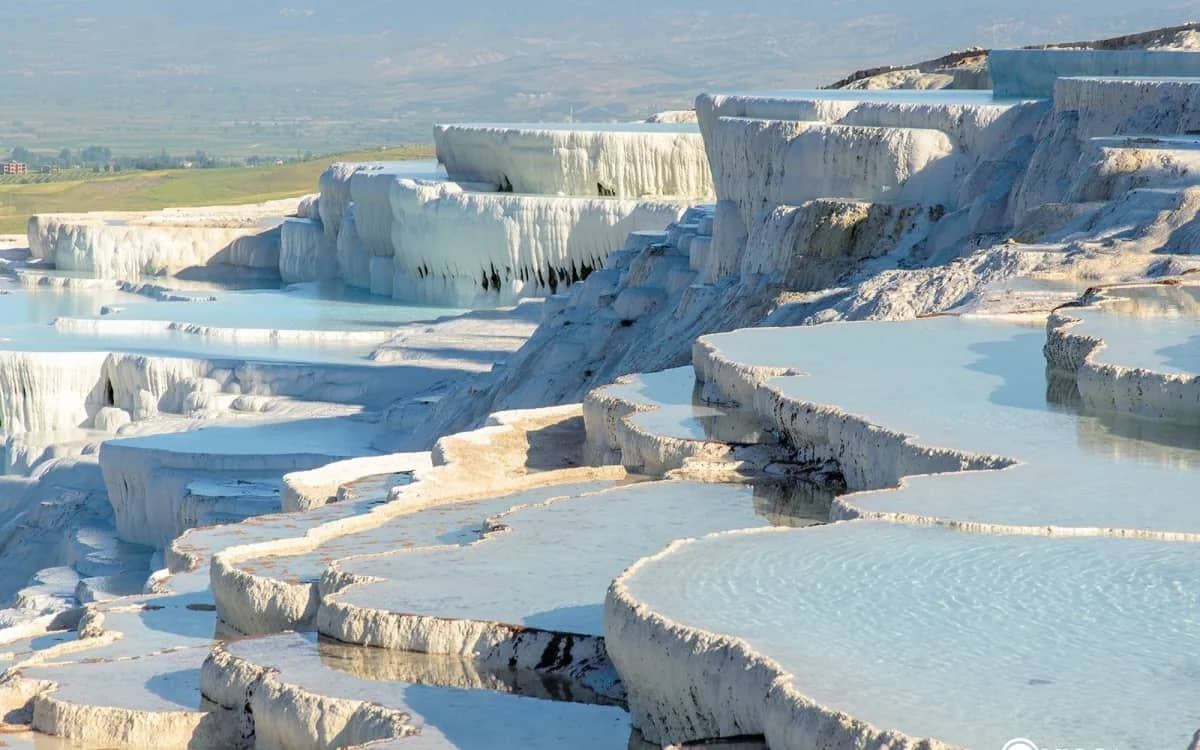
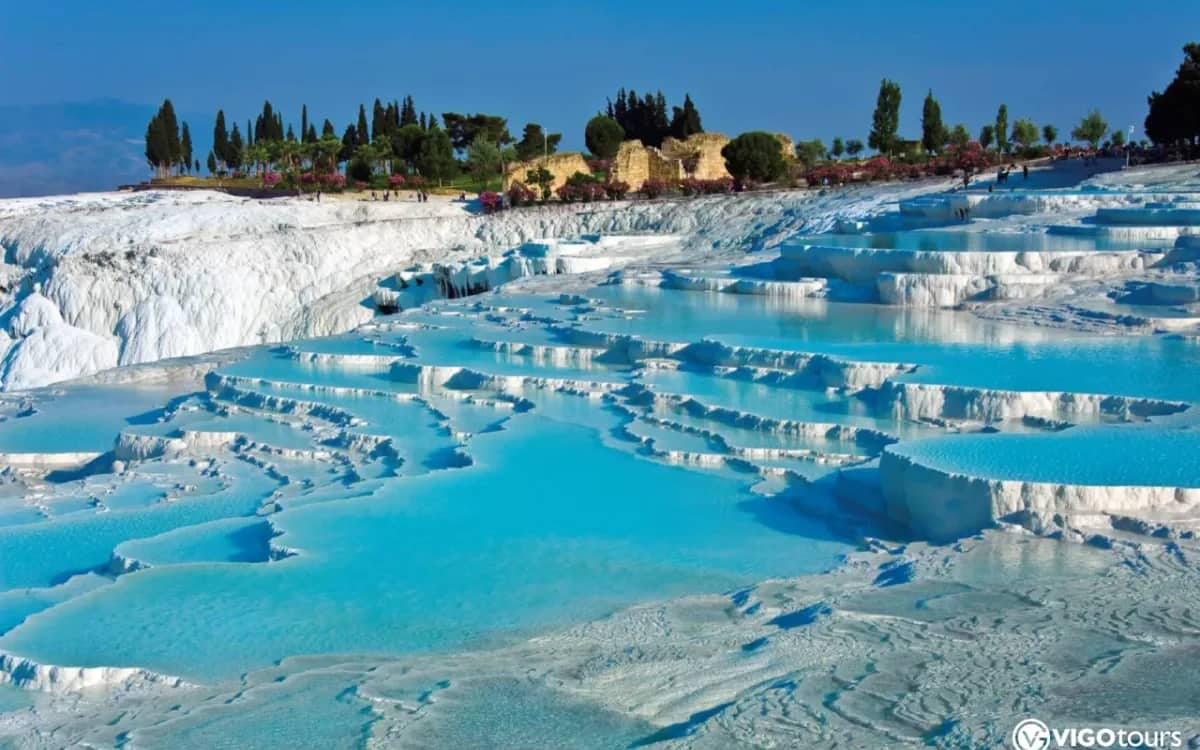
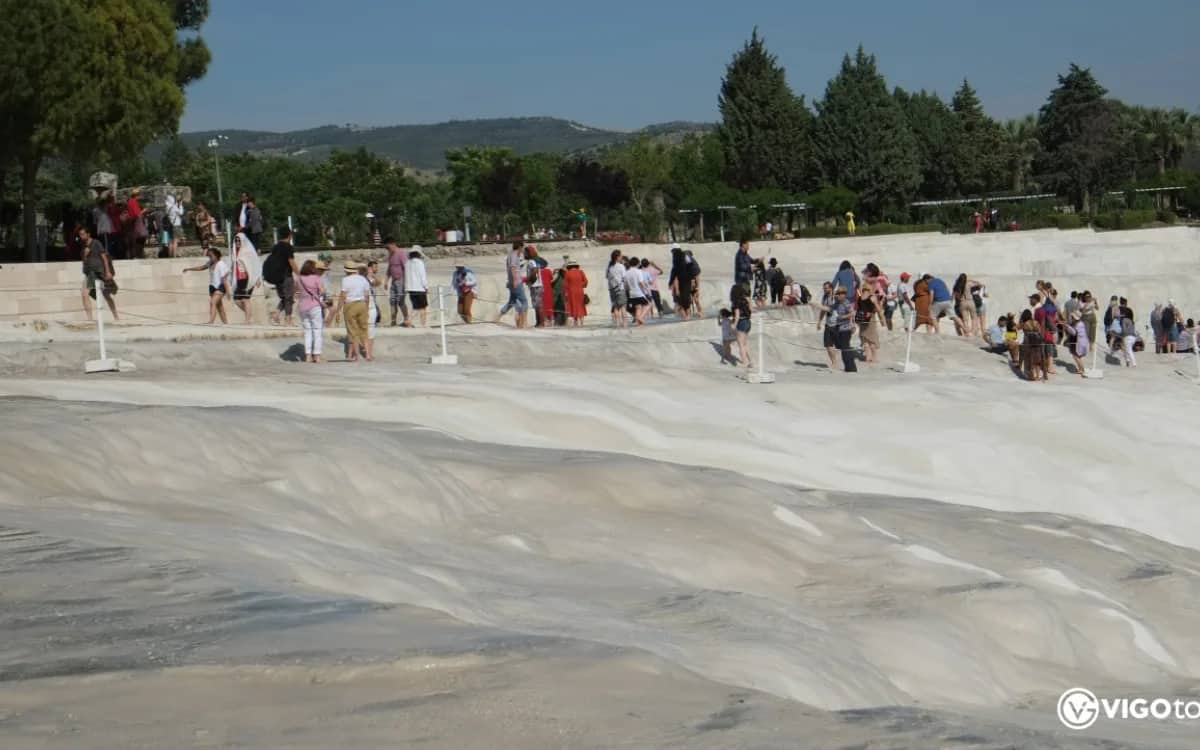
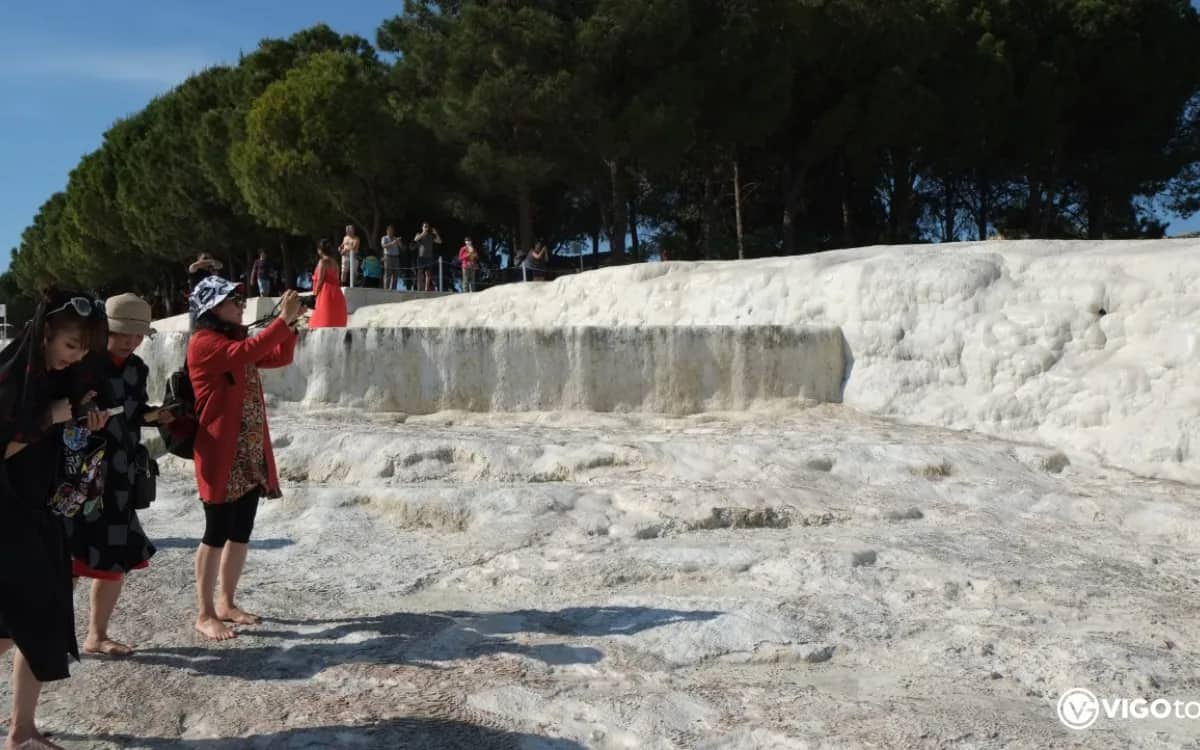
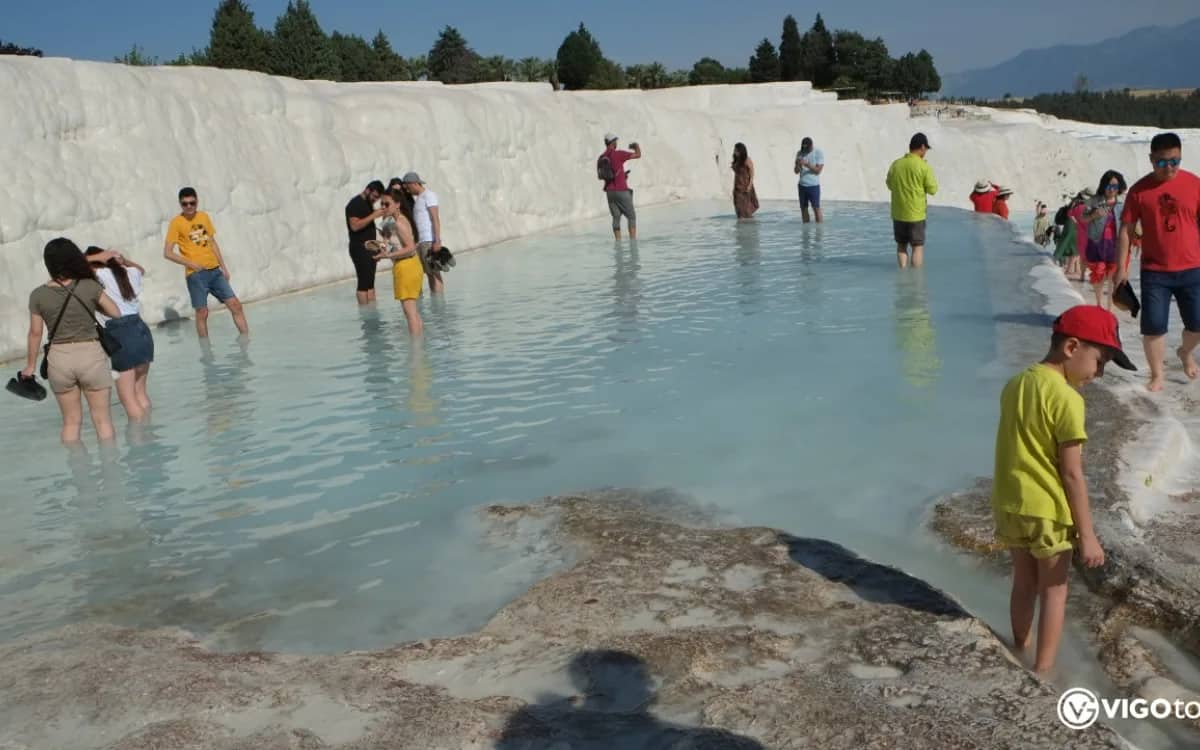
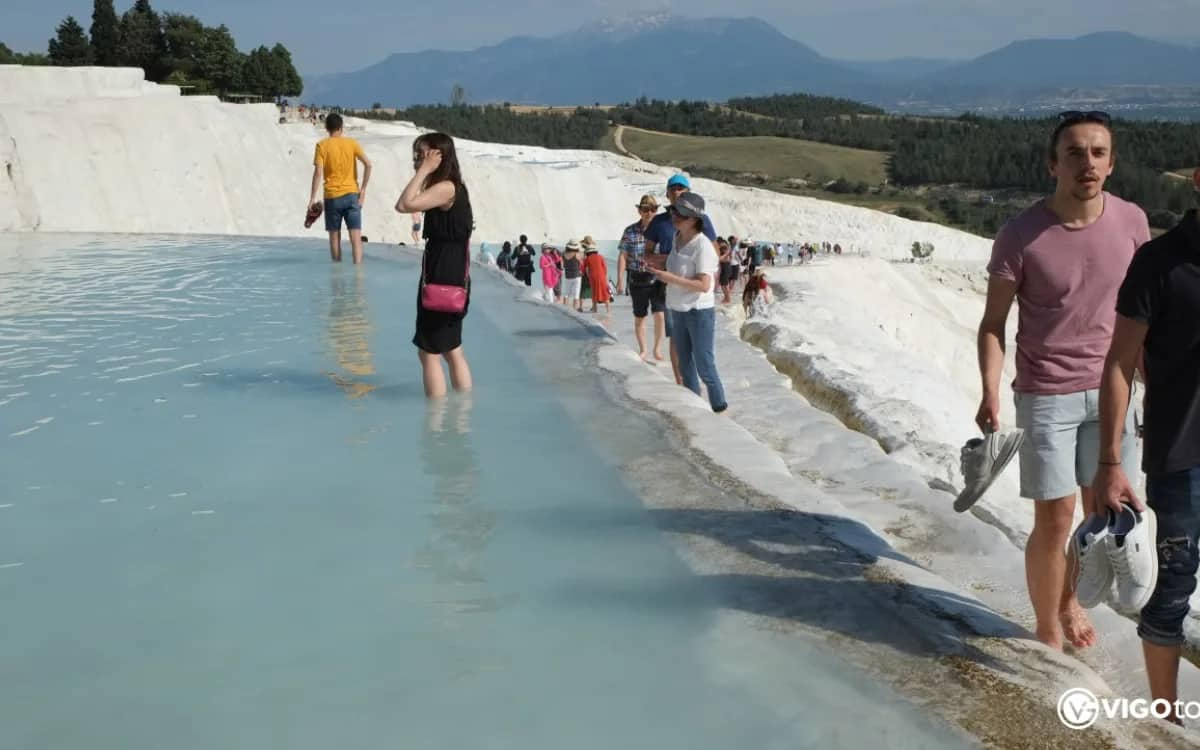
The day starts with an early drive inland from Didim. Pamukkale and Hierapolis share a UNESCO World Heritage site on the hillside above the valley. Mineral-rich spring water leaves deposits of calcium carbonate as it flows downhill. Over time the deposits have built the white terraces and shallow basins you can see along the slope.
Explore Hierapolis with an English-speaking guide
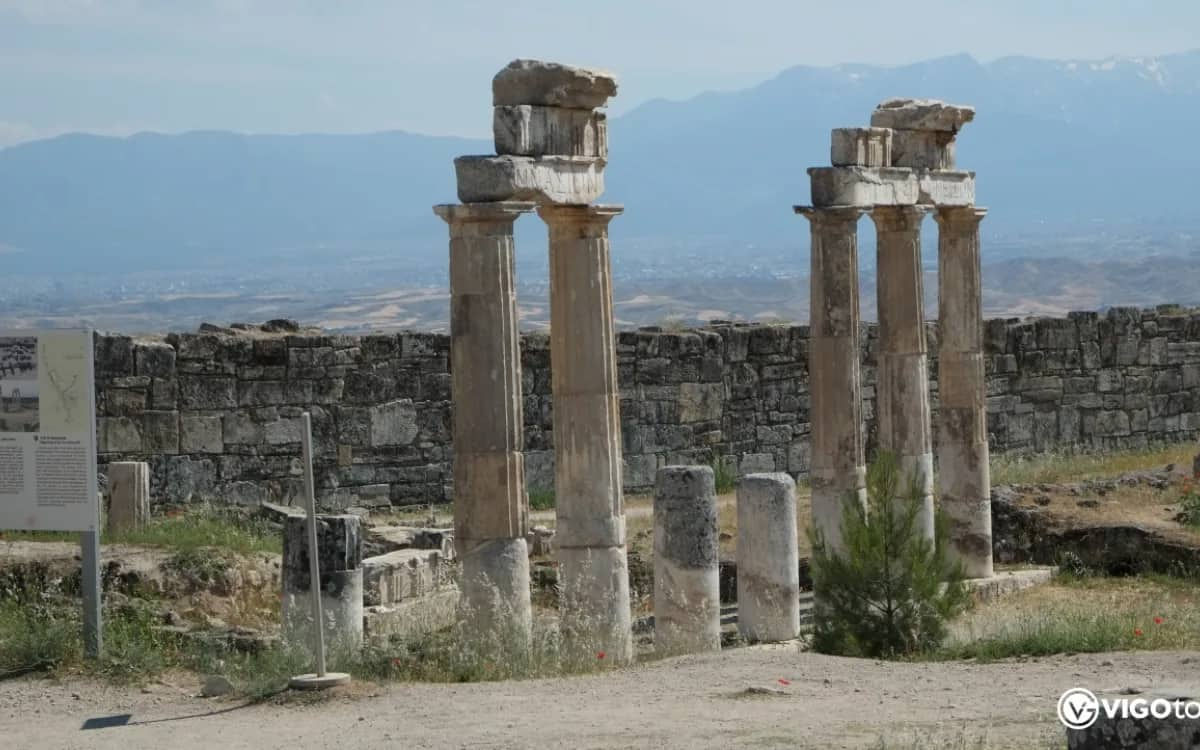
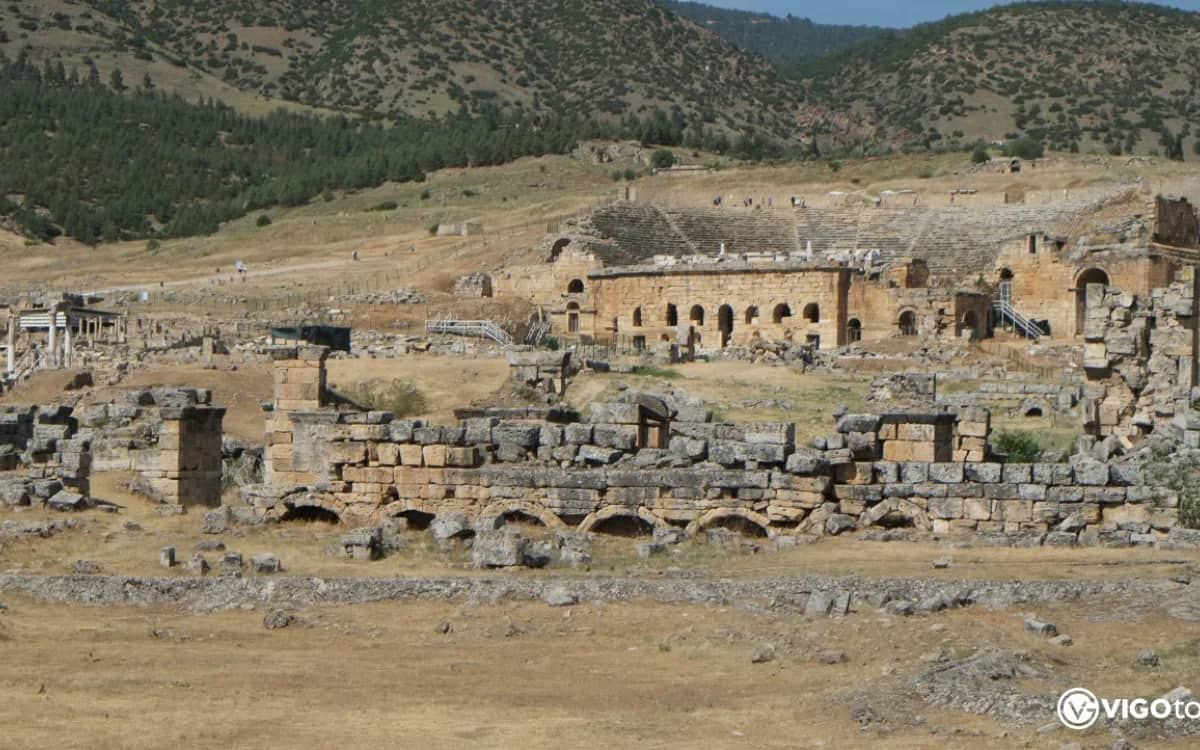
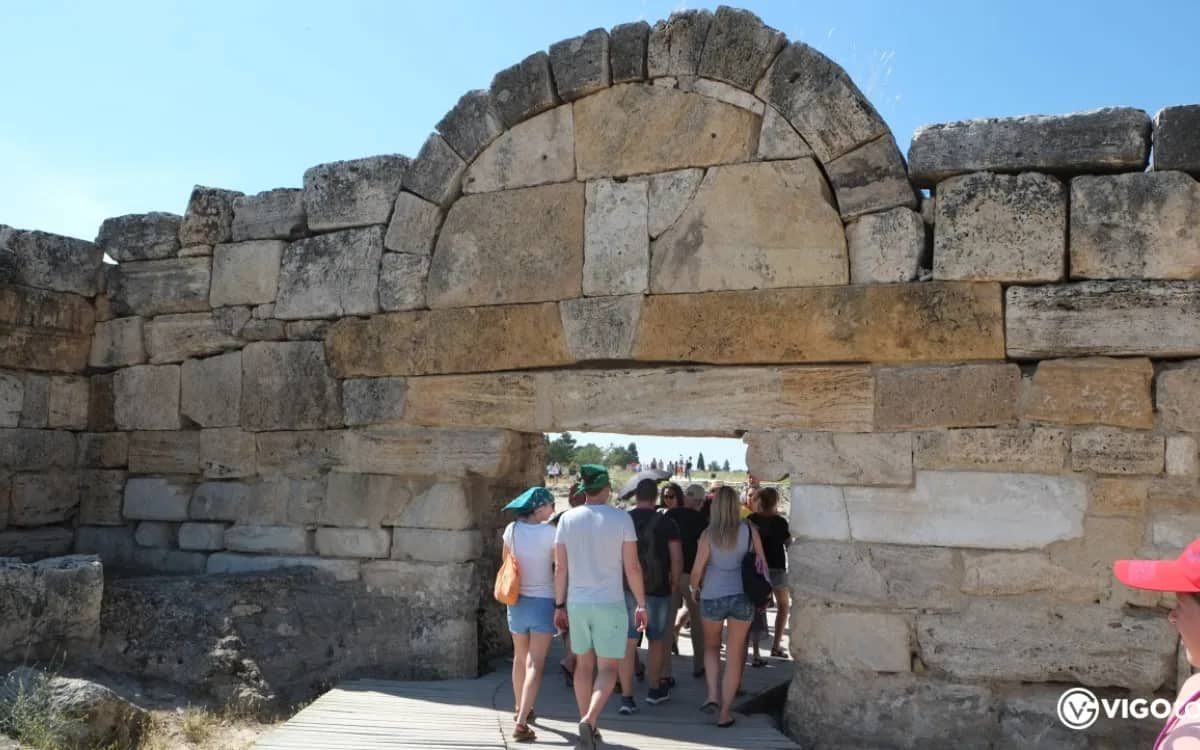
The guided visit puts the ancient city into context. Much of the site’s surviving architecture dates from Roman times, when the settlement developed close to the thermal springs. The ruins trace the growth of the city across the plateau above the valley. Admission is included. The introduction from your guide gives you a starting point for deciding which parts of the site to see during your free time.
The theatre and the extensive necropolis show different sides of Hierapolis. The theatre’s rows follow the hillside, while the tombs reflect the size and long history of the settlement. The complex covers a large area, so it is worth deciding which part you want to explore further before the group separates for free time.
Lunch and time at the travertines
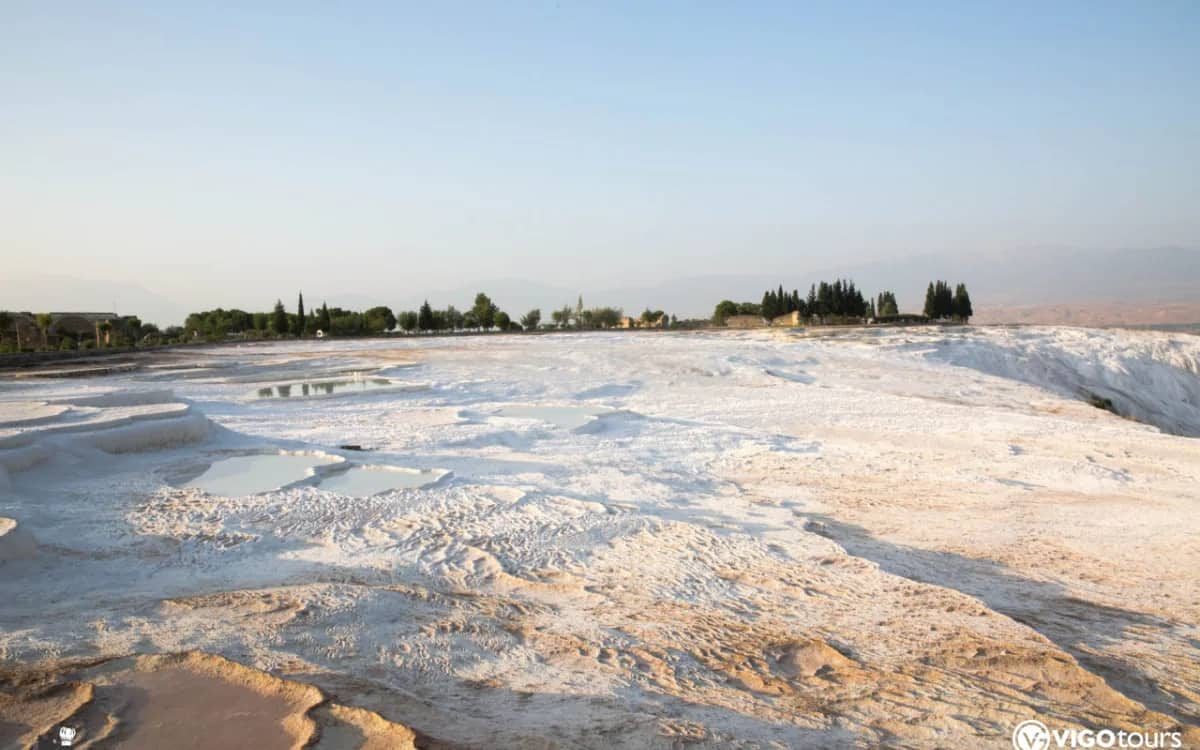
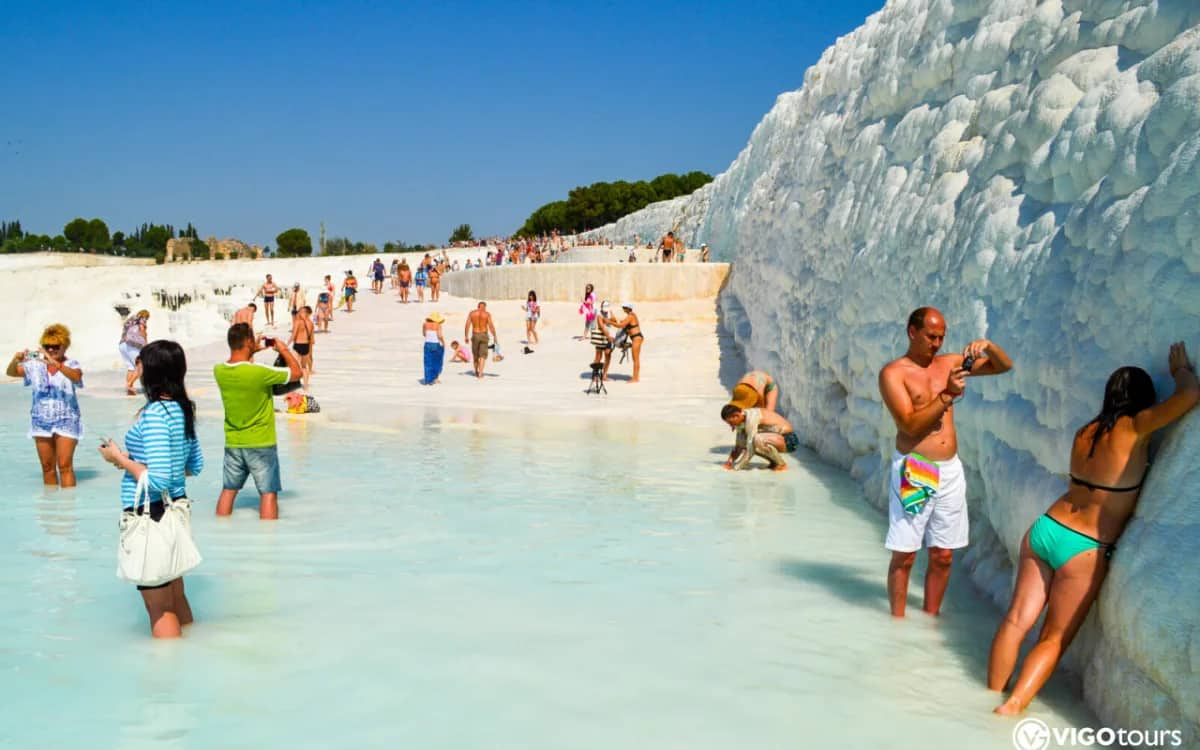
Lunch is included before the free-time portion of the visit. Use that time to follow the designated paths, take photos of the terraces or spend longer around the ruins. The water is distributed unevenly, so some parts of the slope have shallow pools and others show mostly exposed white stone. The view of the valley changes as you move along the paths.
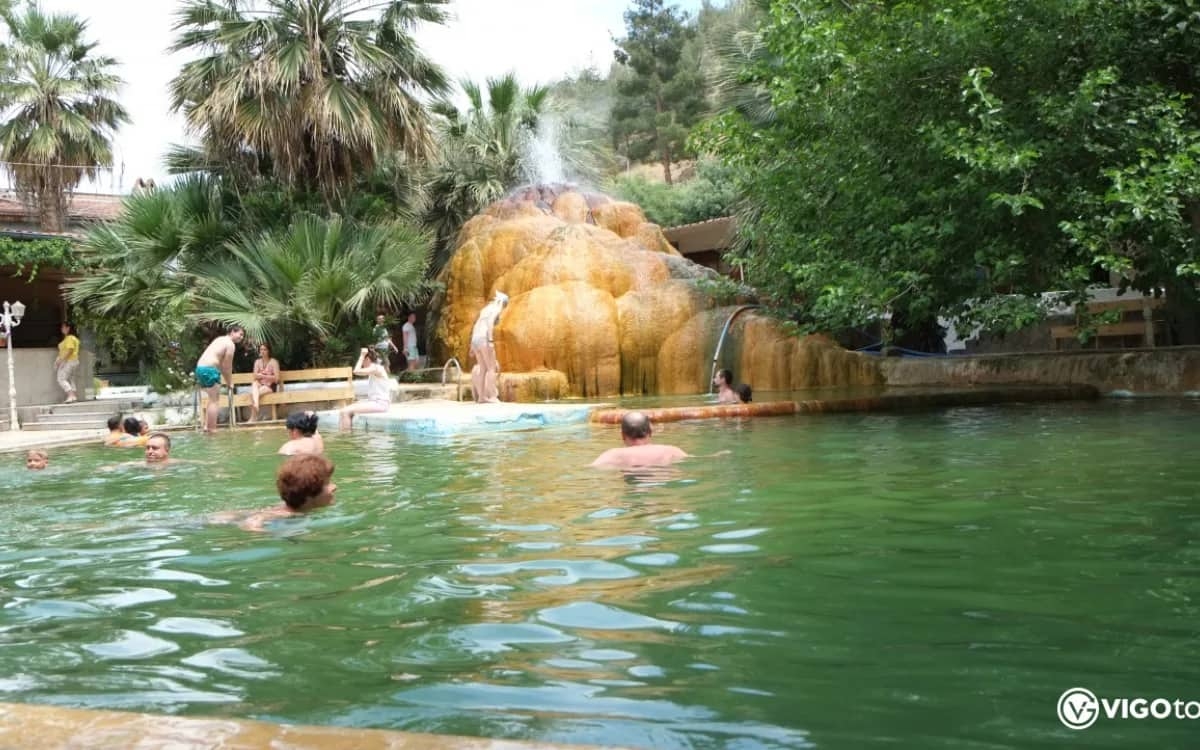
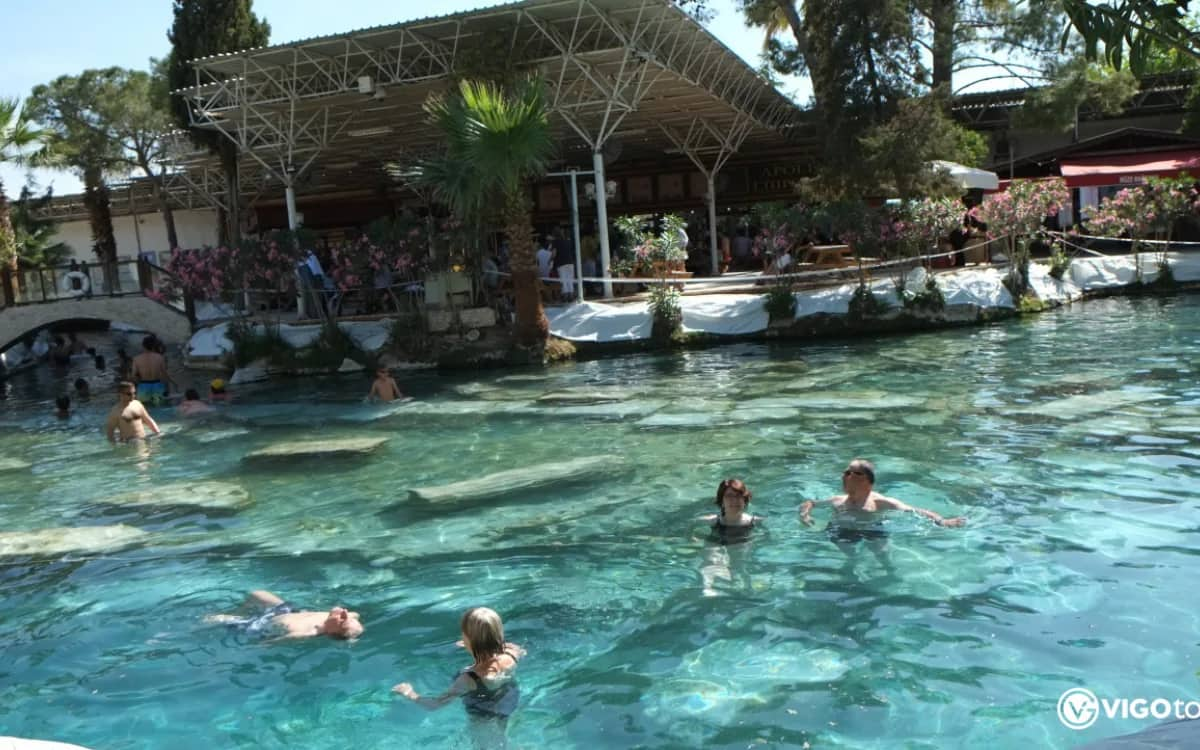
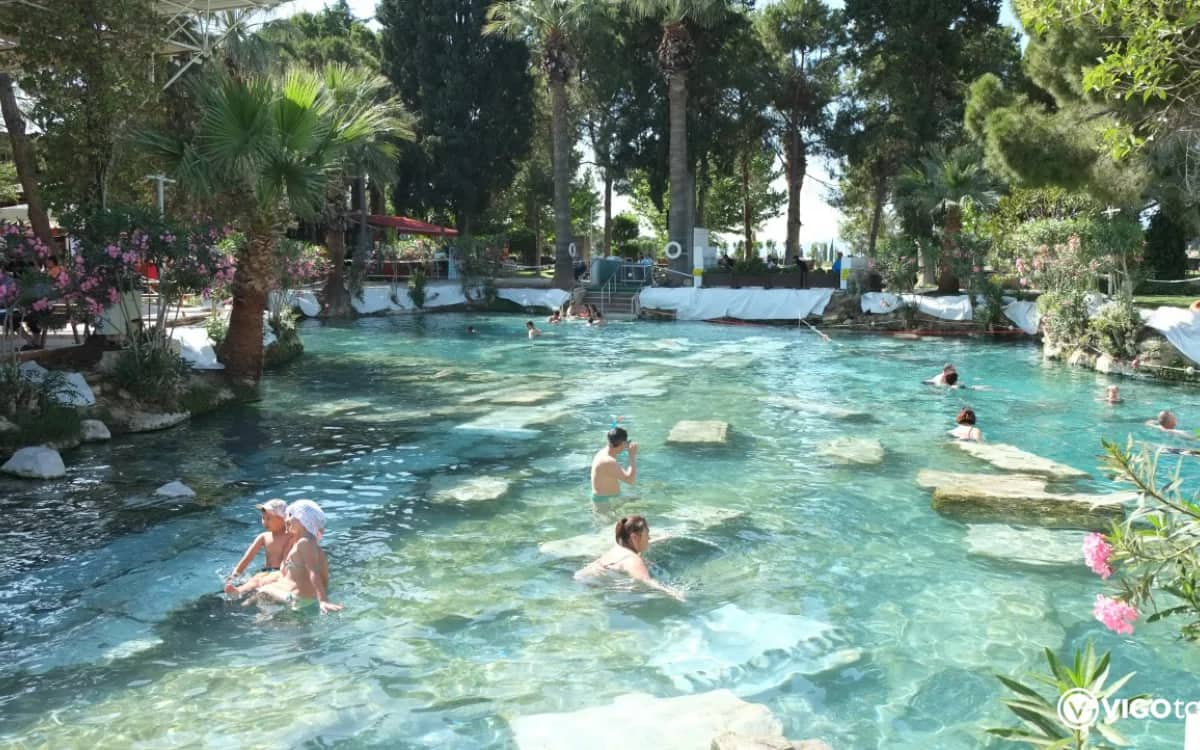
Cleopatra’s Antique Pool
When the Antique Pool is open, you can buy a separate ticket to swim in its thermal water. Stone fragments beneath the surface make it a different experience from viewing the terraces.
Another day in Didim
For a day on the Aegean coast, take a look at the Didim daily boat trip.